The best Sedona photo spot is the one you can reach before the light changes
For a first Sedona sunrise, we would choose Doe Mountain if you are comfortable hiking before dawn, or Bell Rock’s lower trails if you want a gentler start. For a sunset without a substantial hike, the upper Airport Scenic Overlook is the straightforward choice. For Cathedral Rock reflected in Oak Creek, choose Crescent Moon during its visitor hours, which can end before the actual sunset.
That last detail matters. A beautiful photograph online does not tell you whether the entrance gate will be open when you arrive. Nor does “Airport Mesa” tell you which of two quite different viewpoints the photographer used. Choosing between them is easier when you separate the parking place, the walking route and the light you are going there to photograph.
You do not need a complicated camera setup. You need one chosen location, enough time to settle in, and a willingness to enjoy the scene even if the clouds never turn pink. Sedona gives you plenty to work with: the shapes of the rocks, a brightening sky, the creek moving through a shaded foreground and the first lights appearing across town.
Map your morning and evening as separate outings
Use the Forest Service’s Red Rock recreation map to see how the trailheads fit together. The map is useful for geography and route names; current site pages and posted signs control fees and temporary access changes. Save your chosen route before leaving Wi-Fi.
- West Sedona and Boynton Pass: Doe Mountain’s trailhead is on Boynton Pass Road, reached through Dry Creek Road. Devil’s Bridge has different passenger-car starts at Mescal and Dry Creek Vista. The Airport Scenic Overlook is on Airport Road above West Sedona.
- Red Rock Loop and the creek: Crescent Moon is reached through West Sedona and Upper Red Rock Loop Road. It is not the Cathedral Rock climbing trailhead on Back O’Beyond Road.
- Southern SR 179 corridor: Bell Rock Vista, Courthouse Vista and Yavapai Vista are named parking destinations. The Chapel of the Holy Cross is off Chapel Road. This cluster suits an afternoon of shorter photo stops.
Open the map links in the sections below to navigate to the parking destination, rather than simply searching for a rock formation. Choose your sunset location before leaving town; a last-minute drive between distant viewpoints can use up the best part of the light.
Sunrise: choose a climb, an arch or an easy lower-trail view
Doe Mountain: a mesa morning worth the climb
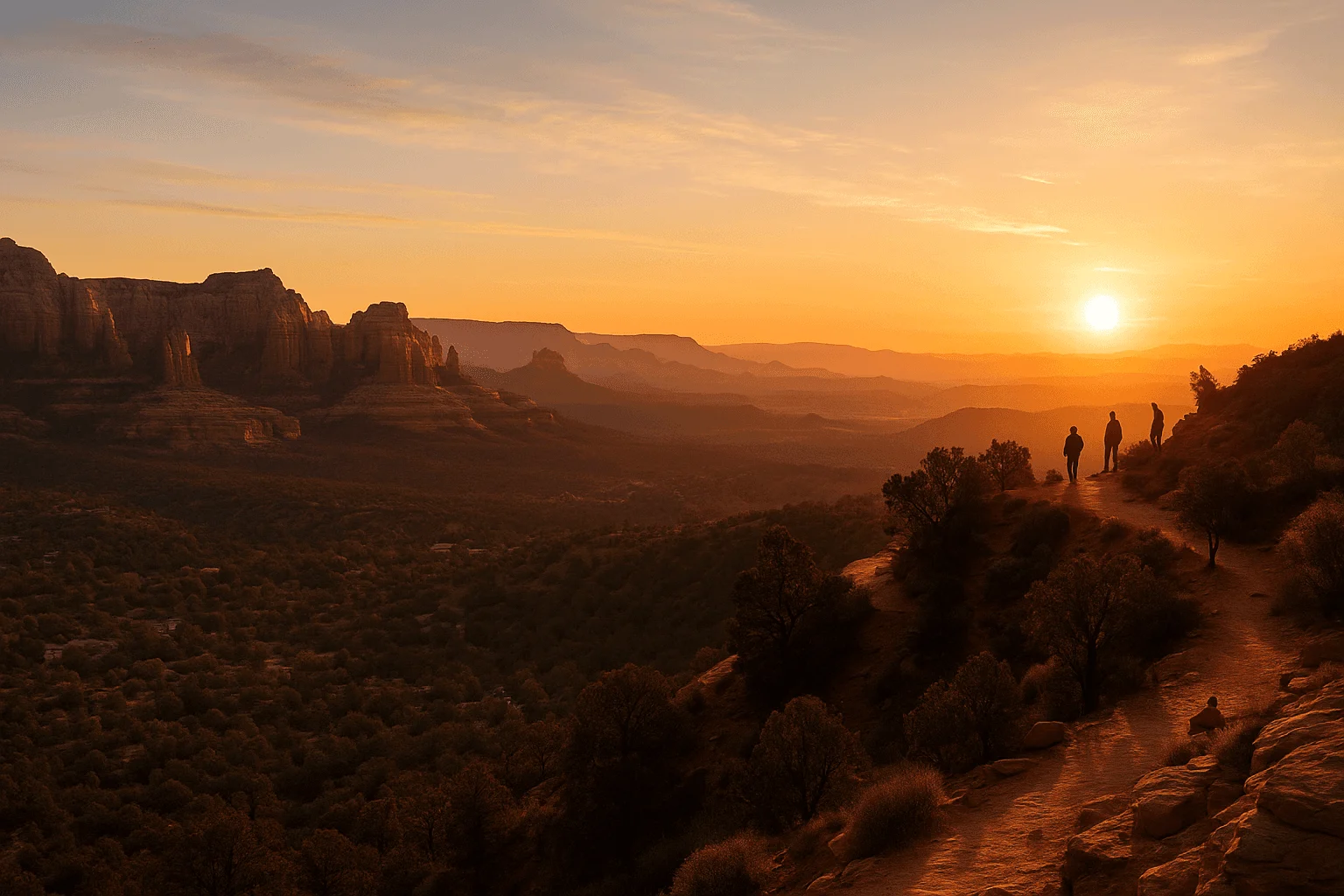
Doe Mountain gives you room to compose a landscape instead of aiming at one crowded landmark. The mesa has broad views across the surrounding red-rock country; the Forest Service names Bear, Maroon and Wilson mountains, Boynton and Secret canyons, Chimney Rock and the Cockscomb among the visible features. At dawn, you can choose the direction of the brightening sky or turn toward the formations catching the first light.
The official trail page lists a 0.7-mile climb to the mesa and 542 feet of elevation gain, rated moderately challenging. Going up and back is about 1.4 miles before you add any wandering on top. Short mileage does not make the switchbacks a casual stroll in darkness.
Navigate to Doe Mountain Trailhead on Boynton Pass Road, beyond the Boynton Canyon intersection; the paved access is reached through Dry Creek Road. A Red Rock Pass or America the Beautiful pass is required at the trailhead. Check the sign and start up Doe Mountain, rather than taking the much more demanding Bear Mountain route across the road.
For a practiced hiker who has already scouted the route, allowing 45–60 minutes to climb and settle into a composition is a reasonable planning starting point, with more time for a slower pace. It is not a guaranteed ascent time. If this is your first visit or you dislike navigating in the dark, go up after daybreak: photographing the morning light is still a good outing.
Devil’s Bridge: reserve a whole morning for the arch
Devil’s Bridge makes sense when the arch is the photograph you specifically want. It is a less forgiving choice for a quick dawn stop: there is an approach hike, a steep natural rock staircase near the top and potentially other visitors waiting to photograph the same formation. Sunrise does not guarantee an empty bridge or parking space.
The Forest Service’s passenger-car routes are 4 miles round trip from Mescal Trailhead, using the signed Mescal–Chuckwagon connection, or 5.8 miles round trip from Dry Creek Vista via Chuckwagon. The often-quoted 1.6-mile walk starts at the rough-road Devil’s Bridge trailhead; it is not the complete trip from an ordinary car’s parking place. The unpaved road requires high clearance and is not the recommended walking approach.
For the shorter passenger-car option, navigate to Mescal Trailhead on Long Canyon Road. Set the start time around the whole approach, your pace and the light you want, rather than assuming an hour is enough for any starting point. The scheduled Route 11 shuttle starts from West SR 89A Park & Ride at 7am on its published Thursday–Sunday schedule, so it is useful for a daylight outing, not a dependable pre-dawn solution.
If you are new to the route, the more enjoyable choice may be an early daylight hike with time for the arch and the surrounding valley. You can photograph the formation from the viewing area without making a walk onto the exposed bridge part of your plan.
Bell Rock: make the rocks your subject, without climbing them
Bell Rock and Courthouse Butte give you recognizable Sedona shapes without requiring a summit photograph. Start at Bell Rock Vista near the Village of Oak Creek, or Courthouse Vista farther north along SR 179. Those are developed parking sites, rather than an invitation to stop on the highway shoulder.
The Bell Rock Pathway information describes a mostly wide, hard-surfaced trail with hills and rough rock in places. Choose a short out-and-back from your parking lot, finding a composition before the route becomes more than you intended. You do not need to complete the full Pathway or climb Bell Rock to photograph it.
Use the trail’s bends and vegetation to give the foreground some shape, then watch the sky and the faces of the buttes as the light changes. This is a good choice if the picture you want is the landscape itself rather than a person standing on an exposed rock. It is also useful at sunset, so scout it in daylight and decide which direction looks promising for that evening.
Sunset: know whether you want town, water or the rock faces
Airport Scenic Overlook: the upper drive-up panorama
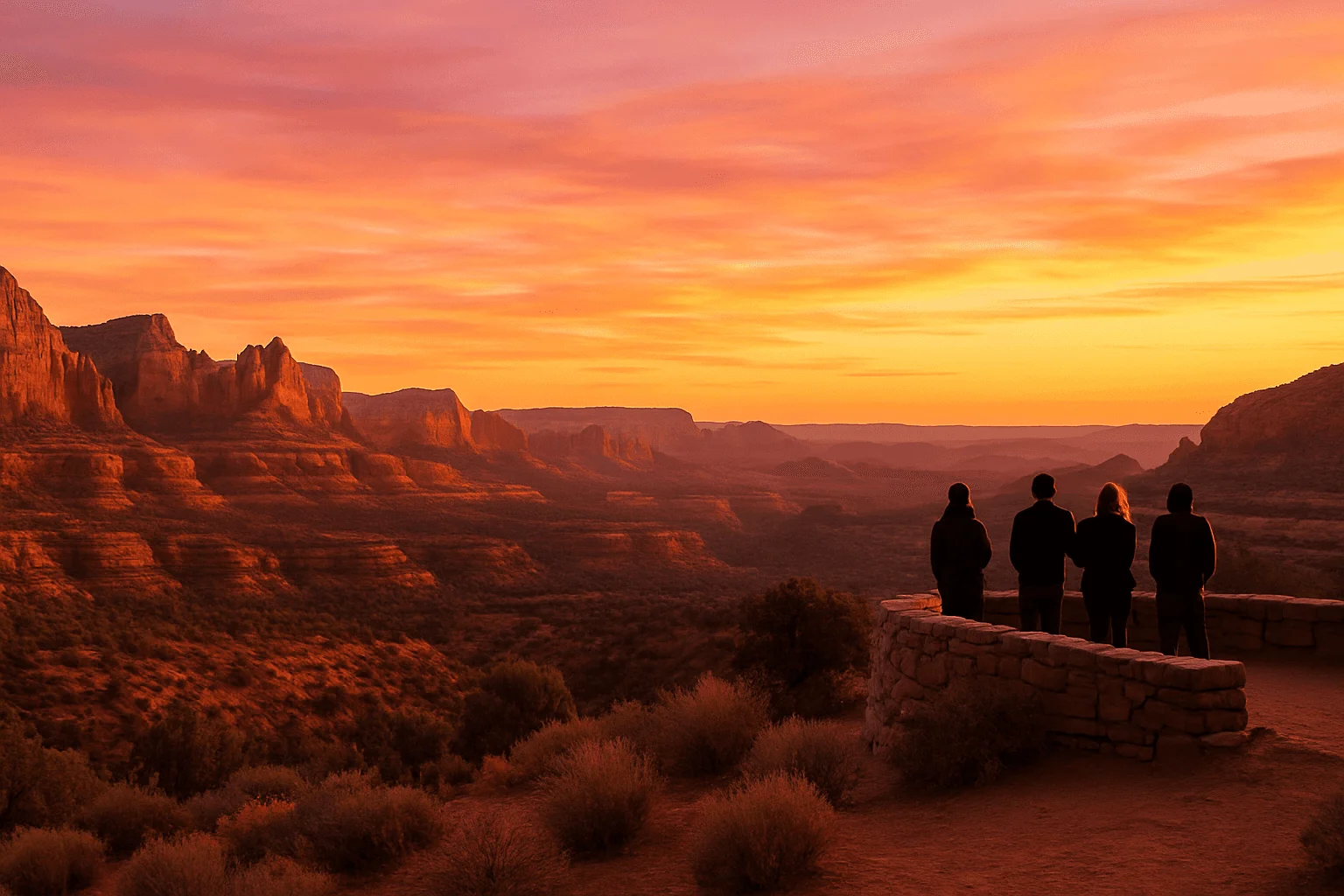
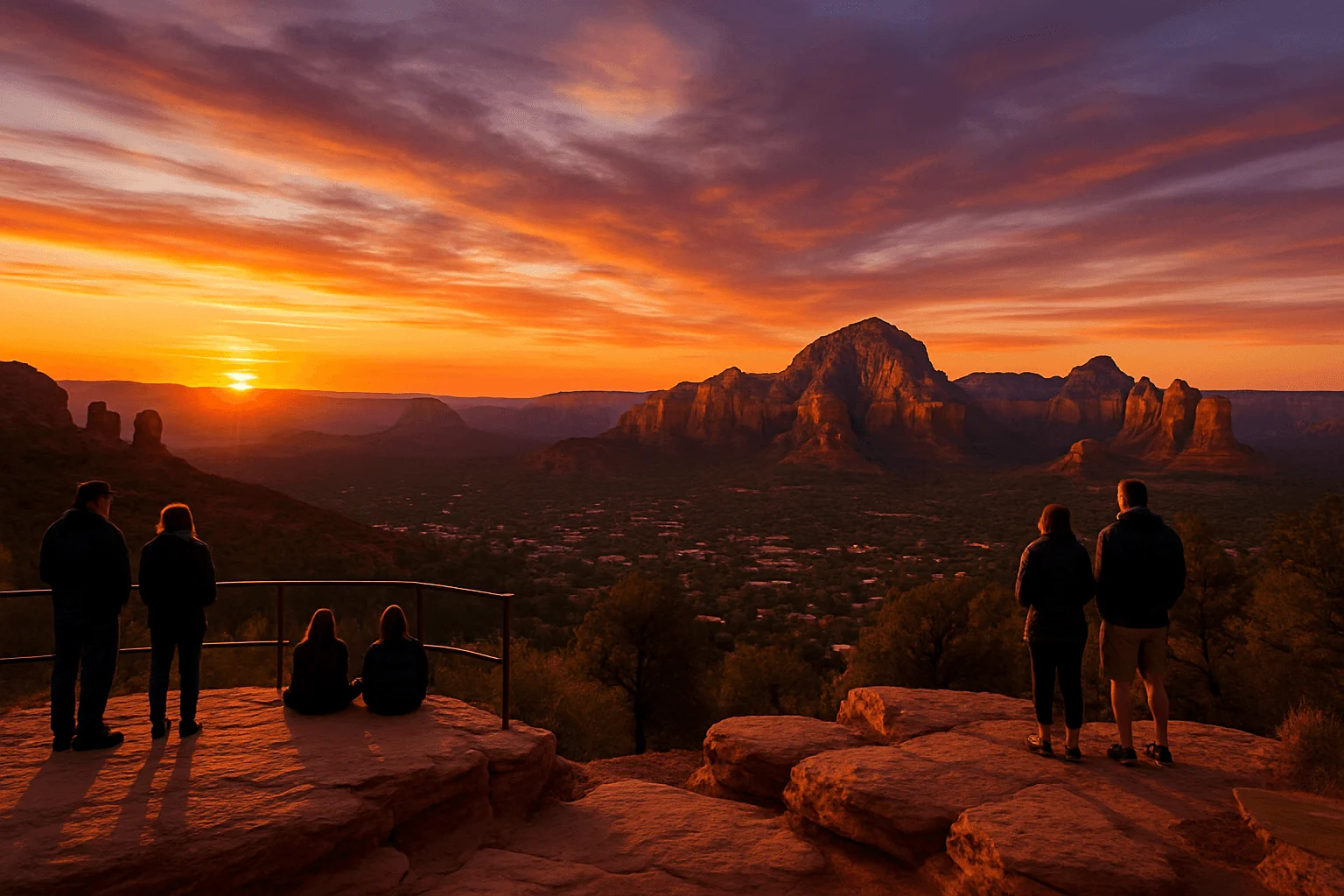
For a low-walk evening, navigate to the Airport Scenic Overlook near the top of Airport Road. You park in the upper lot, then cross at the marked crossing to the viewpoint. You do not have to hike the Airport Loop or Sedona View Trail to reach this overlook.
The airport’s instructions list $3 parking, paid by cash or card, with the receipt valid all day. Its recommended arrival is one hour before published sunset. The viewpoint looks across West Sedona toward formations including Thunder Mountain, Coffee Pot and Chimney Rock, making it a good place to photograph the town and the mountain layers together.
Make space for other viewers when setting a tripod, and take a few pictures after the sun slips away if color remains in the clouds. Town lights can become part of the composition as the landscape darkens. Keep the return simple: the upper overlook involves a road crossing, not a nighttime descent along a hiking trail. Check the surface if you need a particular mobility arrangement rather than assuming every viewing position is paved.
The lower Airport Mesa saddle is a different outing
The smaller lower Airport Mesa parking area and rocky “vortex” viewpoint are often confused with the upper overlook. If you choose the lower location, expect an uneven rocky ascent to the viewpoint instead of the upper lot’s short road crossing.
The Sedona View Trail connects the upper and lower lots. Use that signed hiking route to link them; the airport prohibits pedestrians from walking along Airport Road.
For your first sunset after a travel day, we would keep the upper overlook plan. Save the connecting trail or lower rocky viewpoint for a daylight scout, when you can decide whether the terrain and return walk suit you.
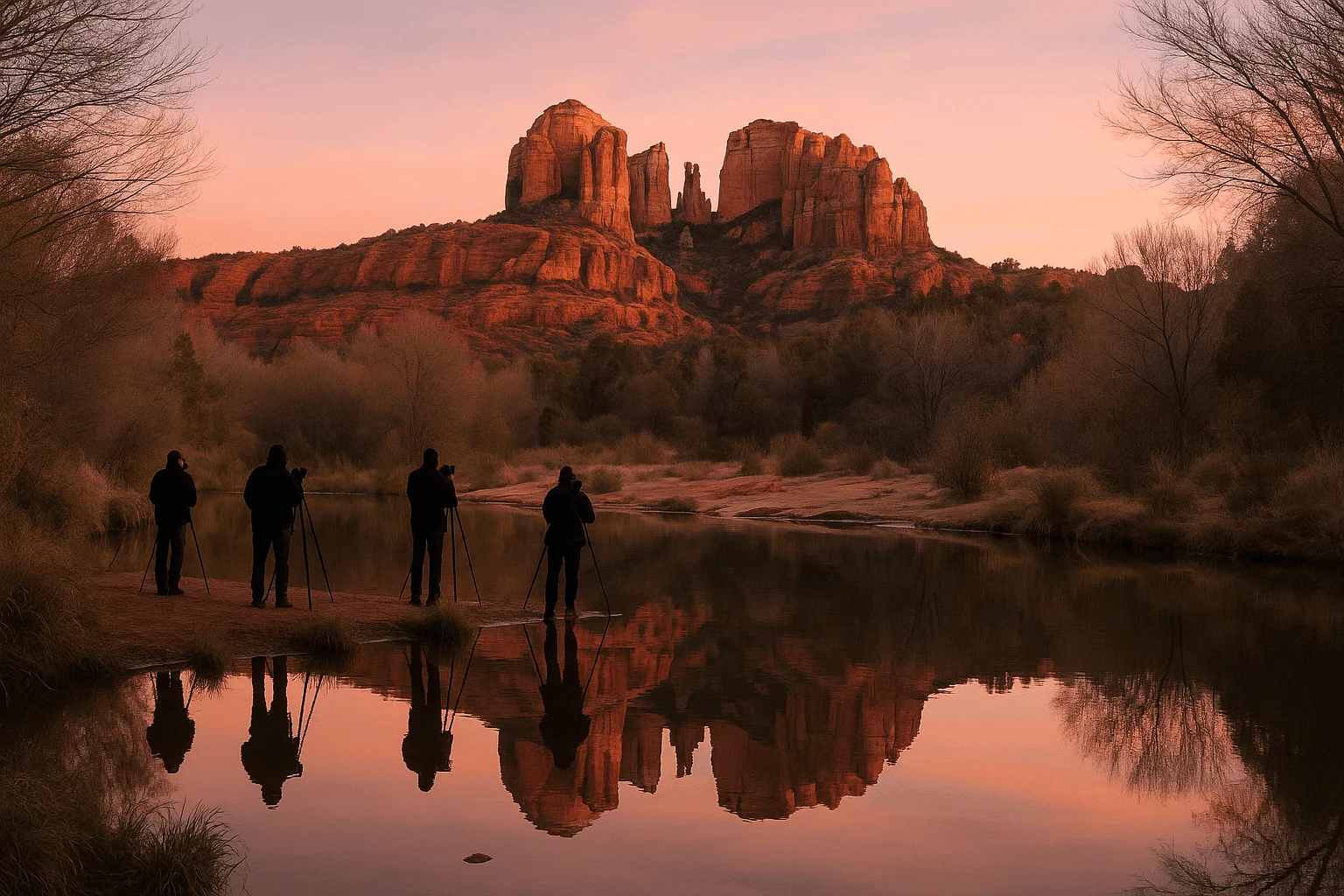
Crescent Moon: Cathedral Rock and Oak Creek, within the gates
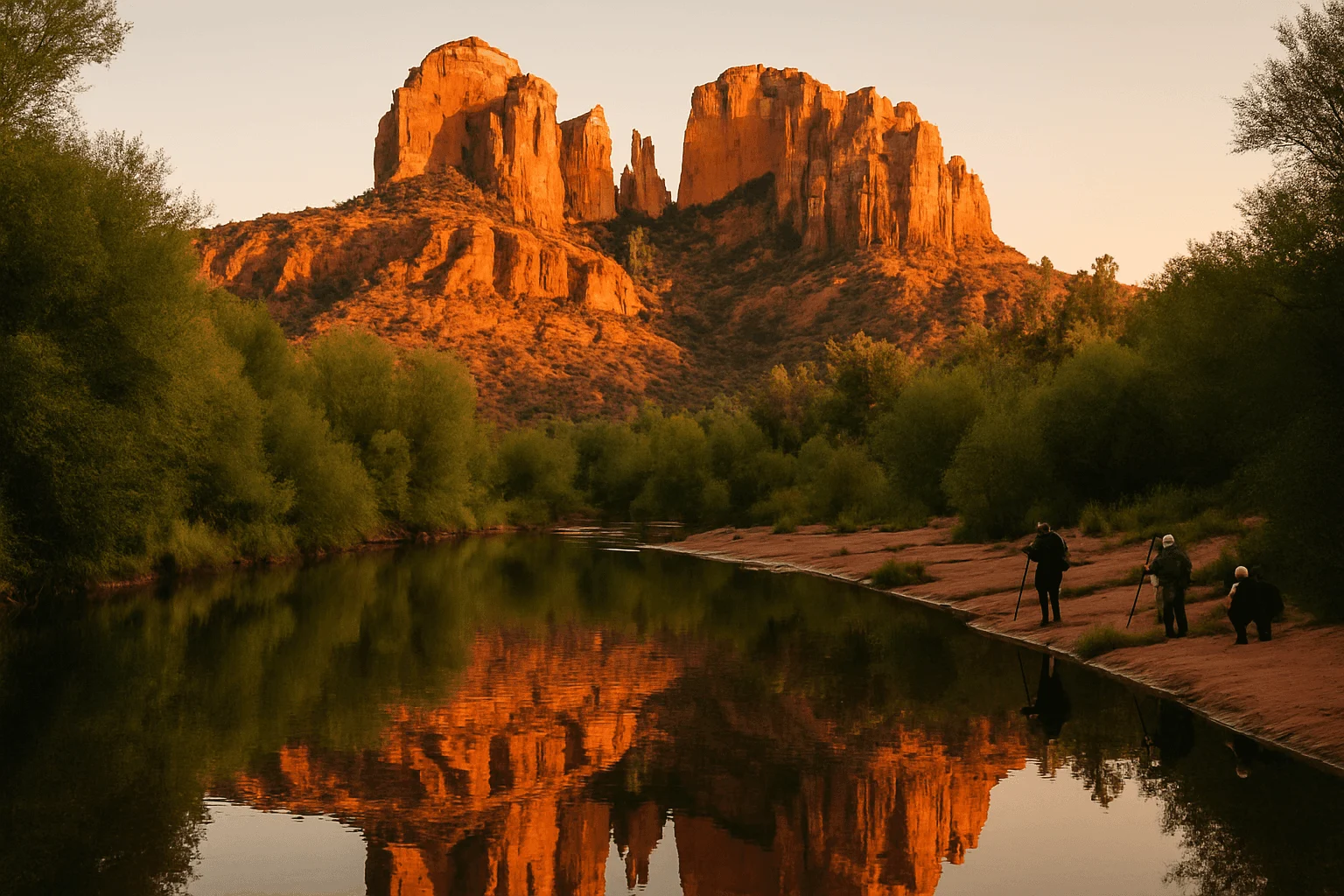
Crescent Moon is where you choose a creek foreground and Cathedral Rock as the subject, rather than climbing Cathedral Rock itself. Navigate to Crescent Moon Picnic Site via Upper Red Rock Loop Road and the signed Red Rock Crossing approach. Walk toward the creek and look for a composition from the bank; a reflection depends on the surface of the water, not a promise that recent rain will make the scene better.
The current Forest Service page lists visitor hours as 7am–7pm April–September, 8am–6pm October–November and 9am–5pm December–March. These are also printed in the official ramada information. This makes Crescent Moon a poor plan for a pre-dawn arrival, and its closing time can precede sunset. Use it for late-afternoon light within the published hours and ask the attendant about that day’s exit arrangements.
Current entry is $15 per vehicle for up to five people; walk-ins and extra passengers are $4 each. This site accepts its separate Coconino Hospitality pass, not a standard Red Rock Pass or America the Beautiful pass. Plan for its entrance charge independently of your trailhead pass.
A still pocket of water may give you a pleasing reflection, while a moving creek can make a good photograph of its own. Keep yourself and the camera on a secure bank instead of crossing the water solely to reproduce someone else’s composition.
Yavapai Vista and the SR 179 corridor: a short walk with a named destination
Choose a named trailhead instead of improvising a stop at a scenic “pullout”. Yavapai Vista gives you a short trail outing in the Bell Rock corridor. The Forest Service lists it as a 0.5-mile out-and-back, with a Red Rock Pass or America the Beautiful pass required at the trailhead.
Go in daylight first to choose the view and learn the return. A short distance is useful when you want foreground rock and a little elevation without committing to a long hike, but the trail and rock surface still require shoes and attention. Bell Rock Vista or Courthouse Vista can also serve as your chosen lower-trail photo stop; pick one instead of racing along SR 179 searching for an unmarked roadside gap.
Chapel of the Holy Cross: an afternoon photo stop, not a sunset appointment
The Chapel’s architecture and the surrounding rock make it worth including in a photography day, but its official visitor hours are 9am–5pm, with last entry at 4:45pm. Make this an afternoon stop at 780 Chapel Road, rather than promising access at dawn or after sunset.
Parking is limited and the approach rises uphill. The Chapel’s page describes a drop-off turnaround, golf-cart assistance to the ramp and wheelchairs for family use. Allow time for arrival, and remember that this is an active place of worship: maintain quiet inside and keep the photography considerate of people who came to pray.
Frame the building with its rock setting from the visitor areas, or use a longer focal length to simplify the distant formations. Then leave for your evening viewpoint with time to park there. The light does not have to be at its absolute warmest for the Chapel to make a memorable photograph.
Budget for the parking you actually use
The current Forest Service pass program lists Bell Rock Vista, Courthouse Vista, Mescal, Dry Creek, Bear/Doe Mountain and Yavapai Vista as Red Rock Pass or America the Beautiful pass sites. The Red Rock daily pass is $5, the weekly pass $15. That is separate from Airport Overlook’s parking charge and Crescent Moon’s concession entry fee. Save the relevant pass or receipt according to that site’s instructions.
Time the light, not just the sunset notification
Check the sunrise and sunset for your exact travel date. To show the seasonal difference, the U.S. Naval Observatory service, calculated for central Sedona in local Mountain Standard Time, gives sunrise around 5:14am and sunset around 7:44pm on June 21, 2026; on December 21 they are around 7:31am and 5:20pm. A fixed “7am sunrise” or “6pm sunset” schedule does not work across the year.
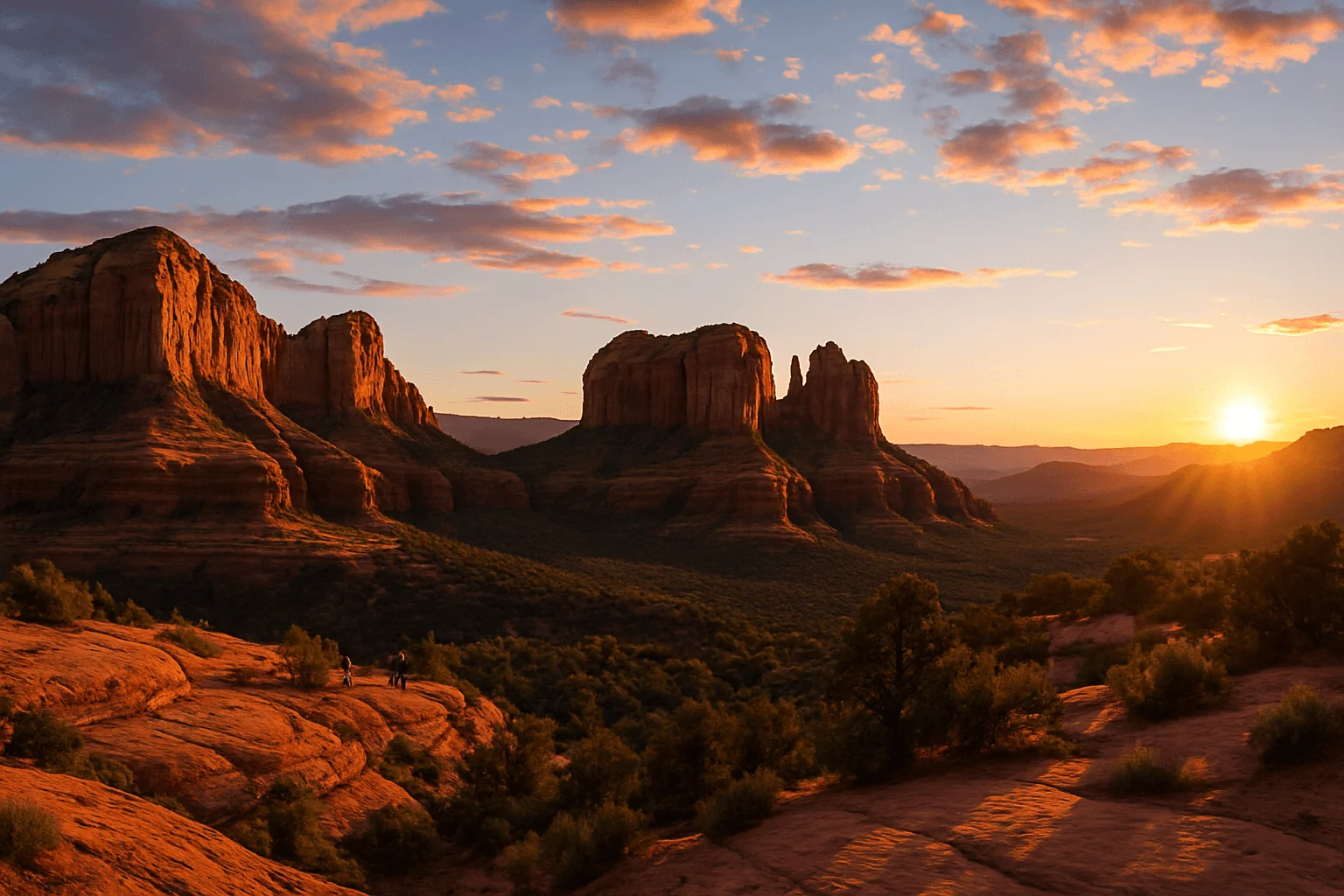
Those times describe the sun at a standard horizon. Nearby ridges can delay when sunlight reaches your chosen rock face or cut it off before the listed sunset. Scout the sightline, look at where the sun will be, and allow time for the sky before sunrise or after sunset only where access permits. The best frame might be a warm patch on the rock rather than the sun itself.
For a drive-up evening, arriving roughly an hour before sunset lets you park and compose without rushing. For a dawn hike, add the whole approach and setup time to the earlier moment you want to photograph. If that means an uncomfortable unfamiliar climb in darkness, choose a lower-trail location or shoot shortly after sunrise instead.
A photography day with a pleasant middle
Choose one sunrise outing: Doe Mountain for a climb to open views, Bell Rock for a lower-trail morning, or Devil’s Bridge if the arch is the priority and you have allowed the longer approach. Return for breakfast, then give yourself a real pause. Trying to fill every hour between dawn and dusk often makes the evening less enjoyable.
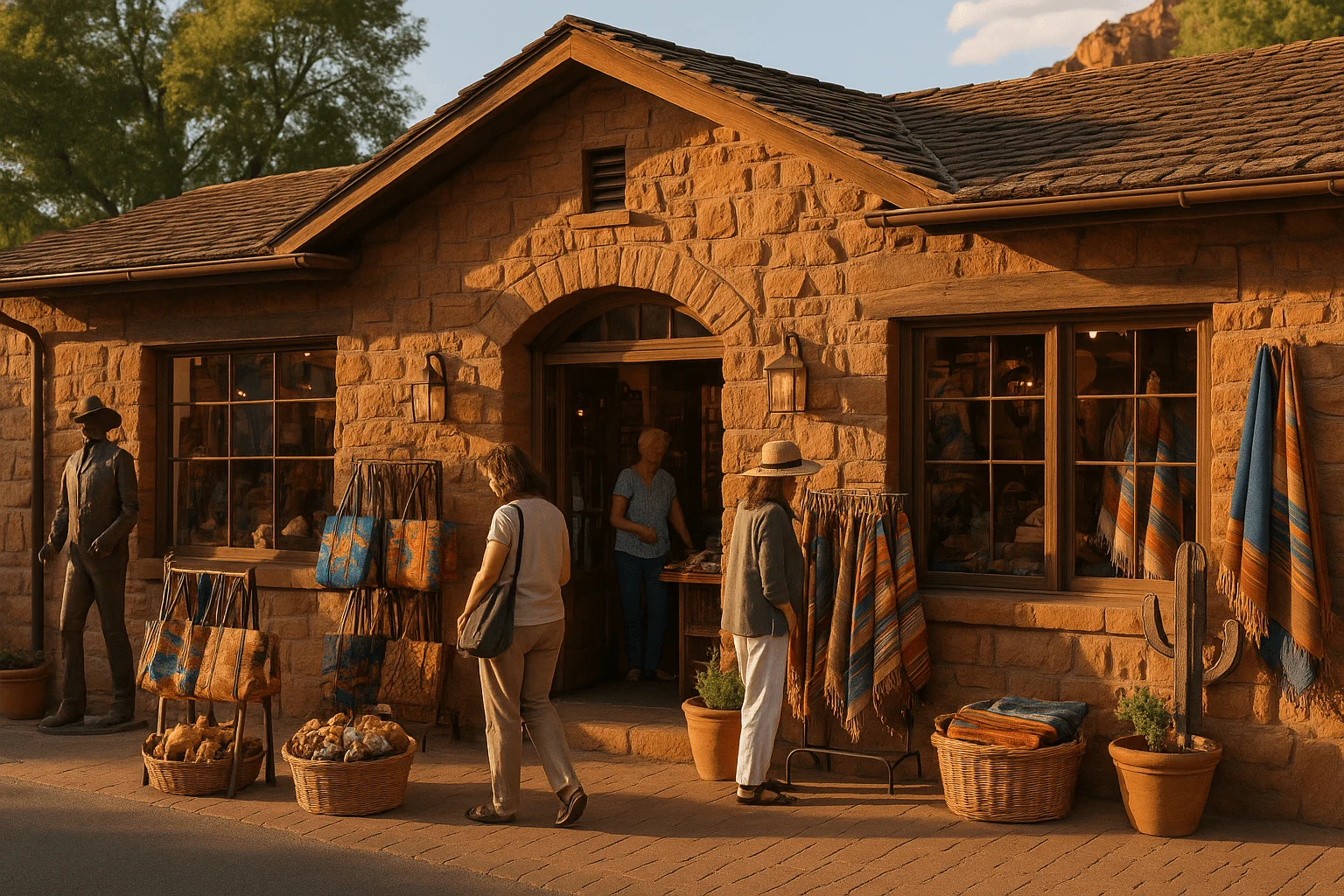
Late morning is a good time for Uptown browsing or the Tlaquepaque area. If you are near Brewer Road, stop at Mi Amoré Sedona inside the historic Hart Store at 100 Brewer Road. A thoughtful gift or something for home or garden gives you another way to bring a little of the trip home. We are open daily from 10am to 4:30pm, so visit before your evening photo outing; the shop is in the Brewer Road area, not on Uptown’s Main Street.
In the afternoon, make a Chapel visit or scout the lower SR 179 trails. Finish with one chosen location: the upper Airport Scenic Overlook for a straightforward panorama, Crescent Moon for a creek composition during its visitor hours, or a previously scouted lower-trail viewpoint. For a larger sightseeing plan, our Best Things to Do in Sedona guide helps you fit the photography into the rest of the trip.
A few camera habits that matter more than more equipment
Start with a clean lens, a charged battery and enough storage. On a phone, tap the bright sky and adjust exposure so the color is still visible; take a second frame exposing for the rocks if the first loses too much foreground detail. On a camera, a bracketed sequence can give you options when the sky and land differ sharply in brightness. Review the pictures while you still have time to adjust.
A small tripod helps with slower exposures, but leave the walking route clear. For reflections, try lowering the camera from a secure position rather than stepping into the creek. For a busy landmark, change the framing: a tighter picture of the rock and light can be more satisfying than waiting for a completely empty wide view.
Keep the return as well planned as the photograph
For any low-light trail, carry a working headlamp, a spare light, water and layers, and save the route before you go. Keep track of the trail you arrived on and decide on your return time while it is still light. Check current forest alerts and the forecast before committing to an exposed mesa or rock staircase.
If you bring a drone, check the site’s land rules and current FAA airspace requirements separately. The Forest Service prohibits launching, landing or operating drones from designated wilderness. A ground-access pass does not authorize a flight, and the Airport Mesa name is a reminder to pay particular attention to aircraft operations. A phone or camera keeps the outing much simpler.
Choose a legal parking space, keep to public visitor areas and leave the plants and rocks as you found them. A good Sedona picture should come with a good memory of being there, including the walk back.
GOOD TO KNOW