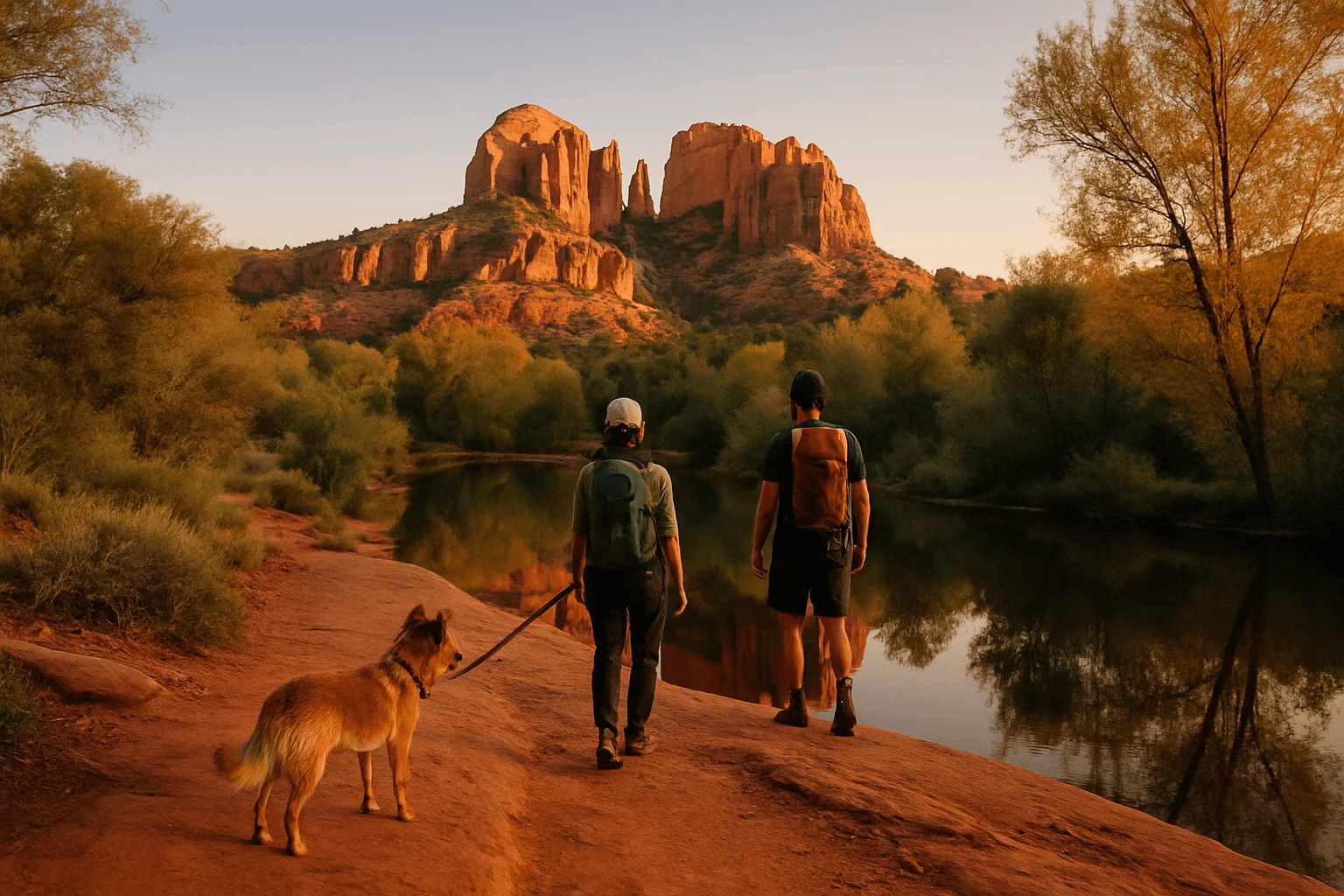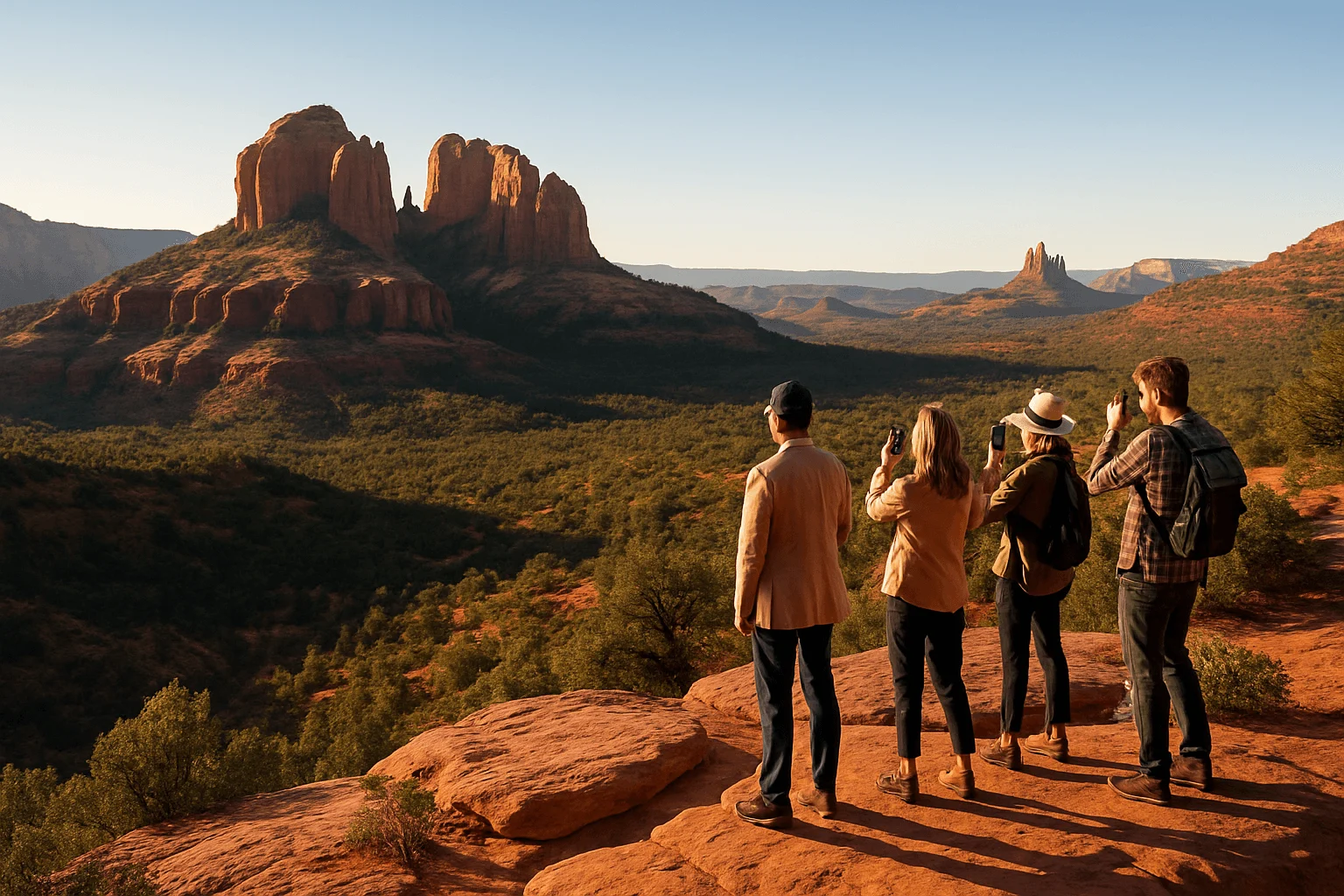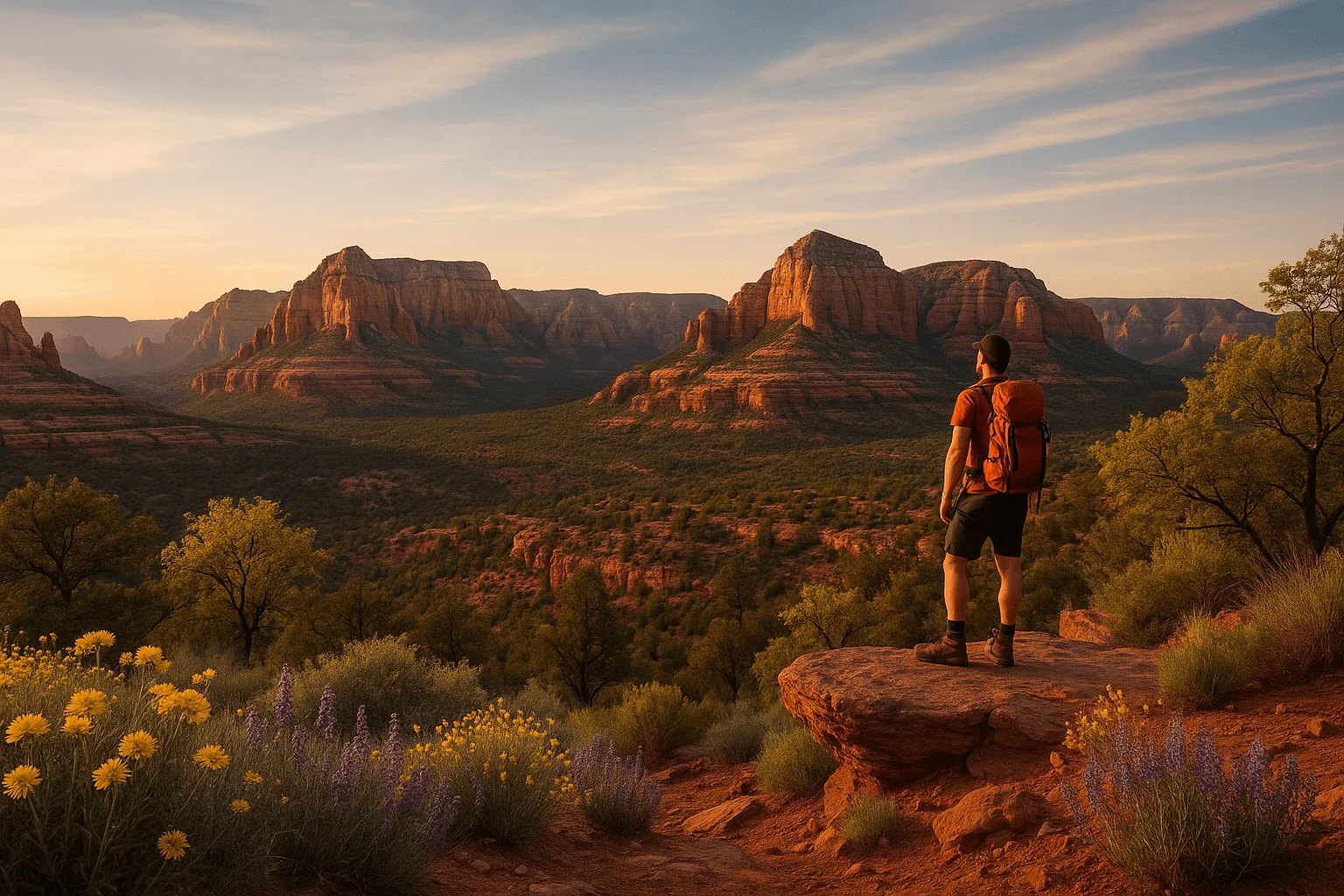
Pack for a red-rock morning and the rest of the day
The most useful Sedona packing list starts with your actual plans. A morning on a rocky trail calls for water capacity, good soles and a daypack. A guided Jeep ride calls for a smaller bag and a layer against the wind. A shopping afternoon and a nice dinner can share one comfortable town outfit, with the trail clothes left to air out at the hotel.
For most visits, start with broken-in trail shoes, a sun hat, sunglasses, sunscreen, a reusable water container, comfortable layers and a daypack. Add a rain shell, first-aid supplies, snacks, offline navigation and a headlamp for hikes. Then adjust the clothing for the forecast at the places you will actually visit, especially if Sedona is one stop on a trip that also includes Flagstaff or the Grand Canyon.
You do not need to buy a completely new outdoor wardrobe. Choose clothes you can move in, shoes you have already walked in and enough space in your pack to put away a layer without carrying it in your hands.
A small everyday kit
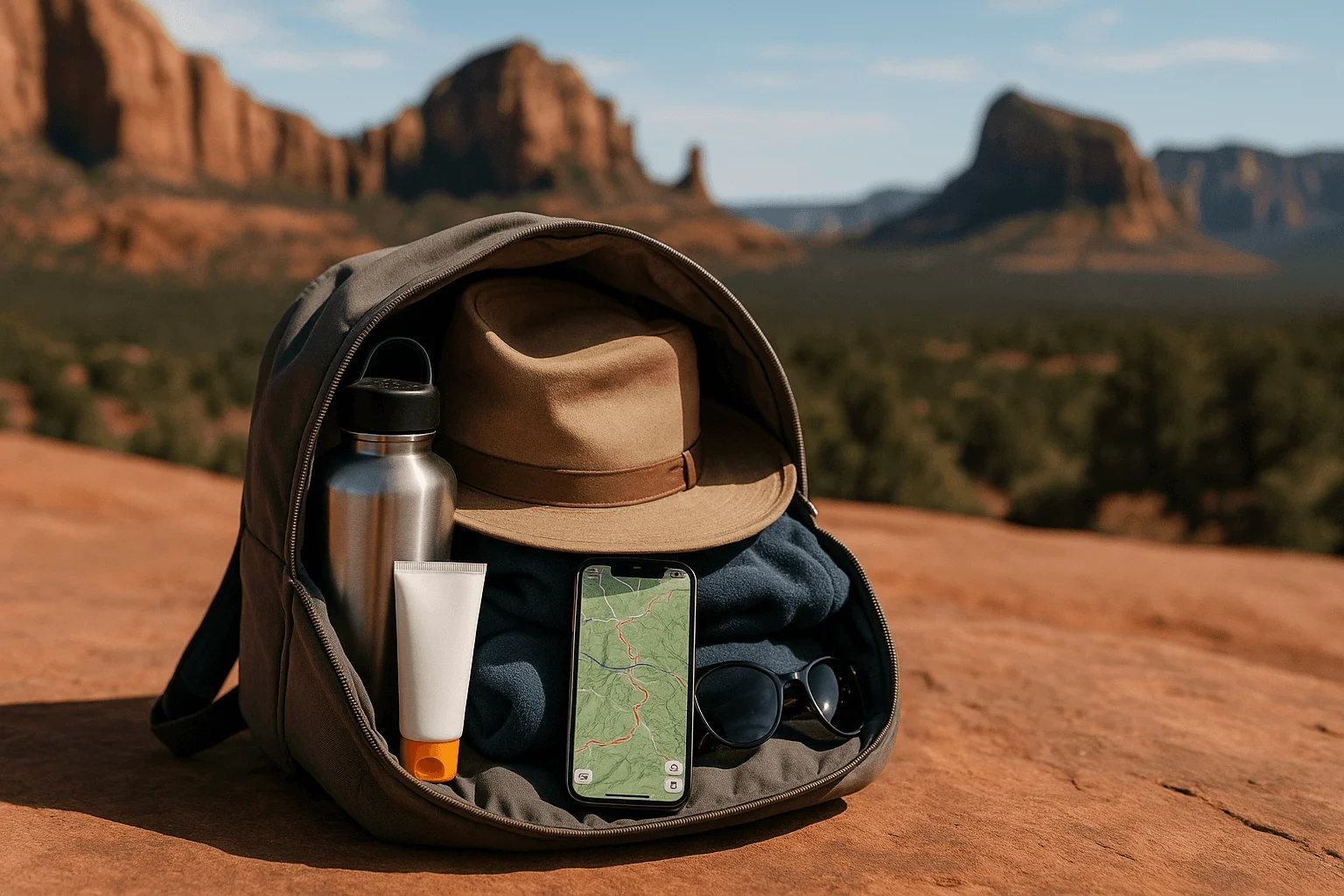
Before leaving the hotel, take water, sun protection, your phone and a charged power bank, identification and the day’s reservation or parking details. Keep any medication you need with you. A light layer earns its place even when the afternoon forecast looks warm: the clothing that feels right while walking in sunshine may feel different while sitting still for an evening view.
Save the meeting-point address, the trailhead map and any booking voucher offline. An open browser tab is not the same as a downloaded map. If the day includes a hike, leave the route and expected return time with someone who is not coming along.
What to wear hiking in Sedona
Start with the shoes you trust
Wear broken-in trail shoes or hiking boots with dependable grip. The Coconino National Forest’s outdoor-safety guidance specifically calls out slickrock, ledges and steep scrambles. “Only a short hike” does not mean a smooth sidewalk, and a picturesque rock formation is not a reason to wear shoes chosen only for the photograph.
Trail runners can be a comfortable choice for familiar, nontechnical routes if they fit well and have appropriate soles. Boots may suit people who prefer that support or expect more demanding conditions. The useful comparison is fit, traction and the route, rather than assuming the heaviest boot is always better.
Pack socks that work with your shoes, plus a spare pair if your plans could leave them wet. A lightweight bag for dusty shoes makes the return trip easier. Keep sandals or clean town shoes for the hotel and dinner, rather than trying to make one delicate pair do every job.
Wear layers that can leave the pack
A comfortable hiking outfit might be a breathable shirt, flexible shorts or trousers, a long-sleeved sun layer and a light fleece or jacket. Choose longer trousers if you prefer more coverage from brush and sun. The layer closest to your skin should feel comfortable when you are moving; the spare one should still be useful when you stop.
A brimmed hat, sunglasses and sun-protective clothing are useful throughout the year. The American Academy of Dermatology recommends broad-spectrum, water-resistant sunscreen with SPF 30 or higher. Follow its application directions and bring enough to reapply. A larger SPF number does not turn a full day outdoors into one morning application.
Give water its own place in the plan
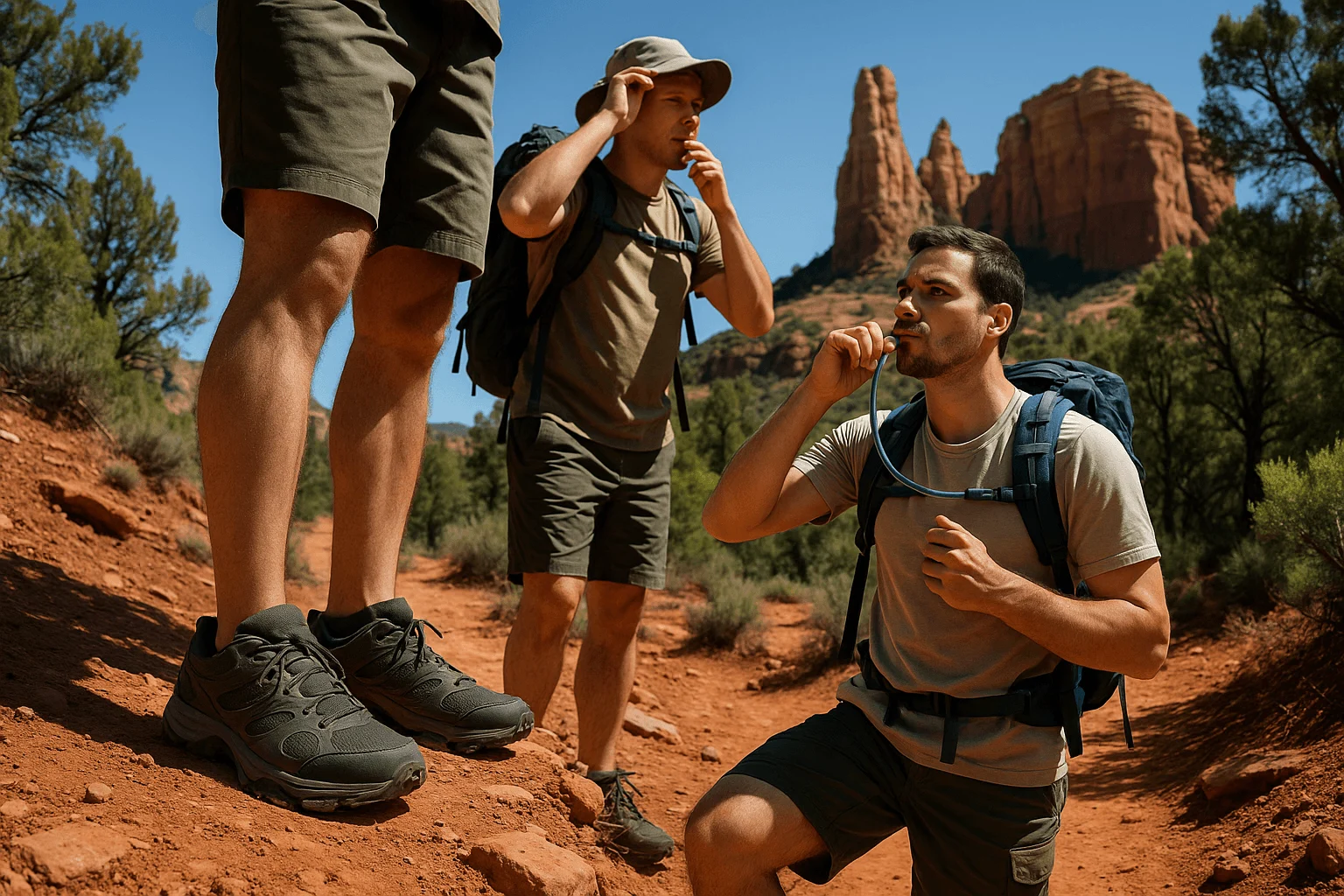
One small bottle is not a complete hiking plan. The city-operated Sedona Shuttle’s summer hiking guidance says to carry at least one liter per person for each hour and be prepared to turn back after using half your supply. For a three-hour summer outing, that means at least three liters per person, with extra capacity for delays. One liter of water weighs about one kilogram, so test the packed bag before committing to a route.
Treat that as summer planning guidance, not a fixed prescription for what everyone must drink. The route, heat, effort and your own needs matter. Bring food as well as water, including snacks you will actually eat. If the water and return-time requirements make the outing impractical, shorten the walk or choose another time instead of leaving supplies behind.
Fill up before you reach the trailhead. Do not depend on finding a drinking fountain or treating a seasonal pool as a reliable refill. The Forest Service warns that backcountry sources can be unreliable and untreated creek water is not drinking water, however clear it looks. Water left in the car is useful when you return, but it cannot help while you are miles away.
Carry the essentials without turning the bag into a suitcase
The National Park Service’s Ten Essentials are a useful starting point for a hiking kit. Choose compact equipment you know how to use and adapt it to the outing.
- Downloaded navigation plus a paper backup, with a charged phone and power bank.
- Sun protection and extra clothing suitable for a delay or weather change.
- A headlamp or flashlight with spare power, separate from the phone.
- First-aid and blister supplies, personal medication and a small repair kit.
- Extra food, water and any appropriate water-treatment supplies.
- A compact emergency shelter and appropriate emergency fire-starting equipment, used only where permitted.
Use the pack’s pockets to keep frequently needed items easy to reach. A brimmed hat and spare jacket do little good if you decide not to carry them because the bag is awkward. For sunset outings, put the light where you can find it before dusk; the phone you use for photos and directions should not also be your only way to see the trail home.
What to bring on a Sedona Jeep tour
A guided Jeep tour has a different packing problem from a hike: you need useful personal items that stay secure in a moving vehicle. Wear comfortable outdoor clothing, closed-toe shoes and layers. Keep a hat secure, use a zipped pocket or strap for your phone, and avoid taking a large bag simply because that is what you carried on the trail the day before.
For the recognizable pink Jeeps, Pink Adventure Tours’ current FAQ recommends a water bottle, sun protection and a camera or phone. Its Sedona store has a water-refill station. Full meals and glass bottles are prohibited in the vehicle. The operator carries rain ponchos, but that does not replace clothing that will keep you comfortable in the forecast temperatures.
A thin jacket can be more useful than another change of clothes on an open-air ride. Pink also suggests that contact-lens wearers consider glasses for dust. Take a lens cloth or a simple protective pouch for electronics, and leave valuables that have no purpose on the outing at the hotel.
Check the instructions for your exact tour before arrival: meeting location, check-in time, bag space and any walking stops. A tour with mostly seated sightseeing still involves getting into and out of the vehicle. If a rough ride or motion sensitivity is a concern, talk to the operator about the route before choosing it; packing something for nausea does not change the ride itself.
A self-drive outing needs a separate preparation check
Do not treat a guided tour’s packing list as all you need for a rental Jeep or UTV. The renter is also responsible for understanding the supplied equipment, vehicle controls, route restrictions and return arrangements. Confirm helmet or eye-protection requirements and what the rental company supplies before buying or packing extras.
Ask the company about current roads and weather, save its contact information and learn where its approved routes go. A general rental car and a vehicle hired for an off-road route are different arrangements. Our Sedona ATV and UTV guide explains the guided-versus-rental choices; here, the practical point is to pack for the activity you have actually booked.
Adjust the suitcase for the season
Spring: a morning layer you can put away
For March through May, build around a breathable daytime outfit and a warmer layer for the start and end of the day. Flexible trousers, a short- or long-sleeved shirt, a light fleece and a shell give you options without requiring a separate outfit for every temperature.
Check the forecast close to departure rather than assuming every April visit has identical conditions. If your itinerary includes a higher-elevation day trip, look up that destination separately. The same jacket may be adequate for a sunny Sedona afternoon and insufficient for an evening somewhere colder.
Summer: carry less clothing, keep the outdoor supplies
For June through August, prioritize lightweight sun coverage, a hat, water capacity and outfits that can get dusty. Pack a swimsuit if the hotel pool or a confirmed swimming outing is part of the trip. A dry change and towel belong with a water outing, rather than automatically in every hiking bag.
The city’s summer guidance recommends hikes before 10am or after 4pm. A very hot forecast can still make an outing unsuitable in those windows; carrying extra water does not cancel the heat. Put the outdoor activity in the part of the day that works, and leave the hottest hours for lunch, galleries or the hotel.
Monsoon weather: a rain shell and a changeable plan
Northern Arizona’s official monsoon season runs June 15 through September 30. The National Weather Service notes that moisture often arrives in early July and storms commonly develop in the afternoon and evening. That pattern helps with planning but does not guarantee a dry morning.
Pack a light rain shell and keep your phone and spare layer in a waterproof pouch or bag. Check the forecast and warnings before entering canyon or creek terrain. The shell helps with rain; it does not make a thunderstorm hike appropriate. The Weather Service identifies substantial buildings and enclosed metal-topped vehicles as lightning shelter, so an open Jeep, rock overhang or picnic canopy is not an equivalent backup.
Fall: September and November need different decisions
September can still call for summer water planning and monsoon awareness. For October and November, bring a layer that works for a lingering sunset, an outdoor dinner or an early start. A fleece or warm jacket, long trousers and a shell are easier to combine than several outfits that only work at one temperature.
Save the daylight information with the route plan. Starting a hike later because the afternoon feels pleasant can leave you returning in the dark. A headlamp belongs in the daypack, while a warm evening layer should be within reach rather than buried in the suitcase.
Winter: warmth and traction, without assuming the trail is dry
For December through February, bring an insulating layer, a wind- and rain-resistant outer layer, a warm hat and gloves. Think about what you will wear standing still as well as what you will wear walking. Snow or ice can change the route decision, especially in shaded sections.
If your chosen route is icy, ask about present conditions and whether traction equipment is appropriate for that terrain. Equipment you have never used is not a reason to continue onto an exposed scramble. A shorter dry walk or a sightseeing day may be the better holiday choice. Check the Forest Service’s current notices before finalizing a hike.
Town clothes, forgotten gear and a little room for something lovely
For a short trip, a clean pair of comfortable town shoes, one or two mix-and-match dinner outfits and a reusable evening layer can cover a lot. Leave a little time to change after a dusty outing. If you have a special restaurant reservation, check its dress guidance before packing: Mariposa, for example, restricts tank tops, sports bras, baseball hats and printed T-shirts. A smart dinner outfit is useful when that restaurant is actually in your plan.
For outdoor clothing and equipment, Canyon Outfitters is at 2701 West State Route 89A in West Sedona. Its published hours are Monday–Saturday 9am–5pm and Sunday 11am–4pm, with holiday closures. It sells outdoor apparel, boots, packs and accessories but does not offer rental equipment. Call about a specific replacement item before making a special trip; having a gear store in town does not establish that every size or item is in stock.
When the essentials are settled, leave a little space for a more enjoyable purchase. Mi Amoré Sedona in the historic Hart Store at 100 Brewer Road is a stop for curated gifts and pieces for home and garden. We are open daily from 10am to 4:30pm. Put us with an afternoon in the Tlaquepaque and Brewer Road area, rather than looking for the shop on Uptown’s main street. For hiking supplies, use a dedicated outdoor retailer.
A final check before you leave the room
Lay out the next day’s kit the night before an early start. Fill the water containers, charge the phone and power bank, save the route or booking details and put the shoes, hat and layers together. Check the forecast for the activity’s location and the return journey.
For a hike, confirm that the full return route, daylight, supplies and present conditions work together. For a Jeep tour, use the operator’s specific instructions and a bag that stays secure. For a town afternoon, lighten the load while keeping water and sun protection. Packing well should make the day easier to enjoy, rather than give you more things to manage.
Use our Sedona hiking guide to choose a route before deciding what belongs in the pack, or our guide to when to visit Sedona for the wider seasonal picture.
GOOD TO KNOW