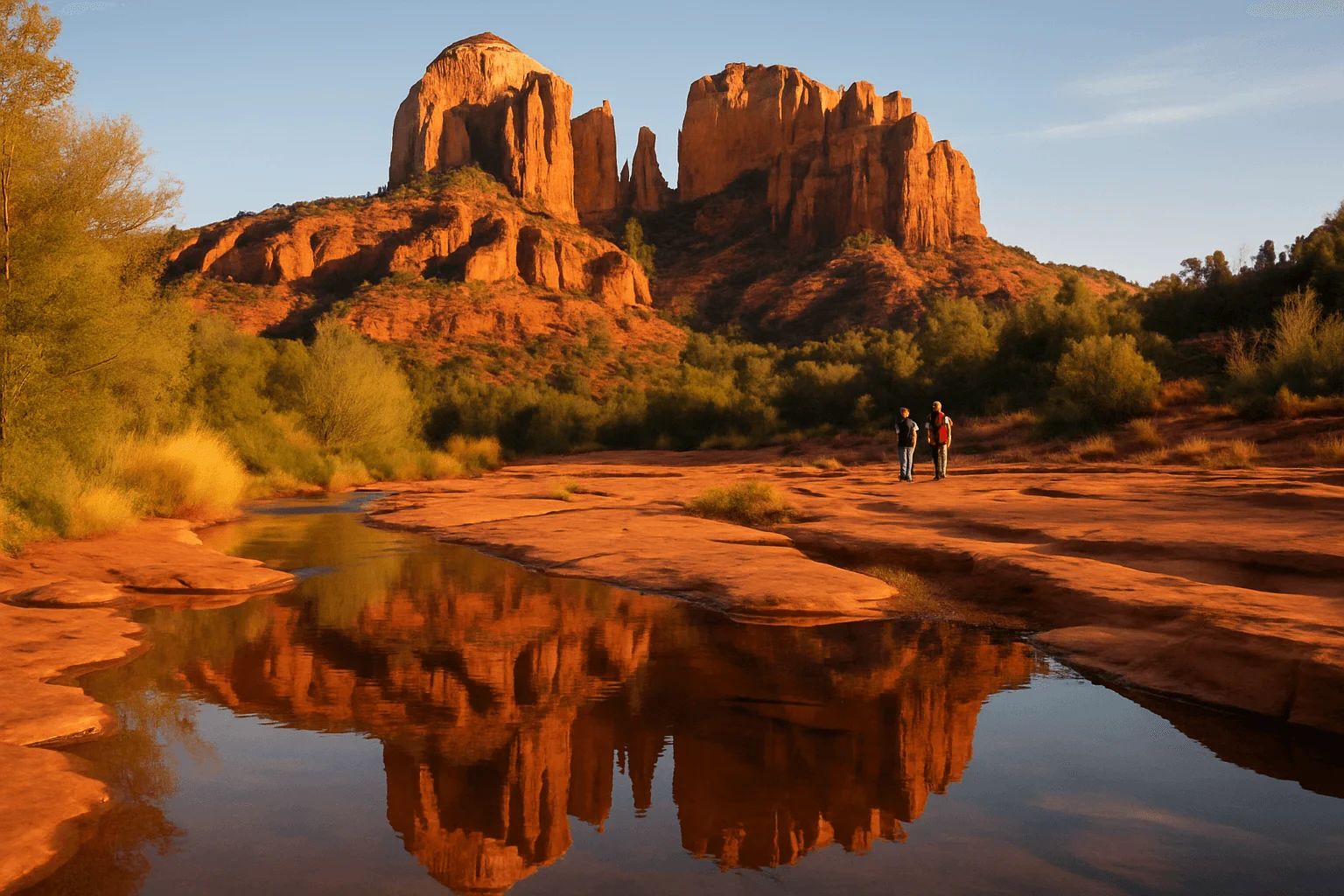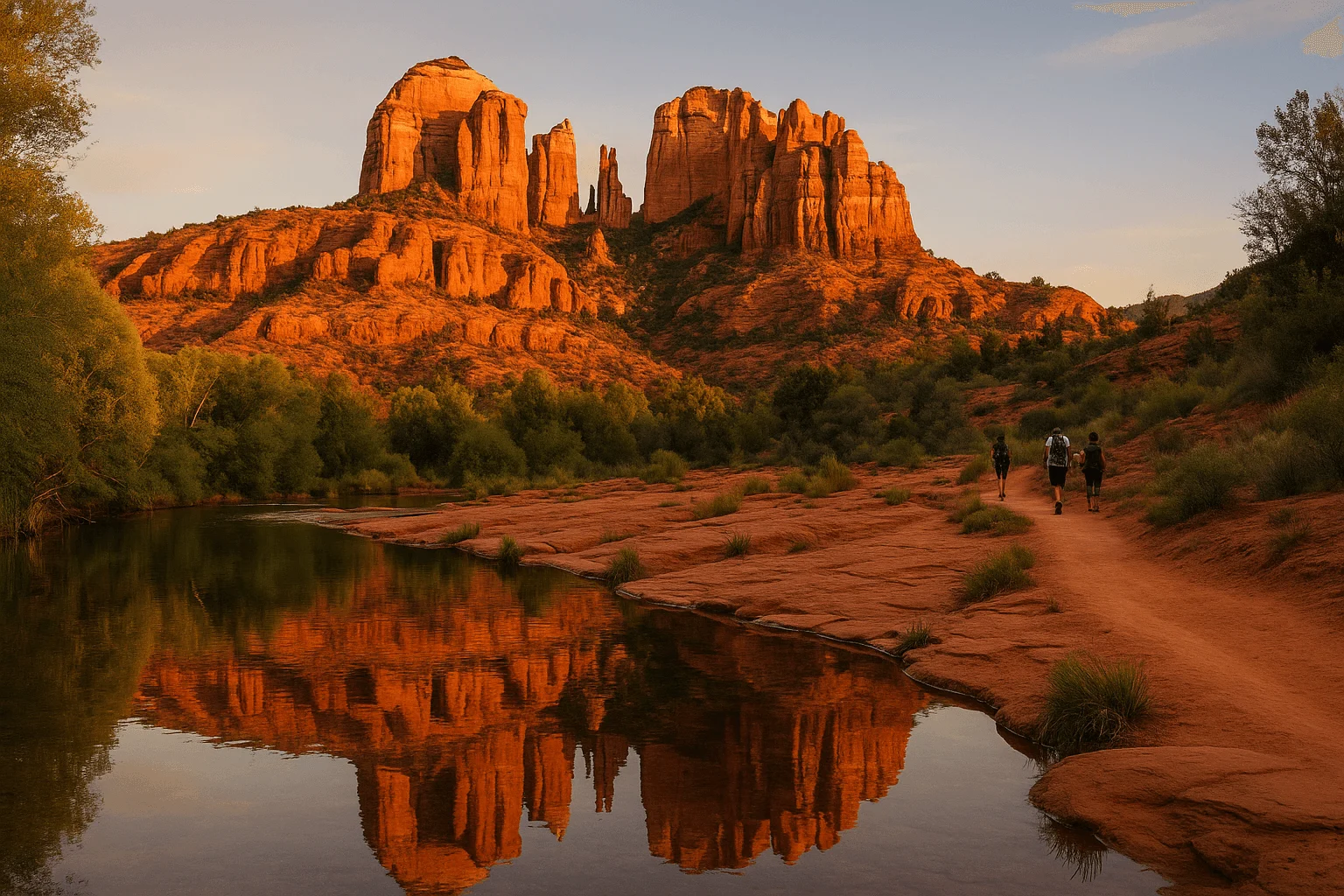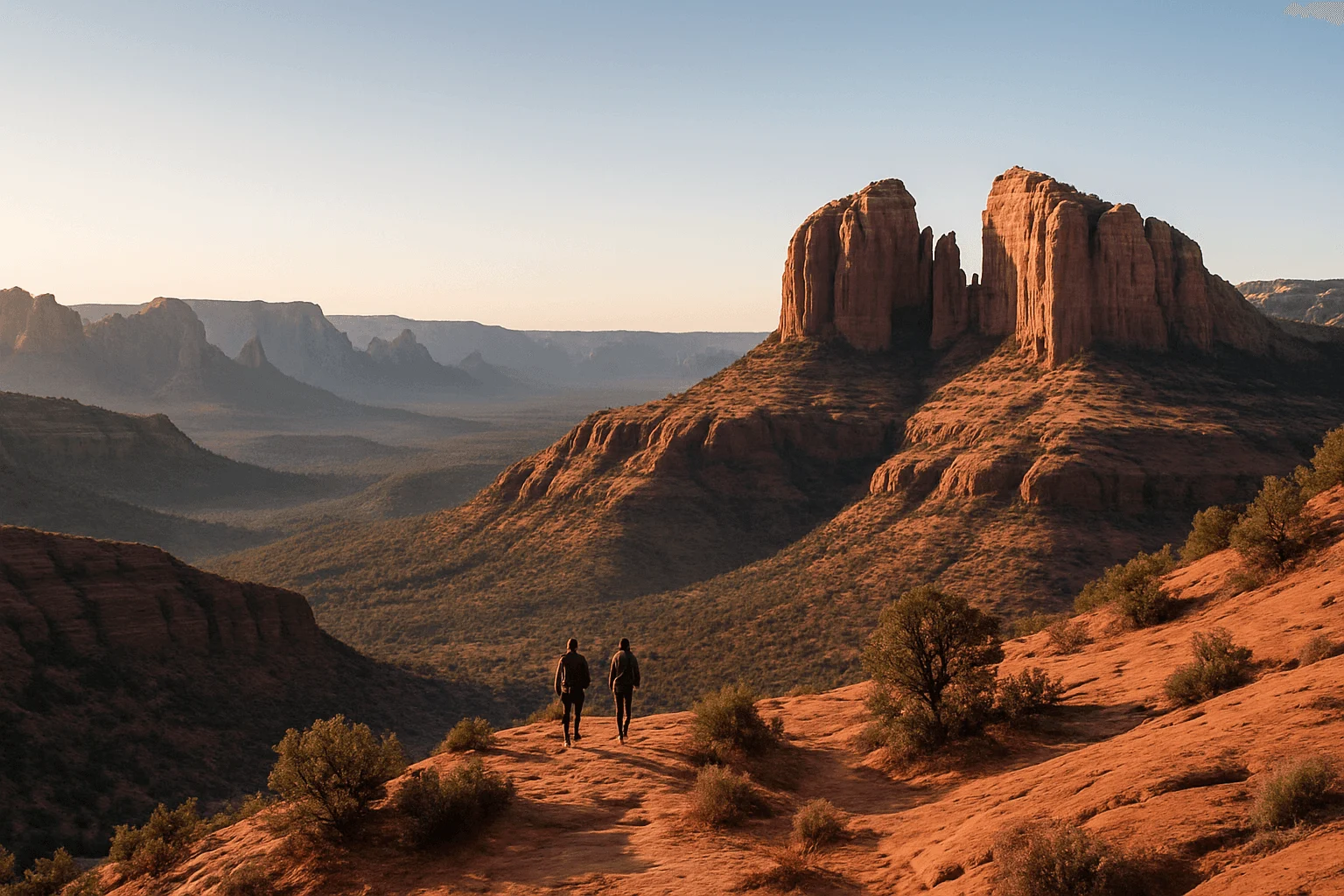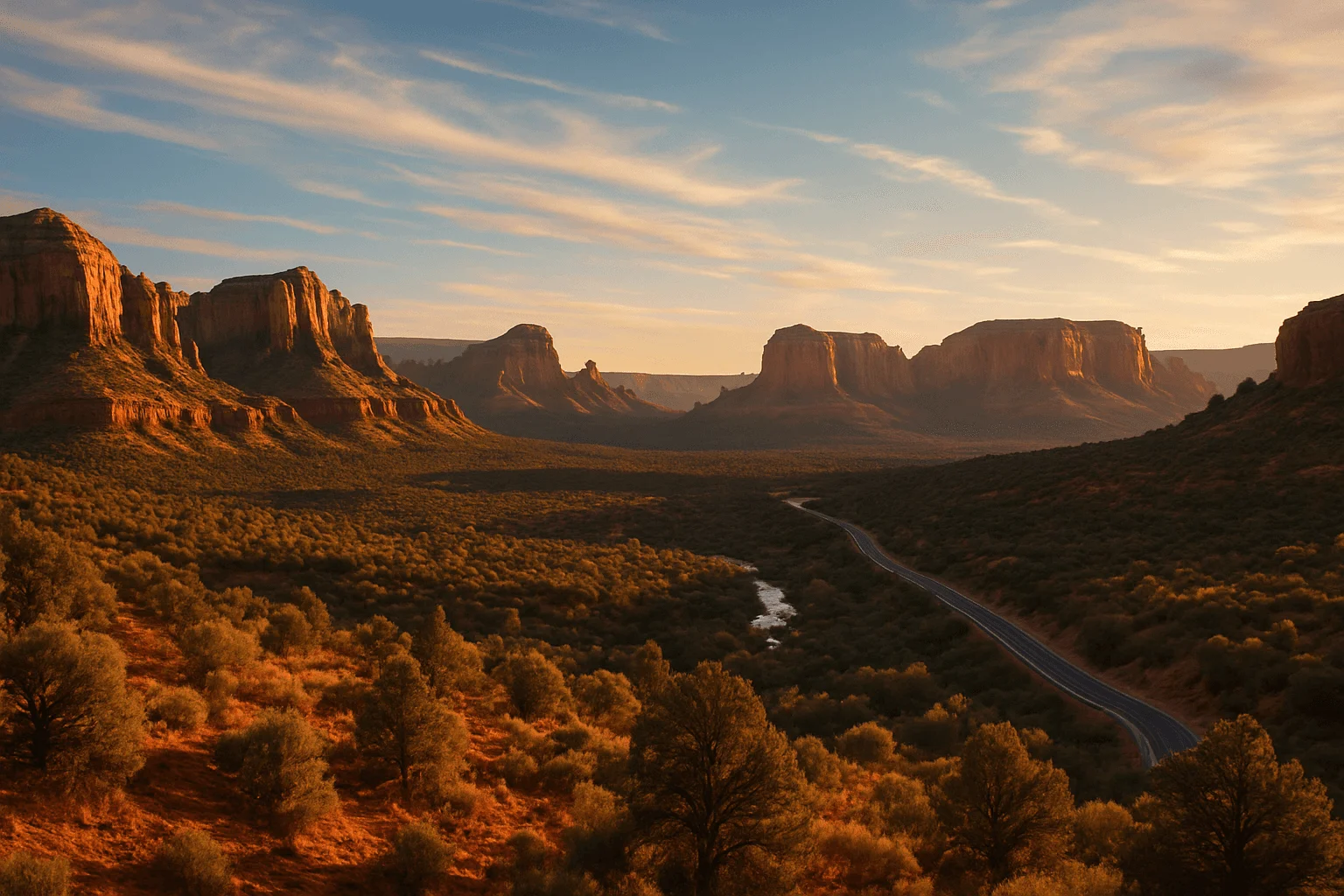
Choose a day trip that leaves time to enjoy the destination
For a first visit beyond Sedona, choose the Grand Canyon South Rim if the big landscape is your priority, Jerome with Cottonwood for a less demanding day of history and browsing, or Flagstaff for a mountain-town change of pace. Montezuma Castle is the easiest compact cultural stop on this list. Page and Antelope Canyon are possible in a day, but they ask for a very early start and a much longer return drive.
The “within four hours” in this guide means one-way driving in ordinary conditions, not the whole outing. Estimates use central Sedona, around the visitor center at 331 Forest Road, before fuel stops, entrance queues, parking and sightseeing. They are planning ranges, not promised arrival times; your hotel location and traffic can change them.
Keep one main destination for the longer days. Northern Arizona's parks reward time outside the car: a second view from the canyon rim, the details in a pueblo wall, or a walk among the pale bands of Blue Mesa. Rushing three parks into a route can leave you with less of that experience than a thoughtful visit to one.
Big landscapes worth a full day
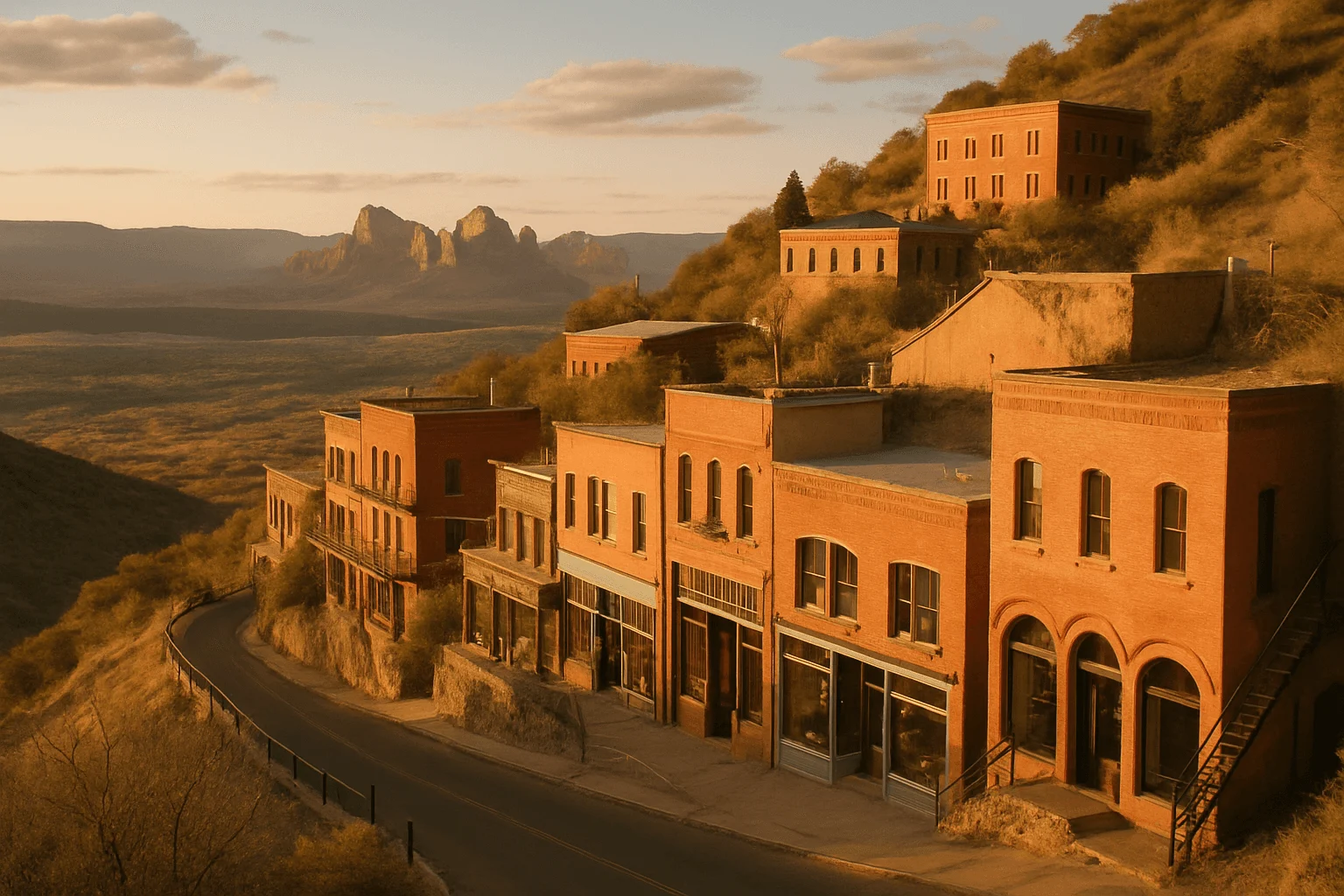
1. Grand Canyon South Rim: the strongest choice for a first canyon view
Allow about 2¼–2¾ hours each way to Mather Point at the South Rim, then leave several hours there. The route via Flagstaff, I-40 and SR64 is about 114 miles from central Sedona; another paved option uses US180. The national park's own broader Sedona directions list roughly 119 miles. Use the actual endpoints and current road conditions rather than aim for a best-case arrival time.
Start around Mather Point and Yavapai Geology Museum, with a rim walk that suits your group. This gives the canyon time to become more than a single photograph. If you want another part of the rim, use the current NPS shuttle map. Hermit Road is closed to ordinary private vehicles March–November; shuttle waiting and riding belong in your schedule. Desert View is a separate drive along the rim, not a stop beside Mather Point.
Check the current entrance fees and pass rules, especially for non-US residents: NPS currently lists an additional $100 fee per visitor aged 16 or older unless covered by an applicable annual or America the Beautiful pass. Entry itself currently has no timed reservation. A rim-focused day is more realistic after the drive than an ambitious hike deep into the canyon.
2. Page: Antelope Canyon and Horseshoe Bend, with the tour setting the day
Plan about 3–3½ hours each way to the Page area; Horseshoe Bend is roughly 159 miles from central Sedona. With two long drives, a canyon tour, its check-in and a meal, this is a full-day commitment. It works better overnight if you'd also like Lake Powell time rather than fit the entire region into one Sedona excursion.
Antelope Canyon requires an authorized guided tour. Upper, Lower and Canyon X are different products with different meeting places and physical demands. Use the Navajo Nation's operator list and confirm the chosen canyon, check-in time, stairs or walking requirements, weather terms and which fees are included. Follow the operator's stated clock: Navajo Nation and Arizona time practices can differ in summer, and a phone may change automatically near the boundary.
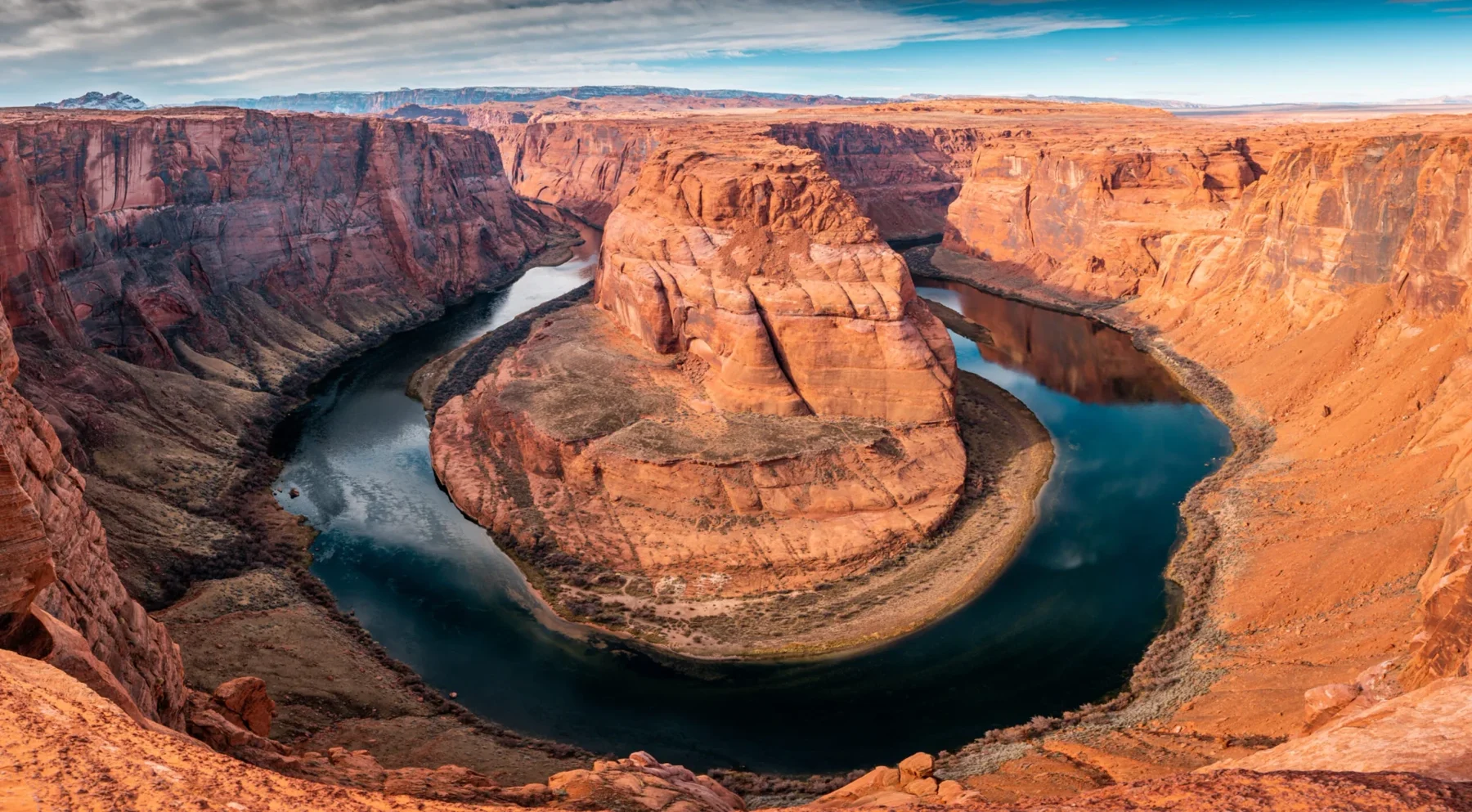
Horseshoe Bend is a separate 1½-mile return walk from its paid parking area, with little shade and exposed parts of the rim. National park passes do not cover that city parking charge. Place the walk around your reserved tour and the day's heat; it is not a roadside photo stop you can finish without leaving the car.
If you'd prefer someone else to manage the long drive, Grand Canyon Adventures' Antelope Canyon and Horseshoe Bend day tour is a relevant alternative. The roughly 10-hour outing includes Sedona hotel pickup and return, a picnic lunch, water and listed entrance fees; gratuities are extra. The supplier may use Upper or Lower Antelope Canyon depending on weather and crowds, so confirm rather than assume a particular canyon. It is for ages 5 and older, requires moderate fitness and about 1½ miles of uneven walking, and is not wheelchair accessible. Review its medical restrictions and your confirmed pickup instructions before booking.
View Antelope Canyon and Horseshoe Bend tour dates on Viator →
3. Petrified Forest: Painted Desert overlooks and a landscape unlike Sedona
Allow about 2½–3 hours each way to the Painted Desert Visitor Center at the north entrance, roughly 144 miles via I-40, plus the drive and stops inside. Choose this if the contrast appeals to you: broad badlands, petrified logs and ancestral Puebloan sites, rather than another canyon rim. Plan several hours in the park so the trip includes time on foot.
The NPS directions distinguish the north entrance off I-40 from the south entrance off US180. The park road between them is 28 miles. Put the intended entrance into your route, then account for the exit when planning the return; a generic pin can point to an inconvenient or incorrect back road.
Combine Painted Desert overlooks with a selected walk. Blue Mesa is a one-mile loop with a steep beginning; Giant Logs is a 0.4-mile loop with stairs behind Rainbow Forest Museum. Neither should be called accessible just because it is short. The current park-road hours are 8 a.m.–5 p.m., with Thanksgiving and Christmas closed. Bring food and water, finish before the gate closes, and leave every piece of petrified wood where it belongs.
Verde Valley history without an all-day highway trip
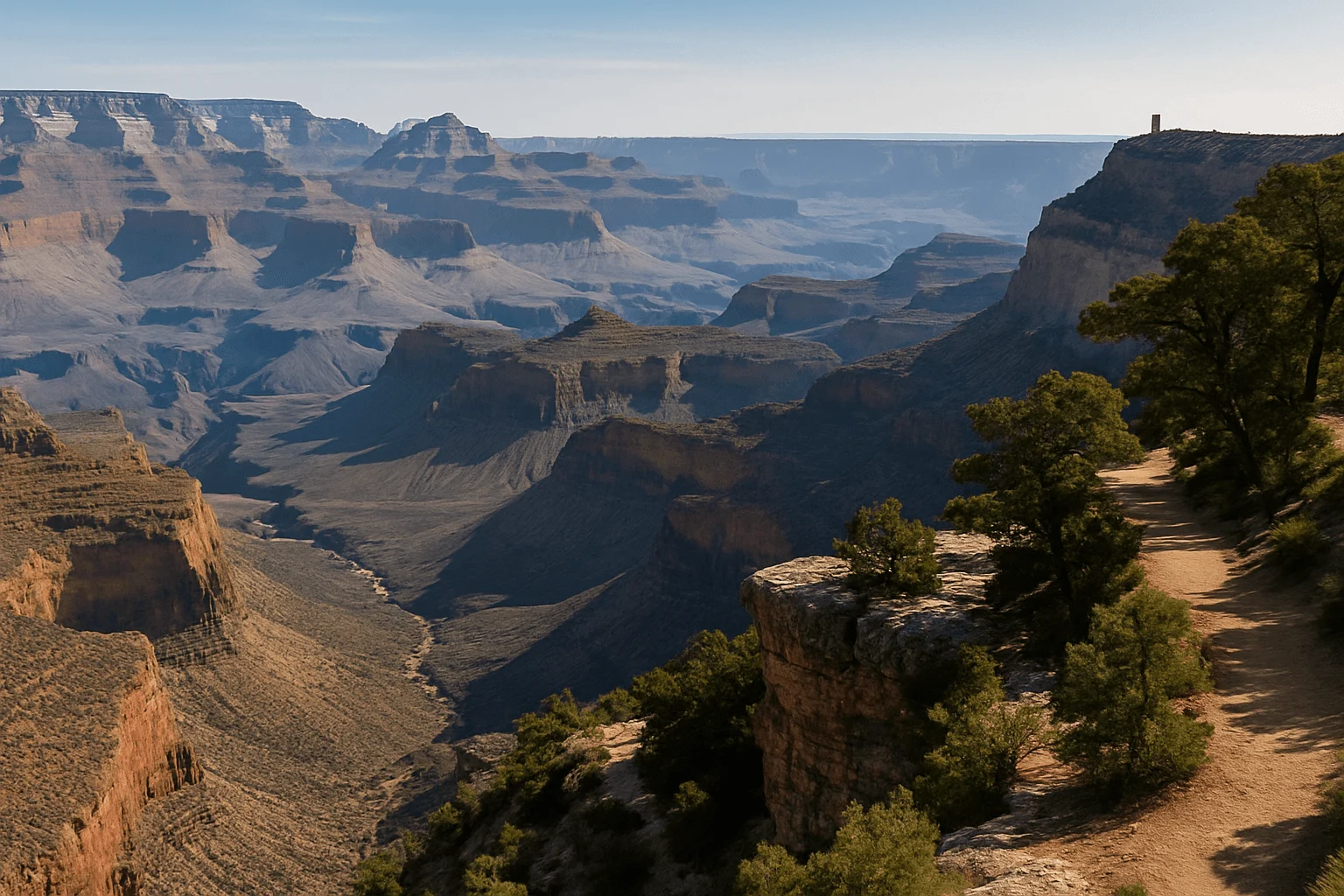
4. Jerome: mining history, hillside galleries and a slow browse
Plan roughly 45–60 minutes each way via Cottonwood and Clarkdale, about 28 miles to Jerome State Historic Park. Jerome is a good half-day choice if you'd like lunch, galleries and valley views rather than another major hike. The town is on a steep hillside; the browsing is compact, but the streets and stairs make it a different outing from a flat shopping plaza.
Jerome State Historic Park, at 100 Douglas Road, gives the day a useful starting point. The Douglas Mansion museum explains the mining community through artifacts, photographs and a model of the underground workings. Current regular hours are 9 a.m.–4:30 p.m., with separate holiday hours and state-park admission.
After the museum, choose a modest stretch of town to explore rather than hunt for parking beside every shop. Cottonwood makes a sensible lunch or tasting-room companion on the same approach. If wine is part of the afternoon, arrange a driver who won't drink. Jerome doesn't need to be bundled with every Verde Valley monument to feel like a full outing.
5. Montezuma Castle and Well: two sites with very different walking conditions
Allow roughly 35–50 minutes each way to Montezuma Castle near Camp Verde, about 25 miles via SR179 and I-17. The main visit pairs a small museum with a 0.3-mile paved loop beneath the cliff dwelling. It is a useful choice for a short cultural outing: see the building from below, read the interpretation and take time in the sycamore grove.
The Castle's main loop is wheelchair and stroller accessible, although the Castle A spur has a grade. The view is from the ground, rather than a climb inside the cliff dwelling.
Montezuma Well is a separate unit about 11 miles away, worth considering for the water landscape and irrigation story. Its paths have stairs and uneven stone; it is not a second equivalent accessible loop. The Well has no entrance charge. The Castle's current $10 adult admission also covers Tuzigoot for seven days; children 15 and under are free. You can use that shared ticket on another day rather than rush both sites into the same afternoon.
6. Tuzigoot and Cottonwood: a pueblo visit followed by a town lunch
Allow about 35–50 minutes each way to Tuzigoot near Clarkdale, roughly 23 miles via SR89A, following the signed national-monument approach. Its hilltop pueblo and museum make a natural pairing with Old Town Cottonwood. Start with the exhibits, then walk the permitted route through the pueblo to understand the building and its setting above the Verde Valley.
The 0.3-mile Pueblo Trail is paved but has steep grades, and the citadel roof requires stairs. For visitors using wheelchairs, the accessible museum and Marsh Overlook Trail, 0.4 mile one way, offer a different way to appreciate the setting. Ask the visitor center about the appropriate route rather than assume paved means level.
There is little shade, so a morning visit can make more sense than a hot midday climb. Leave time for Cottonwood afterward, or choose Jerome as the extra stop if mining history interests you more. The park's current guidance says the parking gate locks at 5 p.m.; don't turn a late marsh walk into an uncertain exit.
Mountain towns, cliff dwellings and a volcanic loop
7. Walnut Canyon: choose the trail before choosing this outing
Allow about 60–75 minutes each way to Walnut Canyon's visitor center, east of Flagstaff, roughly 40 miles via Oak Creek Canyon and Flagstaff. The I-17 alternative is longer, around 68 miles. This is a rewarding choice for the cliff dwellings and canyon setting, with one important decision: are you looking for a rim view or a strenuous stair walk?
The Island Trail is roughly a one-mile return route descending into the canyon. NPS rates it strenuous and counts more than 700 stairs across the route; the climb back out is part of the visit. Entry to that trail closes at 4 p.m. so visitors can finish before the park closes. Snow or ice can close it in winter.
The 0.7-mile return Rim Trail is the easier, fairly flat paved alternative, with overlooks; the visitor center also has an accessible viewpoint. Pets are allowed on the Rim Trail but not the Island Trail or inside the visitor center. Choose the route that suits the whole group, then keep Flagstaff lunch as a flexible addition.
8. Flagstaff: a town day that can become an astronomy evening
Plan roughly 45–60 minutes each way to downtown Flagstaff via SR89A, about 30 miles through Oak Creek Canyon. When conditions suit, the scenic drive is part of the day. The I-17 alternative is closer to 58 miles and can take over an hour. The mountain setting brings a different feel from Sedona's red rocks; check the actual forecast and bring layers.
Keep the daytime visit simple: historic downtown, Route 66, lunch and a museum or chosen activity. Use the current ParkFlag map and posted parking rules; city-managed and private lots have different arrangements. A museum afternoon and three nearby national monuments are more than a small add-on to a leisurely town visit.
For astronomy, Lowell Observatory is on Mars Hill west of downtown, with science exhibits and telescope viewing around sunset when conditions allow. It currently closes Tuesdays. Staying for evening viewing changes the trip: bring layers and plan the return drive after dark, rather than put stargazing into a daytime-only schedule.
9. Prescott: the courthouse square and Granite Dells
Allow about 1½–2 hours each way to downtown Prescott, depending on route. The I-17 approach is roughly 67 miles; the winding route through Jerome and Mingus Mountain is about 62 miles but takes longer. Choose Prescott for a town-centered day with Courthouse Plaza, Whiskey Row and a meal, plus a different outdoor landscape if you'd like one.
Watson Lake, about four miles from downtown, brings water and the granite boulders of the Dells into the day. Visit for the scenery, a selected walk or a planned paddling rental. Swimming is prohibited; this is not a swimming alternative to Oak Creek.
The city currently lists $5 parking and seasonal hours at the lake. Pick a route from its map that matches your ability rather than assume every lakeside trail is a smooth promenade. Leave a generous return window if you're using the winding mountain route, especially in winter weather.
10. Sunset Crater and Wupatki: volcanic scenery and ancestral pueblos
Give these two monuments north of Flagstaff their own day. Dark lava and pine forest around Sunset Crater contrast with the open country and ancestral Puebloan buildings at Wupatki. The usual paved scenic route is the 35-mile Sunset Crater–Wupatki Loop Road, about an hour's driving before walks and stops, but current roadwork changes the approach.
September 2026 access update: NPS has closed the southern stretch of FR545 through October 21 for culvert work, with reopening expected October 22. Sunset Crater's visitor center and trails remain accessible through Wupatki. For a paved approach, use US89 to Wupatki's northern entrance, then continue south through the monuments; return through that northern entrance while the southern road remains closed. Allow extra driving time rather than assume the usual loop is open. The FR776 alternative is unpaved, with high clearance recommended, and is unsuitable for RVs and trailers. Check the latest park notice before leaving.
At Sunset Crater, the Lava Flow Trail has a paved, accessible upper quarter-mile loop within the longer one-mile route. You can see the lava without committing to a bigger hike. At Wupatki Pueblo, the first paved overlook provides a view of the building behind the visitor center; stay on designated paths and off the walls.
The two visitor centers are about 19 miles and 30 minutes apart, before any intermediate stops. One current $25 private-vehicle entry covers both monuments for seven days. Leave several hours for the places themselves, and make this a separate outing from the Grand Canyon so the extra driving does not squeeze out the visit.
Build a day that gets you back with energy left
For a shorter outing, choose Jerome and Cottonwood, Tuzigoot and Cottonwood, or Montezuma Castle with the Well. The shared Castle–Tuzigoot ticket is convenient, but those sites are not next-door neighbors. For a mountain day, choose Walnut Canyon with a Flagstaff meal, or give Sunset Crater and Wupatki their own loop. The Grand Canyon, Page and Petrified Forest each deserve a separate day.
Check AZ511 road conditions and the destination's official alerts before departure. Snow at the higher elevations can change a winter plan, while summer thunderstorms can interrupt exposed walks and slot-canyon tours. Download the route and useful park maps before leaving reliable service, and carry water, food and enough fuel for the return.
Keep fees separate in your budget. An America the Beautiful pass can cover qualifying NPS entry; it does not cover an Antelope Canyon tour, Arizona state-park admission or Horseshoe Bend's city parking. Grand Canyon's current resident and nonresident rules also need their own check.
If you return from a Verde Valley half-day while shops are open, Mi Amoré Sedona at 100 Brewer Road makes a pleasant last stop for a gift or a home-and-garden find. It is open daily 10 a.m.–4:30 p.m., so save it for a shorter outing or another Sedona day rather than squeeze it into the end of a late Page return.
For time closer to town, see Sedona without hiking. If you are still deciding how much of the trip to spend elsewhere, our guide to choosing the number of Sedona days helps keep the red-rock part of the visit from disappearing into the drive.
GOOD TO KNOW