For bird watching in Sedona, start at Sedona Wetlands Preserve if you want open-water views and a flexible walk, or Red Rock State Park if you would enjoy a naturalist-led introduction. Bubbling Ponds, in nearby Cornville, makes a worthwhile third choice when you have time for a separate outing along the lower Oak Creek corridor.
These places offer a different pleasure from reaching a famous viewpoint. You might spend ten minutes following one bird through the reeds, notice a duck disappear behind a clump of grass, or finally connect a familiar call with the bird making it. There is something satisfying about a morning whose highlight is small enough to miss when you are walking quickly.
You do not need a long species list to enjoy it. This guide helps you choose a place, understand the practical differences and give yourself a good chance of noticing more. Access information was checked October 28, 2026; birds, weather and operating arrangements can change.
Choose the kind of birding morning you want
Choose the wetlands for an unhurried first try. You can watch across ponds, pause at a viewing area and decide how much walking feels right. The open water gives you somewhere obvious to look, which helps when the question is still, “Where are all the birds?”
Choose Red Rock State Park for a little guidance. Its scheduled bird walks offer the company of someone who knows the habitat, while the visitor center and connected trails make it possible to build a longer nature outing around the walk.
Choose Bubbling Ponds for a dedicated nearby excursion. This is outside Sedona in Cornville, with a nature loop and viewing areas around a working hatchery landscape. It deserves its own time rather than being squeezed between two appointments in Uptown.
For a first visit, pick one. A relaxed hour looking carefully can be more enjoyable than driving between three sites and spending most of the morning finding the next parking lot. Residents can return to the same spot in another season; visitors can leave the afternoon free for the rest of Sedona.
1. Sedona Wetlands Preserve: start with the water's edge
The preserve is at 7500 AZ-89A, west of central Sedona toward Cottonwood. Its roughly 27 acres are part of the city's treated-wastewater management system, with habitat that gives birds a reason to stop in an otherwise dry landscape. The purpose of a visit is watching and walking, with the water itself left to wildlife.
Follow the signed preserve approach rather than entering the treatment facility. The wildlife-viewing directions describe a left turn before the reclamation-plant gate. There is no entrance charge listed for the preserve, and Northern Arizona Audubon describes gravel parking, restrooms and shaded ramadas. Bring drinking water and allow for sun on the paths; a shelter at one stopping point does not make the whole walk shaded.
Start by standing still. Look along the boundary between water and vegetation, then scan farther across the pond. The city's preserve guidance recommends mornings and evenings, quiet observation and binoculars. You can turn that into a simple routine: scan one section slowly, notice what moves, then look again before continuing.
A viewing deck overlooks the large pond, where Audubon describes ducks gathering in winter. Its sanctuary page also links to recent observations and checklists. Those are useful ways to learn what has been reported, but an entry on a list is not a promise that the bird will be waiting when you arrive.
The preserve is especially appealing if you want to try birding without committing to a long hike. You can make a viewing stop the main event. If a wheelchair, walker or stroller is part of your plan, ask about the current parking-to-viewpoint surface and any uneven sections. “Short” and “suitable for my wheels” are different questions.
2. Red Rock State Park: let a guided walk sharpen your eye
At 4050 Red Rock Loop Road, Red Rock State Park combines creekside habitat with the landscape people come to Sedona to see. This is a conservation park with an entrance fee, a visitor center and a network of trails. It works well when one person in the group is already interested in birds and another simply wants a pleasant nature morning.
The park lists guided bird walks on Wednesdays and Saturdays, welcoming both beginning and experienced birders. In September through November, the listed start is 8 a.m.; December through February moves to 9 a.m. The meeting point is the viewing deck above the visitor center. Check the official bird-walk page for your season and confirm any arrival or registration arrangements with the park before setting out.
A guided walk can make the small things more interesting. You can ask how someone noticed a bird against a busy background, what behavior helped identify it, or why one patch of trees is worth another look. There is no need to pretend you recognized the name. Asking to see the bird again is part of learning.
If you explore independently, ask staff about a manageable section near Oak Creek. The park's bird checklist points to the Kisva Trail for creekside variety. The published five miles refers to an interconnected trail network, not a single route you must complete. Choose a turnaround or loop that fits your group rather than treating every branch on the map as part of the assignment.
As checked in October, the park lists hours of 8 a.m.–5 p.m., with last entry at 4:30 p.m.; the visitor center opens at 9 a.m. Standard entrance fees are $10 for ages 14 and older, $5 for ages 7–13 and free for children six and younger. A separate individual/walk-in rate is listed at $5. Holiday hours differ, so check the current page for the day you plan to visit.
Pets are not allowed, and swimming or wading in the creek is prohibited. Accessible restrooms are listed at the visitor center and Twin Cypress area, but that does not establish the suitability of every trail. If you are choosing between this outing and a water-play day, decide that before arriving: the appeal here is observing the creek habitat from the permitted paths.
3. Bubbling Ponds: make room for a nearby nature loop
Bubbling Ponds Preserve is at 1950 North Page Springs Road in Cornville. It belongs in a Sedona birding plan because it offers another way to explore the lower Oak Creek habitat nearby, but it is a separate drive from town. The neighboring Page Springs Hatchery is a related site with a different address; use the preserve destination when planning your approach.
The setting includes ponds, creekside vegetation and mesquite habitat, with a ramada, viewing decks and places to pause. This gives the outing a different rhythm from looking over one broad stretch of open water. You can spend time watching one edge, move along the trail and find a new arrangement of branches, shade and water to study.
Arizona Game and Fish describes the Blackhawk loop as about 1.5 miles; Northern Arizona Audubon lists its Black Hawk nature trail at 1.8 miles. Allow for roughly that range and follow the current on-site route signs. Do not build a tightly timed plan around an exact mileage, especially when the point is to stop frequently.
The department lists dawn-to-dusk access and closures on Thanksgiving and Christmas. Keep to visitor areas: fish-production sections can be off limits. Also plan a restroom stop beforehand. The land manager says there are no public restrooms, while Audubon mentions a portable toilet; confirm current availability if it is essential to your visit.
For a first birding trip, the Sedona wetlands or a Red Rock guided walk may be a simpler starting point. Save Bubbling Ponds for a morning when you want to linger, or for a return visit after discovering that you enjoy looking at birds much more slowly than you expected.
What birds should you look for?
Begin with a few familiar shapes rather than a long wish list. Arizona Game and Fish includes mallards, great blue herons, belted kingfishers and black phoebes among birds recorded in the Page Springs area. Red Rock's checklist also includes mallards, black phoebes and belted kingfishers as year-round birds. These are possibilities to learn, not sightings guaranteed at any of the three stops.
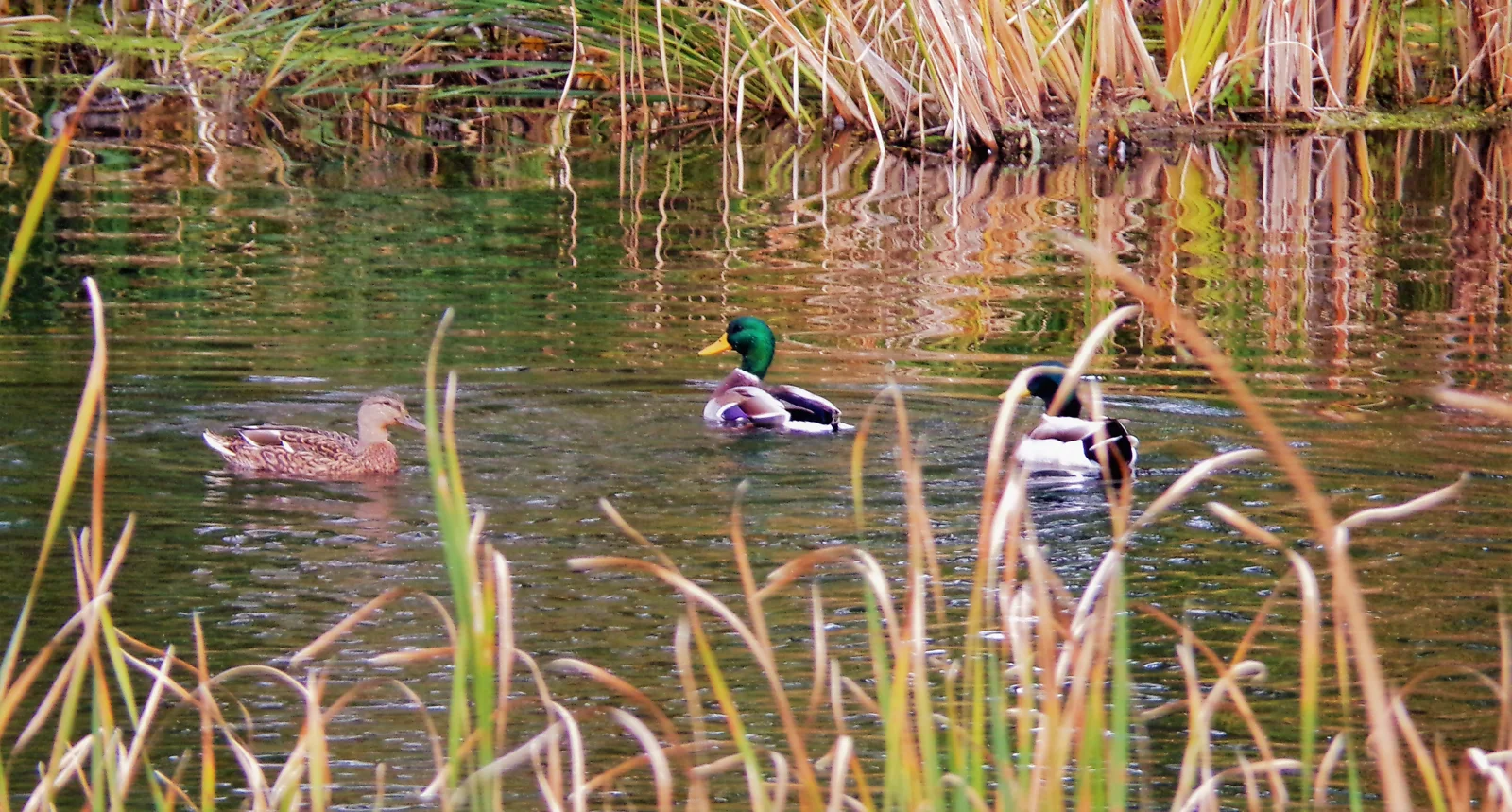
At the wetlands, compare birds already visible on the water: their size, posture, movement and the shape of the head or bill. Along a creek, look for movement against branches and shaded banks. You may hear a bird before seeing it. Give yourself time to locate it without leaving the path or pushing into vegetation.
The Red Rock bird checklist separates seasonal occurrence from abundance. It is useful background for understanding why a winter list differs from a summer one. It is not a live report. Keep your own notes about the date and habitat, and check recent observations before a return trip instead of assuming last month's experience will repeat.
When is a good time to go bird watching in Sedona?
Fall and winter give the wetlands a particular appeal for waterfowl watching; spring and fall migration can change the mix of birds using the area. The local wildlife-viewing guide also describes songbirds using pond-edge vegetation in spring and summer. There is a reason to return through the year, rather than waiting for one supposedly perfect week.
For a casual outing, start with the site's opening arrangements and the forecast, then choose a comfortable morning. The city's morning-and-evening advice is a starting point, not permission to enter outside posted hours. A guided walk's seasonal start time takes priority over an arbitrary sunrise plan.
Wind, temperature and recent weather can change how pleasant it feels to stand still and watch. Wear layers, carry water and use sun protection even if you expect a short visit. If the paths are muddy, access is restricted or the weather is uncomfortable, choose another day or enjoy one of our rainy-day Sedona ideas.
Bring a small kit and one simple observation game
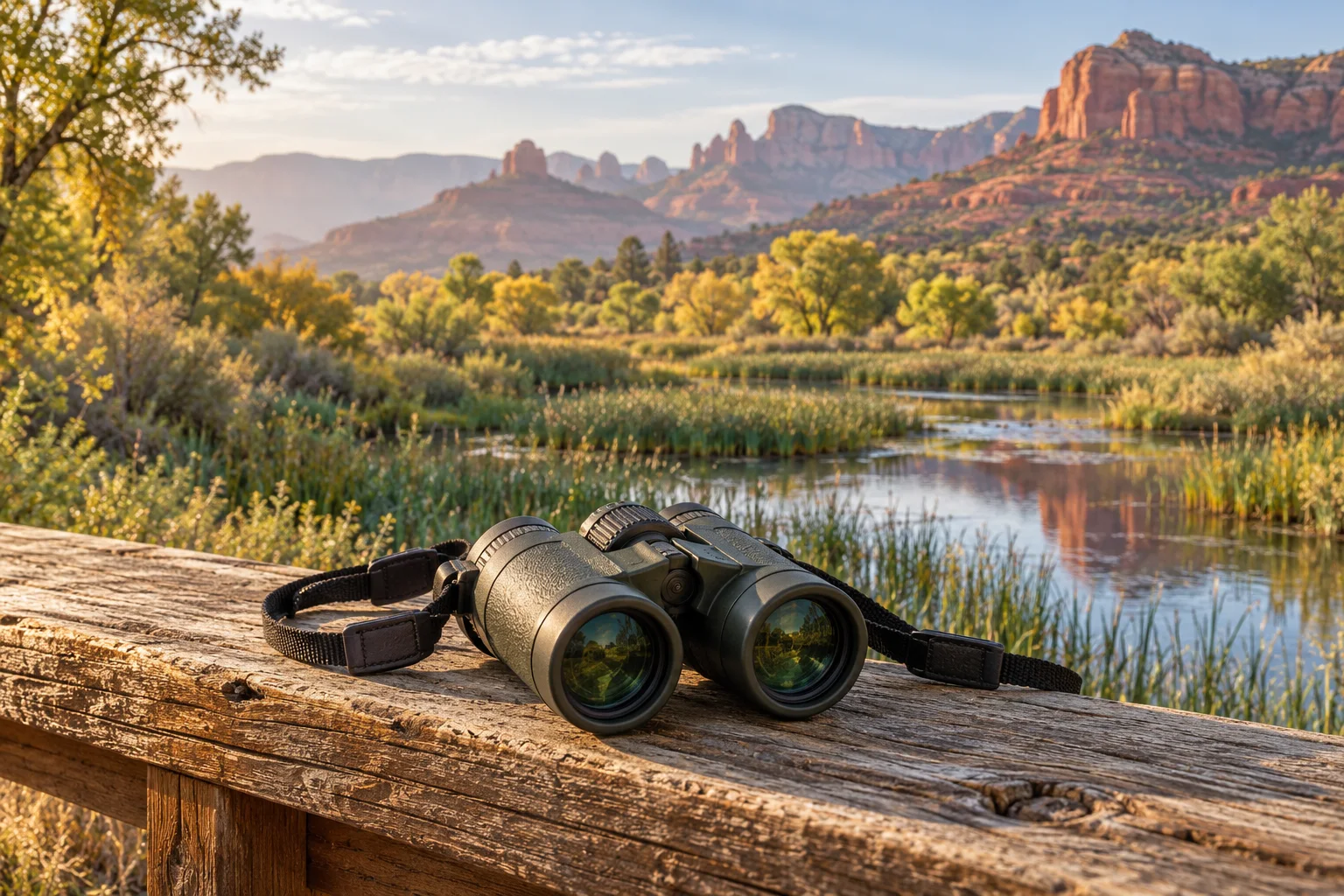
Binoculars help, but a first outing need not begin with a major purchase. Borrow a pair if possible, learn the focus controls before leaving and practice finding a stationary object. The Cornell Lab's beginner birdwatching advice explains why eight-power binoculars offer a useful balance of magnification and field of view.
Pack water, a hat, suitable shoes and a field guide or identification app you have already tried. A small notebook can be more useful than a bag full of equipment. Write down what you noticed before deciding on a name: approximate size, broad color pattern, behavior and where the bird was sitting or swimming.
With children or a friend who is new to birding, try finding three different behaviors rather than three species. Watch a bird swimming, another moving through branches and another remaining completely still. Compare what each seems to be doing. That gives everyone something to contribute without making the morning feel like a test.
If you take a photograph, use it to revisit an observation later. Let an uncertain identification stay uncertain. A note such as “small dark bird by the water, repeatedly returning to the same perch” is more useful than confidently attaching the wrong name.
Keep the outing comfortable for people and birds
Birding can involve very little walking, but access still depends on the specific location. Before going, consider the distance from parking, the firmness of the surface, slopes, shade, seating and restroom access. The questions in Birdability's access guide help you ask for details that matter to your group. A bench near a good view may be a better plan than a loop someone will struggle to finish.
Give wildlife space, stay on designated paths and keep voices low. Leave nests, feathers and other natural objects where they are. For a casual visit, leave recorded bird calls off and let the birds carry on undisturbed. The American Birding Association's ethics guidance emphasizes restraint around nests and roosts and caution when attracting or photographing birds.
Share a viewing area generously. Keep equipment out of the walking line, let other people look and ask before approaching someone else's scope. If you join a group, read the event description and registration instructions first. The city describes seasonal free Audubon outings at the wetlands, but dates and group arrangements vary; they are not a daily drop-in service.
Leave time for a relaxed Sedona afternoon
Plan the morning around one place and one flexible stopping time. Afterward, get lunch, compare notes or simply put the binoculars away and enjoy a different part of town. If you want another easygoing outing on a later day, our Sedona guide without hiking offers more ways to spend time here.
When your route brings you back through central Sedona, Mi Amoré Sedona at 100 Brewer Road is a welcoming separate stop for curated gifts and home décor in the historic Hart Store. Browse for something to take home after a morning spent noticing the details outdoors.

The best souvenir from birding may be something you recognize next time: a shape on the water, a movement in a tree or a call you once walked past. Once you have a few of those, even a familiar Sedona morning can hold something new.
GOOD TO KNOW