Spring in Sedona is three different trips
March, April and May share red rocks and longer daylight, but they do not feel identical on the trail. March gives you cool starts and an easier time with exposed hikes. April is the comfortable middle, especially if you want to mix walking and patio time. By May, an afternoon on open slickrock can feel much hotter than the pleasant morning that persuaded you to leave your jacket behind. Spring is a lovely time to come; the trick is to plan by month and by the part of town you are visiting, rather than copy a one-day list of every famous stop.
If your dates fall on a school-break week or weekend, make one trail or viewpoint the anchor of your day. Use the rest for a slower lunch, a park walk or a gallery stop. This guide gives you a weather baseline, a workable approach to the crowds, and one- and two-day plans that leave room to enjoy Sedona.
What is the weather like in March, April and May?
The 1991–2020 NOAA normals for the Sedona station put March's average daily high/low near 68°F/40°F, April's near 75°F/44°F and May's near 84°F/53°F. These are monthly averages, not a forecast for your particular week or a promise about a canyon or high viewpoint.
March: cool starts, changing conditions
March is a good match for someone who wants a substantial red-rock hike and doesn't mind carrying a layer. A shaded trail or a breezy overlook can be cold first thing, even if lunch feels warm. Of the three spring months, March has the highest average precipitation at the Sedona station, so leave a flexible half-day for a wet or muddy morning. Check the actual forecast and current trail conditions before treating a scramble as a sure thing.
April: the easiest all-rounder
April's average high sits in the mid-70s, which makes an early hike followed by a town afternoon an appealing pairing. That is also why a sunny weekend can feel busy: hikers, photographers and day-trippers all want roughly the same comfortable hours. You can still have an unhurried day if you choose one trail access plan in advance and let the afternoon be flexible.
May: start outdoors earlier
May's average high is in the low 80s, and exposed sandstone can feel more demanding than that number suggests. Put the longer, less shaded walk in the morning, carry water you will actually drink, and leave the middle of the day for food, galleries or a short park visit. Do not count on creek water as a swimming option merely because it is warm outside; park access and water conditions change independently of the air temperature.
How to handle spring crowds without spending the day in a parking line
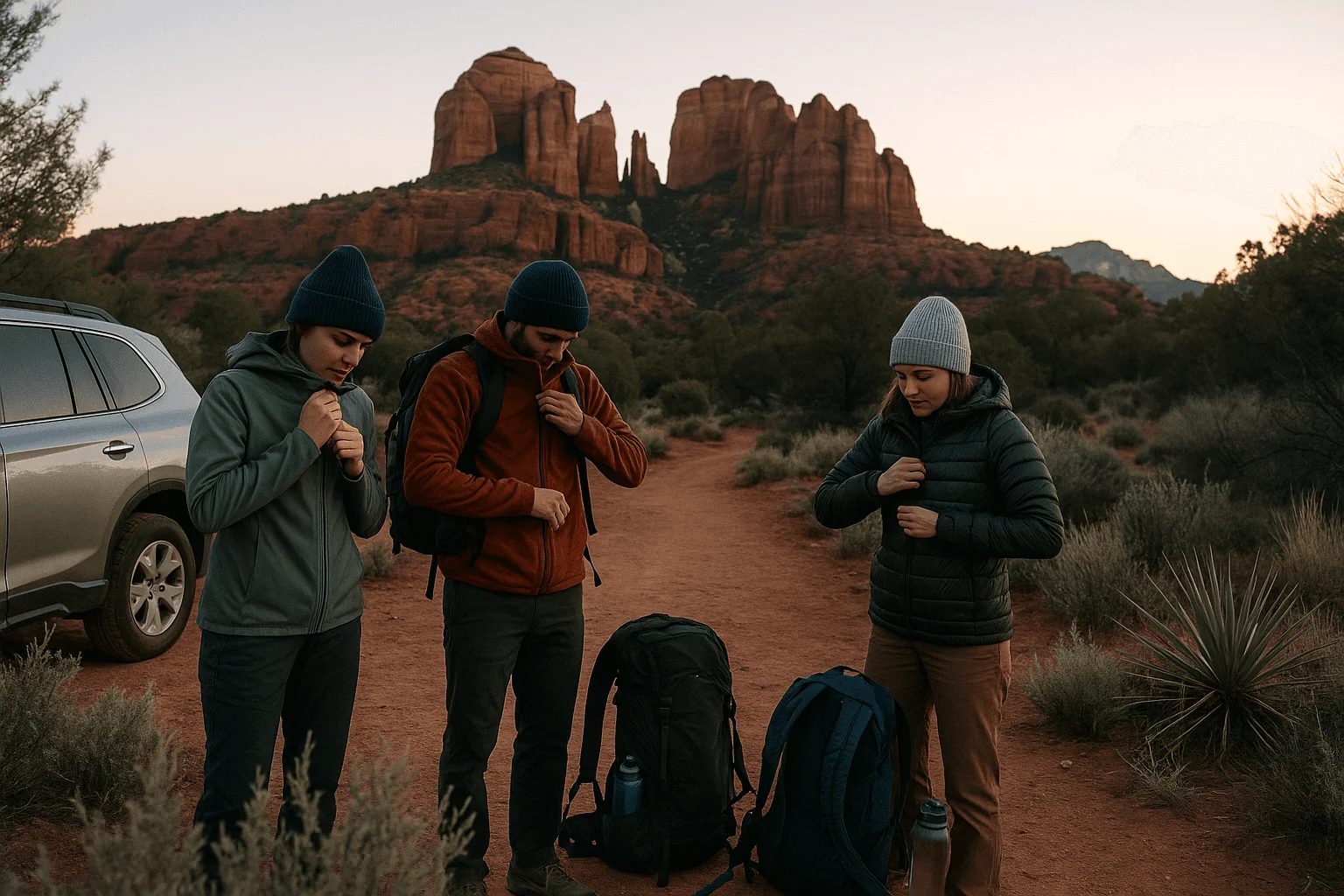
The pressure points are small trailhead lots, Oak Creek Canyon on popular days, and the scenic overlooks around sunset. Spring-break calendars vary, so there is no universal quiet week or magic arrival time. A weekday helps when you can manage one, but the useful decision is whether your chosen hike has shuttle service and whether that service changes car access.
The free Sedona Shuttle trailhead service normally runs Thursday through Sunday and can add days during spring breaks. It serves Cathedral Rock, Little Horse, Mescal and Dry Creek Vista, among other trailheads. When its Cathedral Rock route is running, the Back O' Beyond trailhead lot closes to private vehicles. Check the current route and service date before you set off; an old tip to “get there before 8” does not solve a closed lot. Dry Creek Vista is the practical shuttle start for the Devil's Bridge approach in West Sedona, not a trailhead in East Sedona.
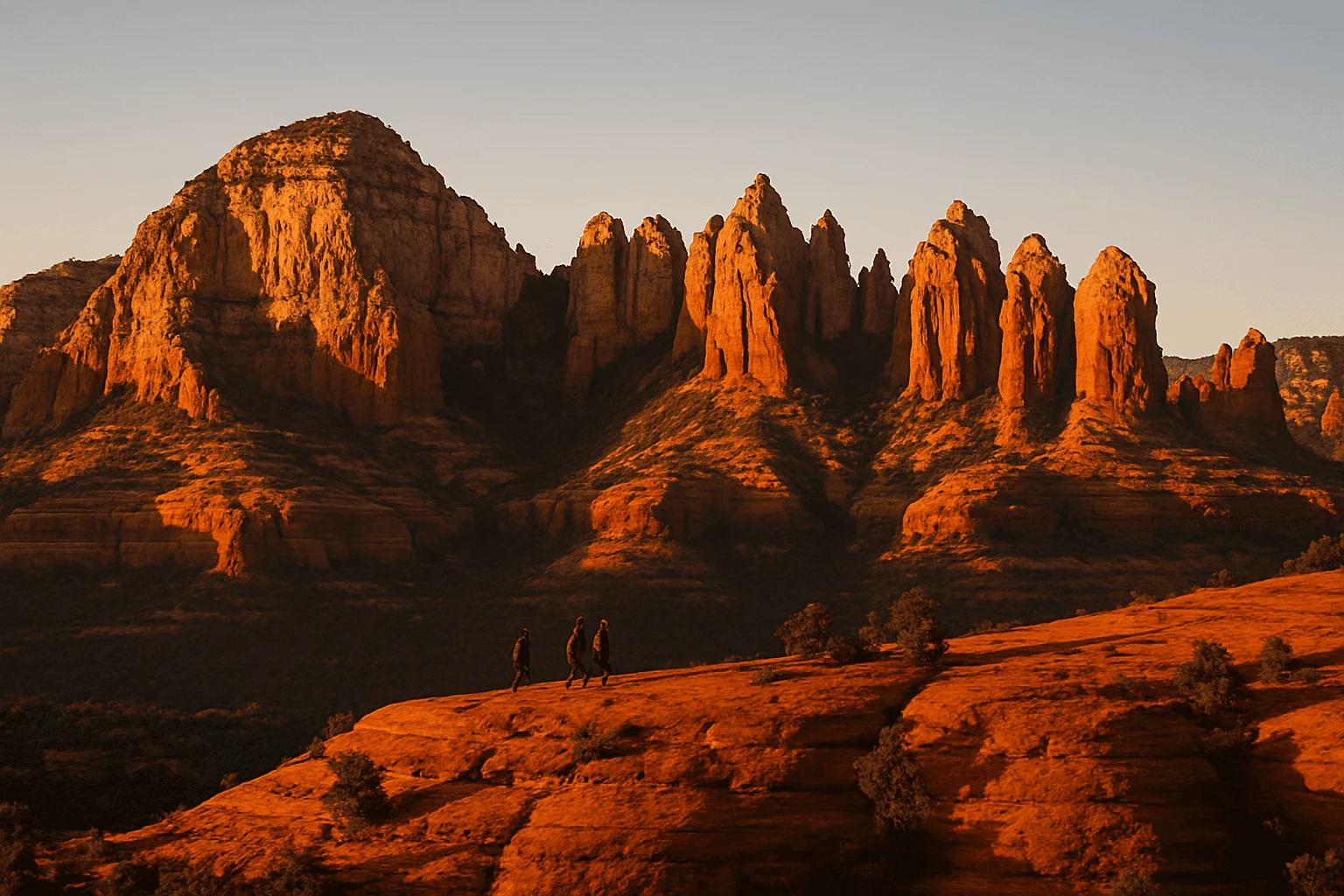
If you want a simpler day, choose an easier red-rock walk around Bell Rock in the Village of Oak Creek or the designated trails at Red Rock State Park, then return to central Sedona for lunch. These places can be busy too, but you are no longer trying to fit two headline hikes and a canyon drive into the same morning. Forest Service lots may require a Red Rock Pass or an accepted federal pass; a state park charges its own admission. Check the sign at the specific site rather than assuming one pass covers everything.
The best spring activities, chosen by the day you want
For one memorable red-rock hike
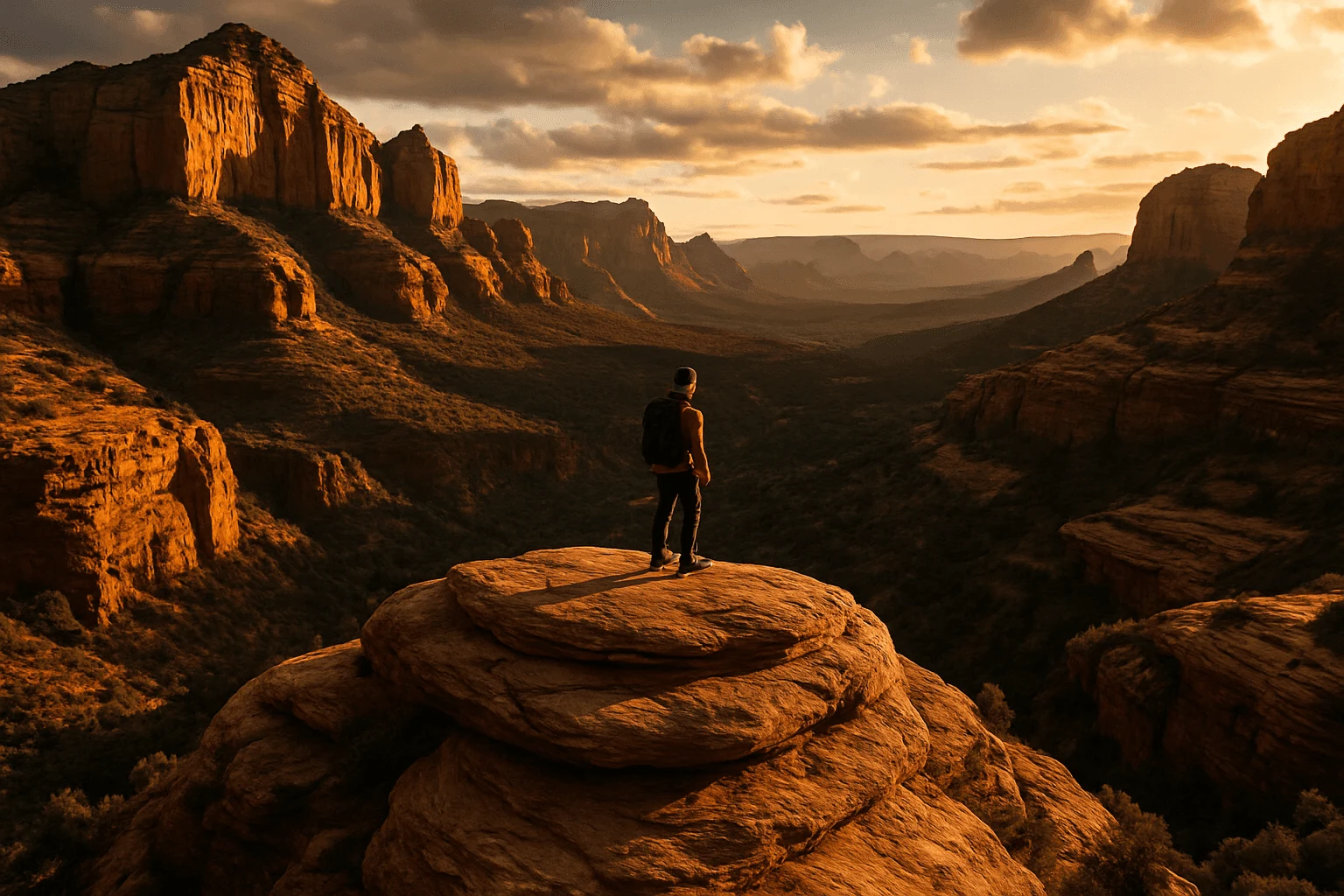
Cathedral Rock rewards people comfortable with a short, steep rock scramble to the saddle. This is a climb, not an easy paved viewpoint, and wet or slick rock is a good reason to choose something else. On shuttle days, ride from the designated park-and-ride to the Back O' Beyond trailhead; check the current Cathedral route and the return schedule before walking up.
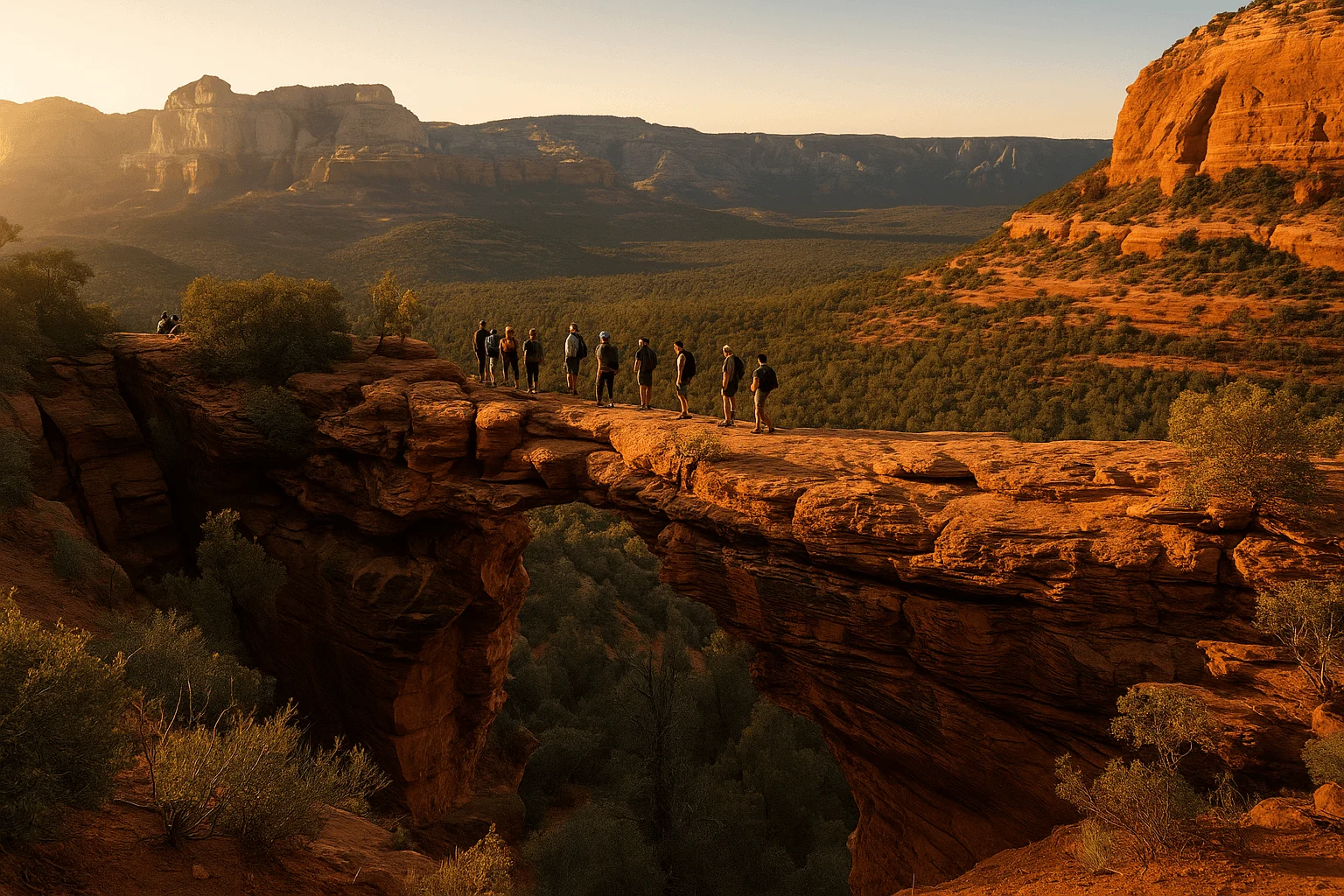
Devil's Bridge is an arch hike in the Dry Creek side of West Sedona. The distance depends on your starting point: a shuttle ride to Dry Creek Vista still leaves an approach on foot, while the rough road toward the closer trailhead is not a sensible shortcut for an ordinary rental car. The bridge itself and the approach can be crowded. Pick this as your main morning rather than squeezing it between two other hikes. The Dry Creek Vista/Mescal shuttle route is the least confusing start on its operating days.
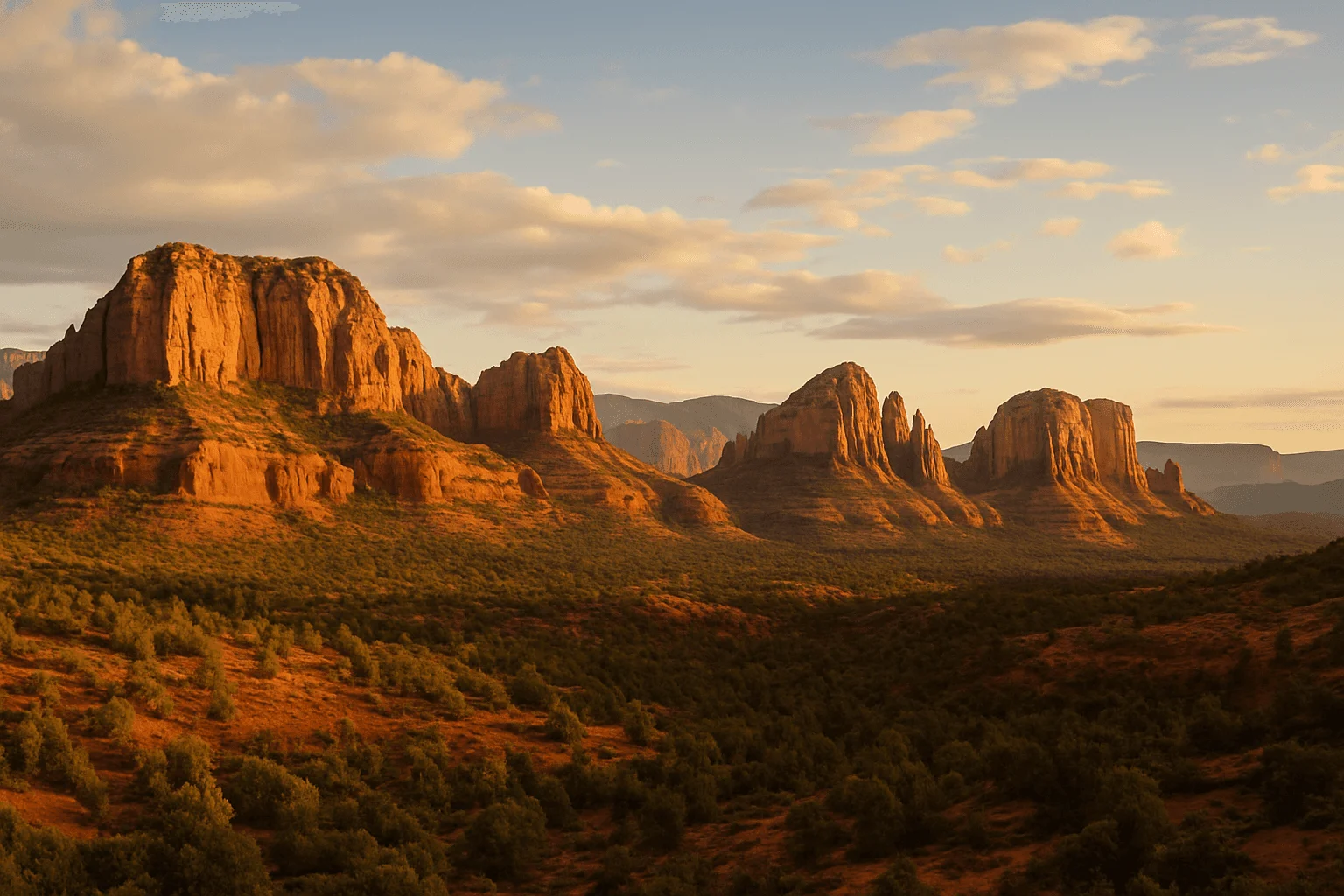
For a less committing red-rock walk, Bell Rock Pathway near the Village of Oak Creek lets you turn around when the views have satisfied you. Stay on the path rather than assuming an easy approach to the rock means an easy climb on it. If clouds or a chilly wind shorten the walk, you have still seen the open landscape that makes this side of Sedona worth the drive.
For creek shade or a gentler day
Red Rock State Park, off Lower Red Rock Loop Road, is a good change of pace when your group wants marked nature trails, birds and creek habitat rather than a summit. It is a conservation park: swimming and wading are prohibited. Its guided nature walk is included with admission when offered, first come, first served; confirm the current walk time with the park.
Slide Rock State Park farther up Oak Creek Canyon is a separate choice for a warm day, with its historic orchard and creekside setting. A state-park fee applies. Never build a spring plan around guaranteed sliding or swimming: check the park's current access and water notices, especially after storms or fire-related closures. The canyon drive, not just the park, uses part of your day.
West Fork Trail would ordinarily be a shaded creek walk with repeated crossings, not a dry-footed substitute for an exposed hike. As of September 27, 2026, however, the Forest Service has extended its closure through October 31, 2026, unless rescinded, because of post-fire flood and debris hazards. Do not set out for West Fork on the assumption that a past spring itinerary proves it is open. Recheck the official alert before any future visit; if access resumes, creek levels and the separate Call of the Canyon fee will still matter.
For a pleasant afternoon away from the trail
Tlaquepaque Arts & Shopping Village is on State Route 179, below Uptown rather than on Uptown's Main Street. Its courtyards and galleries are a relaxed way to fill the warmest part of an April or May day. Check the village's current shop hours; restaurant hours can differ. If you want to take something thoughtful home, make the short separate stop at Mi Amoré Sedona in the historic Hart Store at 100 Brewer Road. The gift shop carries curated gifts and home and garden pieces and is open daily 10 a.m.–4:30 p.m.; fit it into your daytime route, not a post-sunset plan.
For a no-trail viewpoint, the Airport Scenic Overlook can give you broad red-rock scenery, but the upper parking area is popular around sunset and has its own parking charge. A spring sunset is not worth circling repeatedly for a space; leave room for a different overlook or simply enjoy the light from wherever your evening takes you.
What to pack for spring
Bring a light warm layer for March mornings and overlooks, sun protection for every month, and shoes with grip for uneven rock. For a planned creek hike, be willing to turn back if a crossing is high or slippery rather than assuming water shoes make it safe. Carry water and snacks even on a short walk, save the route offline where cell service is uncertain, and check the day-of forecast before leaving. A May hiker needs a different start time from a March hiker; the same packing list cannot compensate for a hot, exposed afternoon.
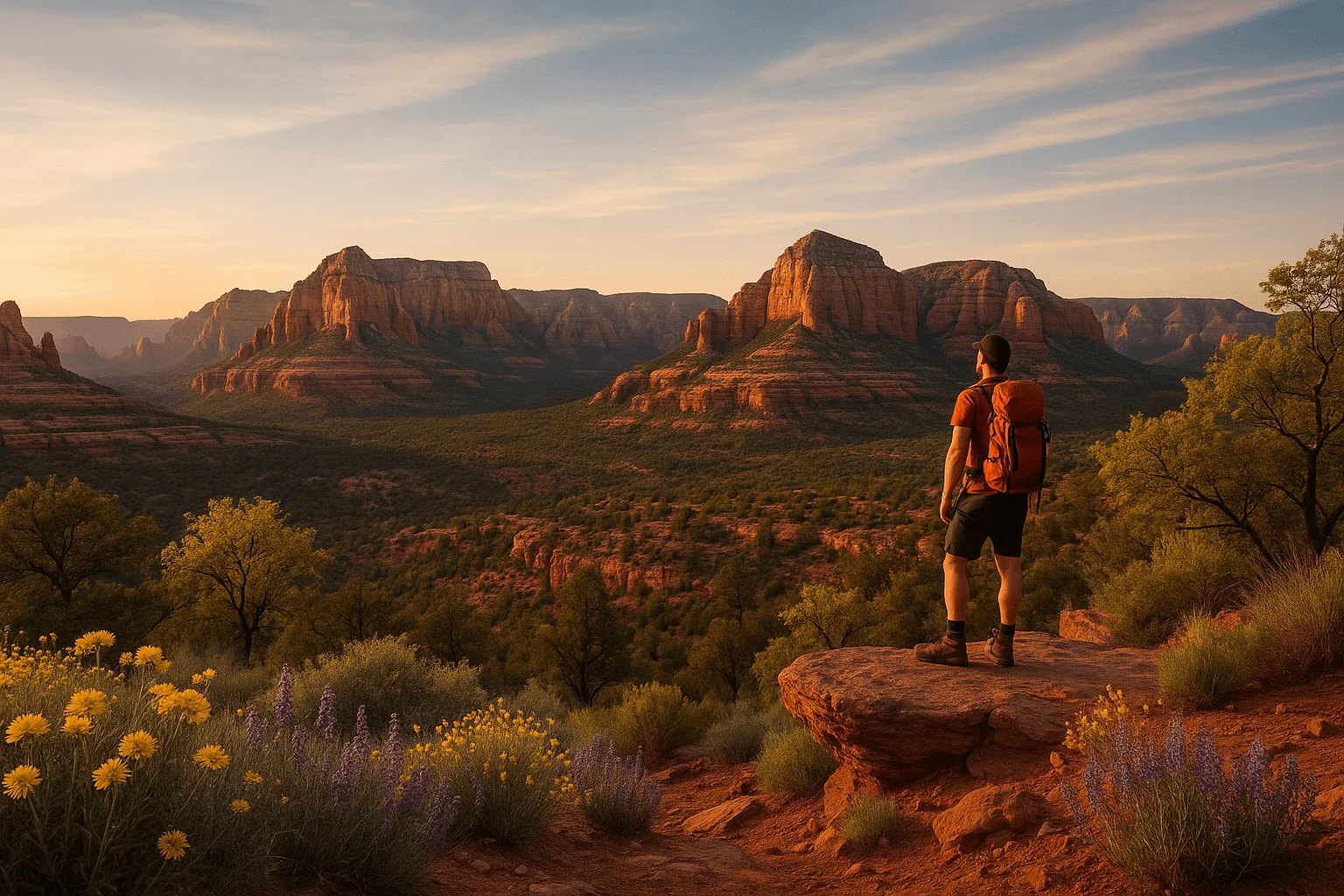
If rain is in the forecast, preserve a non-hiking option. Mud, slickrock and changing creek levels can make an otherwise reasonable trail a poor choice. Spring wildflowers and flowing water also vary by year, so treat them as a lovely possibility rather than a guaranteed attraction.
A realistic one-day spring plan
Begin with one anchor: Cathedral Rock by shuttle if you want a strenuous scramble, Devil's Bridge via Dry Creek Vista if you want the arch, or Bell Rock Pathway if you want a flexible walk. Use the morning for that choice, then have lunch near the part of town where you actually finish. Trying to add West Fork or Slide Rock to this same morning turns a pleasant day into a drive-and-park exercise.
Spend the afternoon in the Tlaquepaque courtyards and, before 4:30 p.m., stop at Mi Amoré Sedona on Brewer Road if gifts or home pieces are on your list. If you still want an evening view, check the Airport overlook or choose a dinner setting with a view; leave enough time to get there without rushing. In May, this order also keeps the exposed walking out of the hottest part of the day.
Two days gives you room to see a different side of Sedona
On day one, do your chosen Cathedral Rock or Devil's Bridge morning using the current shuttle rules. Make the afternoon a town afternoon, with galleries, a long lunch and the Brewer Road shop stop. On day two, choose a contrast: a measured walk at Red Rock State Park, or a canyon outing such as Slide Rock if current access and water conditions support it. Do not assume Red Rock State Park is a swimming park or that an older West Fork recommendation overrides its present closure.
If your spring trip is mainly about photography, swap the major hike for a sunrise or late-day viewpoint and use midday for easy walking. If your group has a slow walker or young children, Bell Rock's turn-around flexibility and Red Rock State Park's interpretive trails are more forgiving than a Cathedral saddle scramble. Your second day should feel different from the first, not like another attempt to collect every famous trailhead.
Before you leave
Check three live things: the Sedona forecast, the trailhead shuttle service for your date, and Forest Service alerts for your chosen trail. For a creek or state-park day, check that park's own current notice as well. For a different season, our month-by-month Sedona guide can help you compare. Spring is generous when you let its conditions shape the day: cool rock in the morning, a slower afternoon, and enough time to notice where you are.
GOOD TO KNOW