The best handmade gift is one you can explain when you give it: who made it, what it is made from, and why you chose it. In Sedona, start at Sedona Arts Center for work connected to named artists, Esteban's for a useful pottery gift, or Sedona Artist Market when you want to compare several media in one visit. For a Native American collectible, make artist identification and the piece's origin part of the purchase, not an afterthought.
These shops sit in three different areas. Uptown is the north SR 89A shopping district; Tlaquepaque is on SR 179 south of the main junction; West Sedona stretches farther along SR 89A. Each area can make a pleasant browse, but all three are not one compact walking loop. Choose the sort of gift first, then give yourself time to enjoy the right stop.
Uptown: start with named artists at Sedona Arts Center
Sedona Arts Center, at 15 Art Barn Road, is a particularly useful first stop if “local” matters more to you than a Sedona label printed on the item. Its gallery includes ceramics, glass, paintings, photography, fiber work and other media, with an artist directory you can read before you arrive. You can choose a piece and keep the maker's biography with the gift. The campus has visitor parking; check gallery hours and exhibitions separately.
For a concrete starting point, look at the ceramics rather than assuming the gallery is only for large paintings. Jeff Perkins works with wheel-thrown vessels and hand-built clay figures and has a long connection to the Verde Valley. Lyn and Ken Mikell describe their Cottonwood studio and their naked-raku process, in which firing leaves smoky patterns on the vessel. Their work illustrates a useful distinction: a nearby Verde Valley artist is a real regional connection, even when the studio is outside Sedona city limits.
Ask whether the pottery you are considering is decorative or intended for food and drink. A beautiful raku vessel is not automatically the right coffee mug. The gallery's online shop also says sales are final and shipping costs can change with the destination or packing required. Discuss those details before paying, especially for a fragile piece you cannot carry home yourself.
Tlaquepaque: pottery and useful handmade gifts in one browse
Esteban's: a mug or serving piece you will use after the trip
Esteban's, at 336 AZ 179, suite B103, focuses on functional and decorative pottery. The shop began with Steve and Nancy Scagnelli in 1974 and now represents a wider group of artists and craftspeople, many from Arizona and the Southwest. That makes it a good place to compare forms, glazes and how a piece feels in your hand instead of choosing only by a desert motif.
For a gift, imagine the recipient's actual kitchen: a mug comfortable to hold, a bowl suited to their table, or a small decorative vessel for a shelf. Ask which artist made the piece and where the studio is. Esteban's describes its functional pottery as suitable for everyday use, but confirm the care instructions for the exact piece; decorative work is a separate category. A set that looks coordinated may still vary because it was made by hand, which can be part of its charm.
Environmental Realists: wood, leather and copper gifts
Environmental Realists, at 336 SR 179, suite A107, is useful when your gift list extends beyond pottery. Its own site describes handcrafted wood, leather and copper pieces alongside home accents, games, garden art and jewelry. It represents a range of craftspeople, so ask about the individual maker and place of production rather than treating everything as Sedona-made.
Think about how the gift will be used: a small home object for someone who likes practical things, a game for a shared evening, or a garden piece for an outdoor space. For garden art, ask about weather exposure and finish care; for a wooden kitchen item, ask about food use and washing. Those questions lead to a better gift than simply buying the most Southwestern-looking object on the shelf.
Renee Taylor: when you want a gallery piece rather than a small souvenir
Renee Taylor's galleries at Tlaquepaque are worth a look for contemporary art and sculpture, with a separate designer-jewelry location. Use them when you want a more substantial purchase and can spend time with the artist and medium information. A Sedona gallery can represent artists from many places; confirm where your chosen work was made if supporting a local studio is the main goal. Ask about editions, dimensions, installation and delivery before committing to a large piece.
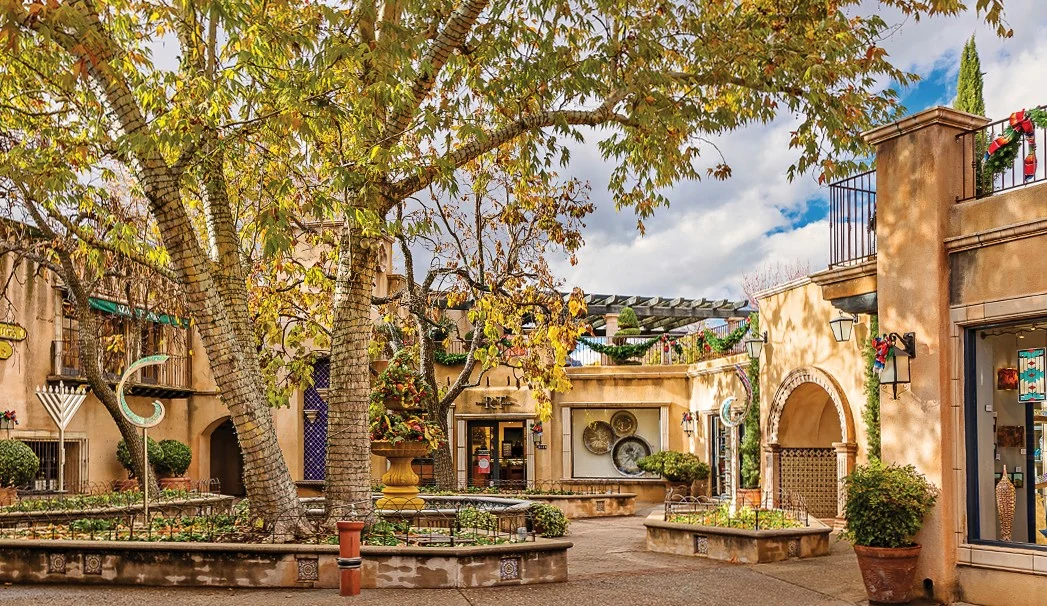
Tlaquepaque North and South are at 313 and 336 SR 179, with a village map to locate specific suites. Its limited free parking is for village visitors. Use that parking for your Tlaquepaque browse and respect posted rules rather than leaving the car there for an unrelated all-day outing. Individual shops and restaurants can keep different hours.
A nearby curated gift stop at the historic Hart Store
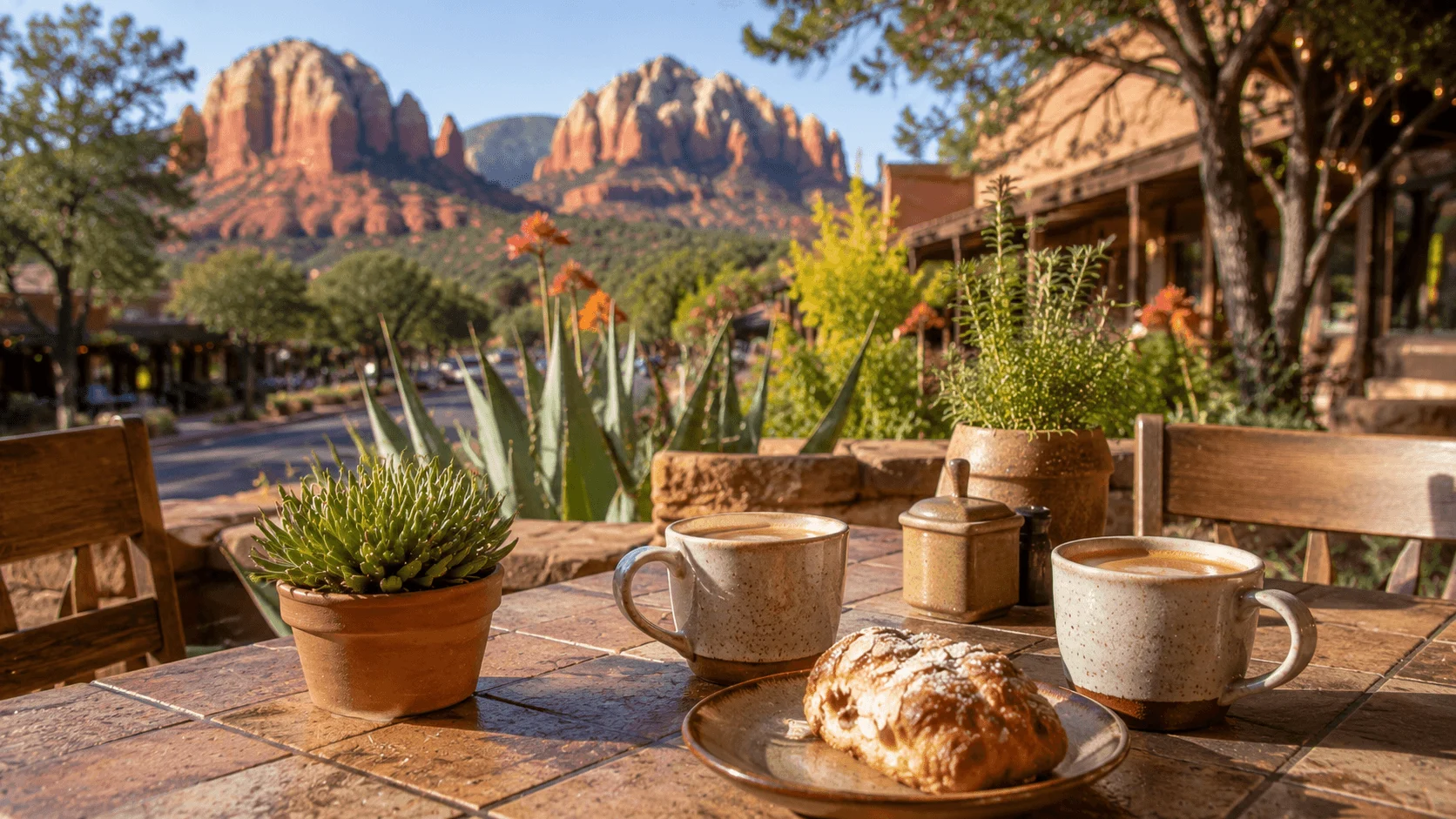
If you are browsing Tlaquepaque and want a gift that feels personal without making a major art purchase, continue to Mi Amore Sedona at 100 Brewer Road. The historic Hart Store setting and curated gifts, home and garden pieces make it a pleasant part of this side of town. The shop is open daily from 10 a.m. to 4:30 p.m. Ask about the maker and origin of anything where handmade or local production matters to you; “curated” is not a claim that every item was made in Sedona.
It is near the Tlaquepaque area, not on Uptown Main Street, and it is a gift shop rather than visitor lodging. Keep the visit in the same part of your day as the courtyards and nearby galleries, instead of adding a separate cross-town errand after everything has closed.
West Sedona: compare several artists or focus on a collectible
Sedona Artist Market: a broad browse across Arizona work
Sedona Artist Market is at 2081 W State Route 89A, suite 11, in the Harkins plaza between the theater and post office. Its current site lists paintings, ceramics, mixed media, textiles, glass, sculpture, photography and other work by Arizona artists. This is the stop to prioritize when several people on your gift list have different tastes and you want to compare them in one place.
Start with a material or purpose: a ceramic piece for a cook, a small work on paper for an apartment, or a textile gift for someone who prefers useful objects. Then read the artist information. Arizona-made covers a larger area than Sedona-made; ask where the artist works if that distinction matters. The website currently lists daily 10 a.m.–5 p.m. hours, but confirm for holidays and any special visit. An artist may not be there whenever the market is open, so call ahead if meeting a particular maker is the reason for going.
Kachina House: ask about the artist and the making process
Kachina House, at 2920 Hopi Drive in West Sedona, specializes in Native American pottery, carvings, baskets and related art. It is a separate showroom stop, not a shop within Tlaquepaque. Its published hours are 10 a.m.–3 p.m. daily, so plan this earlier than an evening gallery browse and confirm the current schedule.
Its pottery information explains that work can be hand-coiled or hand-built, while other pieces use a mold before an artist applies etched or painted surfaces. Ask about the actual piece's process, maker and community instead of assuming every decorated vessel was shaped in the same way. Southwestern art can be made by an artist well beyond Sedona; that does not make it less meaningful, but it deserves an accurate description.
How to tell what you are really buying
Ask three questions before a handmade purchase: Who made this? Where do they work? What parts were made by hand? A clear answer might be an artist's name on a card, a studio biography or a description of the process. A print can be a thoughtful gift and a legitimate way to support an artist, but it should be identified as a print rather than an original painting. Likewise, a local shop can sell lovely imported or commercially produced goods without those becoming locally made.
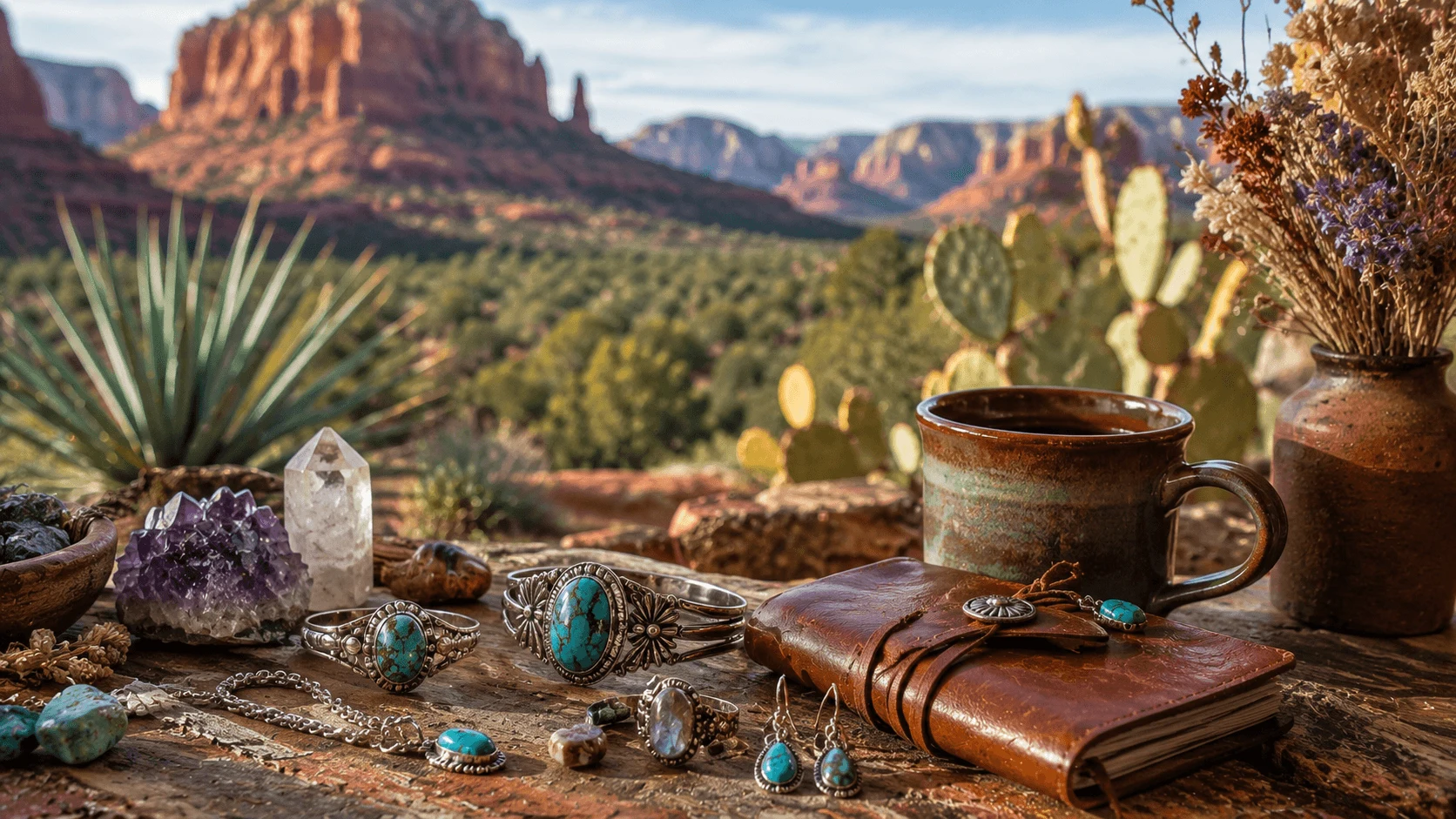
For American Indian or Alaska Native art, the Indian Arts and Crafts Board's buying advice recommends written verification of authenticity and a receipt recording the maker and tribal affiliation. Keep the seller's specific claims in writing. “Southwestern style” or “Native-inspired” describes appearance, not proof that a Native artist made it. You do not need to become an expert in every art tradition to ask respectful, concrete questions.
Choose two shopping areas, then enjoy them
For a visit centered on clay and small home gifts, spend your browsing time at Esteban's and Environmental Realists, take a courtyard lunch break, and leave room for the Hart Store before 4:30 p.m. For a visit centered on named regional artists, choose Sedona Arts Center and Sedona Artist Market. For a particular Native American collectible, contact Kachina House first and shape the rest of the day around its earlier closing.
You can walk within Uptown and within Tlaquepaque, but connecting those areas adds a highway-side walk; West Sedona requires a separate transport plan. Use our walkability guide for that connection and the driving-and-shuttle guide for trips between areas. Do not turn a relaxed shopping day into a checklist of every store.
Get the piece home without losing the story
Before buying a heavy pot or framed work, request the packing and shipping quote, insurance terms, likely delivery window and return policy. Do not assume every shop can ship internationally or that a quoted art price includes delivery. Photograph the piece and its label, keep the receipt, and ask for a maker card to tuck into the gift. For a carry-on, small unframed work, textiles or a carefully packed small object may be easier than a large fragile vessel; check your airline's limits.
The reward is a gift that still means something after the suitcase is unpacked. For a broader mix beyond handmade work, see our gift-shop guide or tasteful souvenir ideas. Here, take the extra minute to learn the maker's name. That is the part of the shopping trip you can bring home with the object.
GOOD TO KNOW