Before you make Sunday your drive-home day, look at what is happening at Tlaquepaque. Sedona's Día de los Muertos celebration brings music, dance, altars and a community remembrance mural into the village—and the most personal part of the afternoon may be something you add yourself.
The main celebration is Sunday, November 1, 2026, from 11 a.m.–5 p.m. The Marigold Mural Project begins earlier, on Thursday, October 29. Those are two related opportunities: come for the mural on an earlier day, or keep Sunday open for the broader program. Tlaquepaque's 2026 events calendar confirms the dates.
For visitors who enjoy art, live performances and time to wander, this is a good reason to give a fall weekend one more unhurried afternoon. Here is how to choose your visit, understand what you are seeing and leave room for the parts that matter to you. Event details were checked October 20; all times below are local Sedona time.
Choose Sunday for the celebration, or an earlier day for the mural
The distinction matters if you are deciding which night to book or when to leave town. October 31 is Saturday; Tlaquepaque's main Día de los Muertos event is the following day. Arriving on Halloween does not mean you have arrived for the full Sunday performance program.
The organizer's mural page lists October 29–November 1, 11 a.m.–5 p.m., on Calle Independencia. Brushes and paints are supplied, and artist Lovejoy will be there to help. That makes the project a possible stop for someone whose Sedona stay ends before Sunday.
If you can stay, Sunday offers the widest variety in one visit. Plan around one performance you particularly want to see, then use the remaining time for the mural and altars. Trying to squeeze every courtyard into a minute-by-minute schedule would miss the pleasure of discovering something and choosing to linger.
For a Thursday, Friday or Saturday visit, make the mural the reason to come. Shops and a meal can fill out the outing, but do not assume Sunday's musicians or activities will also be there. For Sunday, leave enough room around the event that a late lunch or a longer pause does not immediately threaten your journey home.
Understand the remembrance behind the color
Día de los Muertos is a Mexican tradition centered on remembering loved ones who have died. Its place beside Halloween on the calendar can cause confusion, but it has its own history and meaning. The Smithsonian's introduction explains the significance of ofrendas, or altars, where photographs, meaningful objects and offerings honor the people being remembered.
Marigolds are part of that visual language. The Smithsonian describes their color and fragrance as guides for returning spirits within the tradition. Brightly decorated skulls belong to this setting of remembrance, too. Looking for the meaning of an object gives you more to notice than simply deciding whether it would make an attractive photograph.
UNESCO's account of the Indigenous festivity in Mexico describes traditions involving flowers, candles and the deceased person's favorite foods, and the meeting of Indigenous beliefs with Catholic observances. It recognizes the importance of the practice to communities and family relationships. That recognition concerns the Mexican cultural tradition; it is not a designation awarded to this Sedona event.
Come with curiosity rather than the expectation that one festival explains every family's practice. If you are visiting with children, start with an ordinary question: what is one thing you remember about someone you loved? A favorite meal, a familiar saying or a small shared habit can make remembrance understandable without requiring a long history lesson.
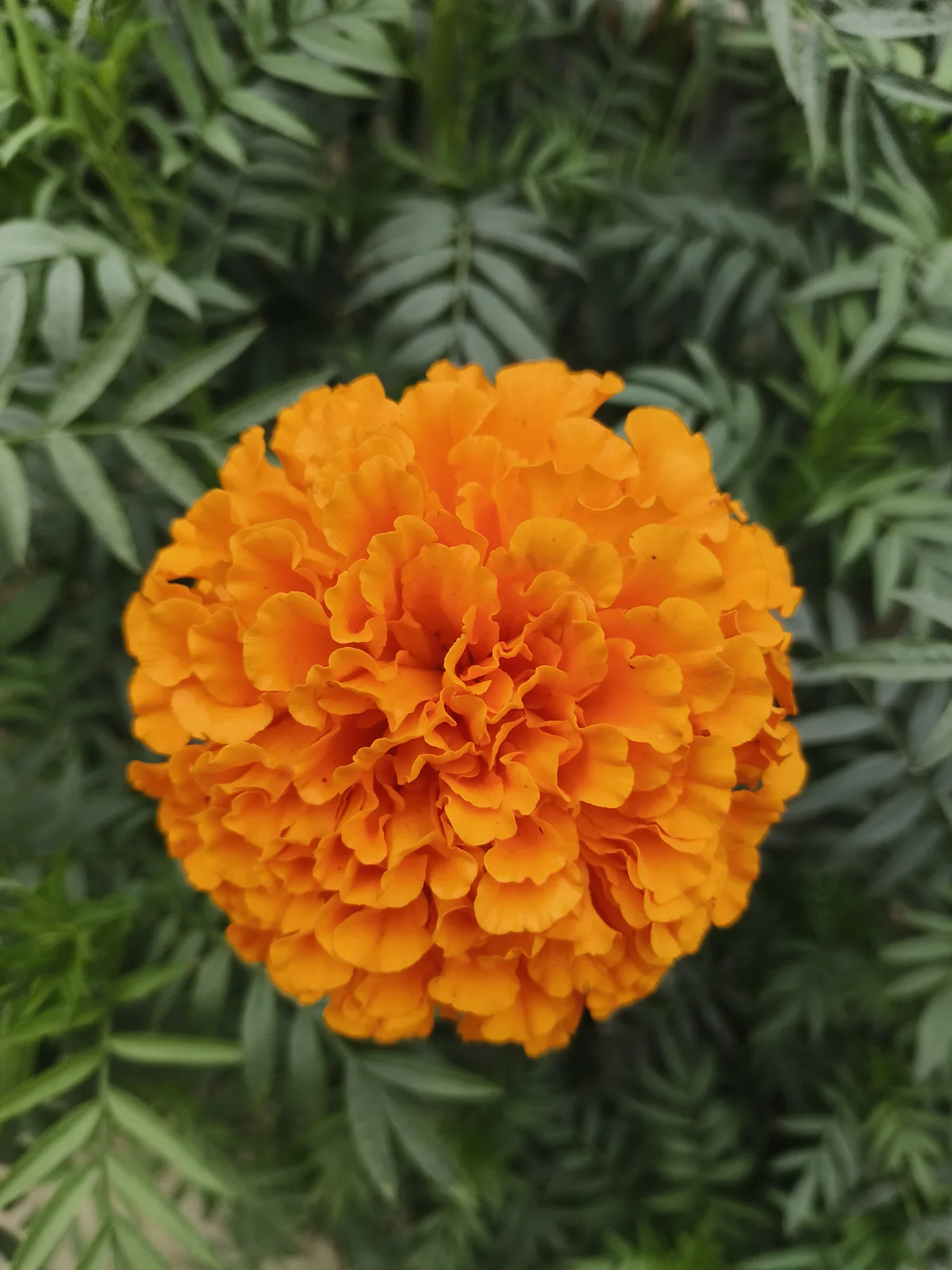
You can help make the Marigold Mural
The mural is a participatory artwork, not simply a finished picture to walk past. Lovejoy creates the initial design, and visitors contribute remembrances. In the artist's account of the project, contributions can honor people or beloved animals, and no painting experience is needed. Participation is free.
That is an unusually approachable invitation for a travel day. You do not have to sign up for a full art course or arrive with a developed drawing. Before you take a brush, ask where to work and how much space to use. Think about a detail that belongs to your own memory rather than trying to produce the most impressive image on the wall.
Give yourself permission to watch first. You might decide to contribute; you might prefer to look at the work and think privately. For a group, this is a good moment to let everyone participate at their own pace. Someone who wants a few quiet minutes should not have to compete with the next item on the itinerary.
Previous years' murals will also be displayed. They make the project feel larger than a single weekend: you can look at earlier contributions before deciding what to add now. Ask before photographing an identifiable person working on a tribute, and be especially considerate around children or anyone having a personal moment.
Follow the altars through the village
The organizer publishes a 2026 walking map of the altars, linked from the celebration page. Open it before you arrive, then let it help you find installations rather than turn the afternoon into a race to complete a list. Read the accompanying descriptions and follow any instructions about participation.
At an altar, pause before raising your phone. Notice which objects have been placed together and what the display asks you to remember. A name or photograph may mean much more to another visitor than you can know. Keep a little space around people who are stopping for their own reasons, and do not rearrange offerings to improve a picture.
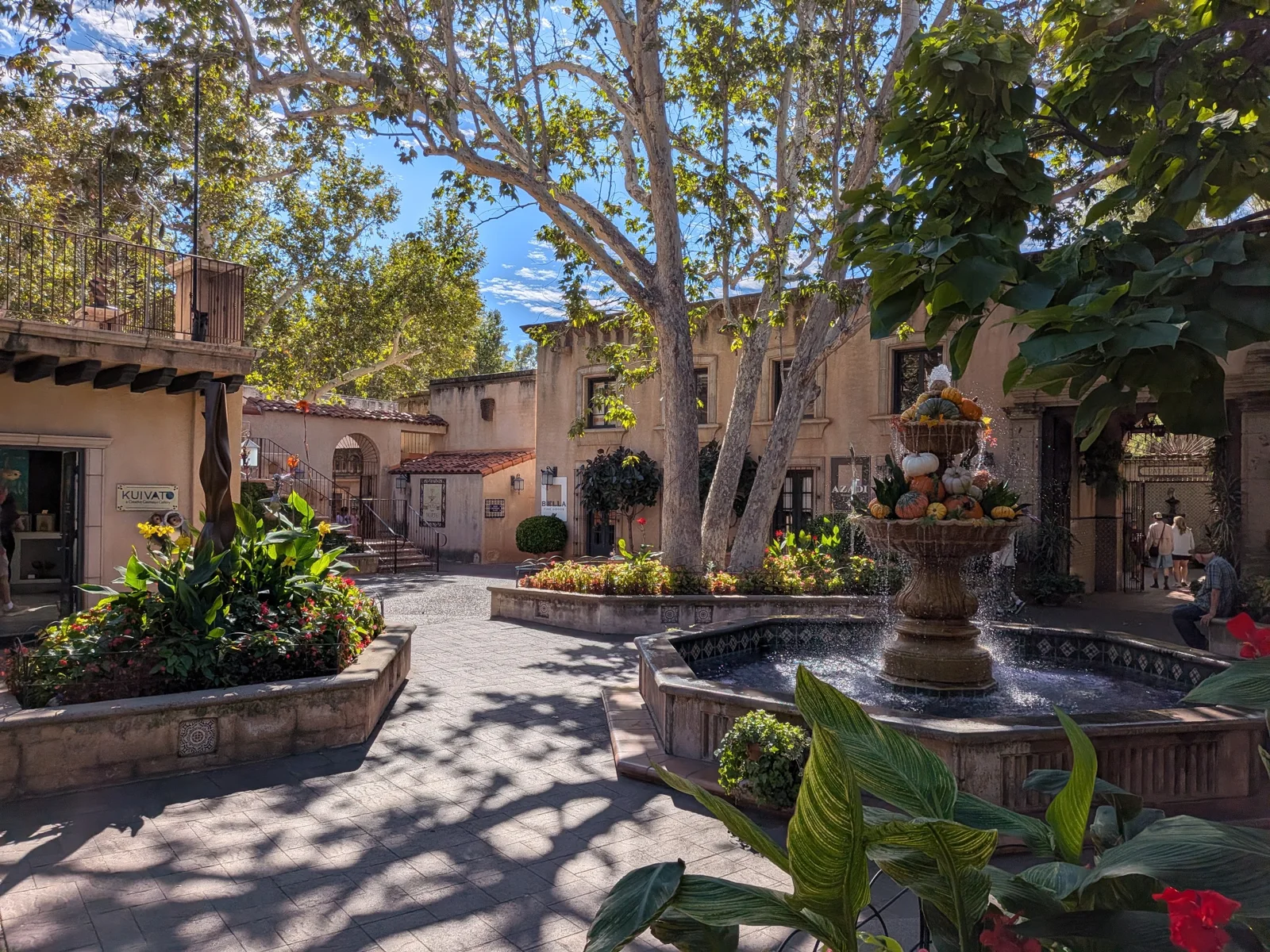
The setting is worth noticing as well. Tlaquepaque's own history describes Abe Miller's vision for a village inspired by San Pedro Tlaquepaque near Guadalajara, developed among Sedona's sycamores in the 1970s. The architecture draws on Mexican courtyards, materials and craftsmanship. Its courtyard layout gives visitors a series of small spaces to explore instead of one uninterrupted shopping street.
That background makes wandering more interesting. Look at the relationship between trees, paths and buildings as you move between activities. Choose a place to meet again if your group separates; a named courtyard is easier to agree on than “by the shops.” The regular village map is useful for orientation, while the event's altar map serves a different purpose.
Use a few performance times to shape the afternoon
You do not need to memorize the whole official celebration schedule. Three useful anchors are Ballet Folklorico De Colores at Tlaquepaque North at 1 p.m. and 3 p.m., sugar-skull decorating in Patio de las Campanas from 1–5 p.m., and Sedona Dance Project in Patio del Norte from 2:15–2:45 p.m.
For a visit built around dance, choose the 1 p.m. ballet performance, then allow time to make your way back to the South village before the 2:15 p.m. Sedona Dance Project appearance. The mural can come before or after. This is a suggested sequence, not a promise about walking speed or available seating; let your group’s pace determine how much you include.
If making something is the priority, begin with the mural and keep the afternoon flexible. A family could choose sugar-skull decorating after lunch and treat the 3 p.m. ballet as an option. There is music elsewhere in the courtyards and chapel, so missing one performance does not require abandoning the visit. For friends with different interests, agree on one shared stop and leave the surrounding time open.
The program also lists Gaetano and Friends from 5:30–7:30 p.m. That is later than the main celebration's advertised finish. Treat it as a separately timed evening listing; do not assume the mural, decorating or other festival activities continue until then. Check any activity charges directly before participating—the free mural does not establish the price of every offering.
Decide how you will arrive before setting your schedule
Tlaquepaque South is at 336 State Route 179; Tlaquepaque North is across the road at 313 State Route 179. The venue's parking information says its surrounding lots are free for village visitors. A free lot is still a finite lot, so give parking its own time rather than arriving exactly as your chosen performance starts.
The event page advertises a free shuttle between Uptown and Tlaquepaque for the celebration, but it does not provide a precise operating timetable. Confirm the boarding point and last return with Tlaquepaque at 928-282-4838 before building your day around it. Do not assume that an ordinary city bus carrying the Sedona Shuttle name is the same event service.
If you park in Uptown, consult the city's parking guide and read the time limit at your actual space. An afternoon that expands into an evening needs parking that permits that length of stay. Decide where you will leave the car before deciding how much of the event to fit in.
Sedona Shuttle Connect is a separate on-demand option. Its current schedule is Thursday–Sunday, 6:30 a.m.–8:30 p.m., with a standard $2 fare per rider. Check whether your starting point and destination are inside its service area. The operator's instructions allow booking through the TransLoc app or by calling 928-203-5152; phone-booked rides can be paid with exact cash.
Our Hart Store, Tlaquepaque and Uptown walking guide helps put the areas in context. Keep the return trip in your plan, especially if different members of your group may want to leave at different times.
Make the visit comfortable for your group
Tlaquepaque's visitor information lists accessible parking, entrances and restrooms, and says visitors may bring their own mobility devices; wheelchair rentals are not available on the property. For a particular performance or activity, ask about the exact approach and seating. General venue accessibility does not answer every question about a temporary event arrangement.
The village welcomes leashed dogs, but being allowed to bring a pet and wanting to bring that pet into a busy performance setting are different decisions. Consider how your dog responds to music, close quarters and waiting. Check individual businesses' policies before entering, and make a plan that lets you leave easily if your companion is uncomfortable.
Bring comfortable shoes and a layer you can carry. Check the forecast close to the date instead of treating a seasonal average as the day's weather. Our month-by-month Sedona guide explains the broader autumn conditions; it is background for packing, not a prediction for November 1.
Leave room for a small discovery of your own
If browsing for a gift is part of your weekend, make it a separate, unrushed stop. Mi Amoré Sedona is inside the historic Hart Store at 100 Brewer Road, with curated gifts and home and garden pieces. Our current daily hours are 10 a.m.–4:30 p.m., so visit earlier in the day or on another day if you want the full festival afternoon.
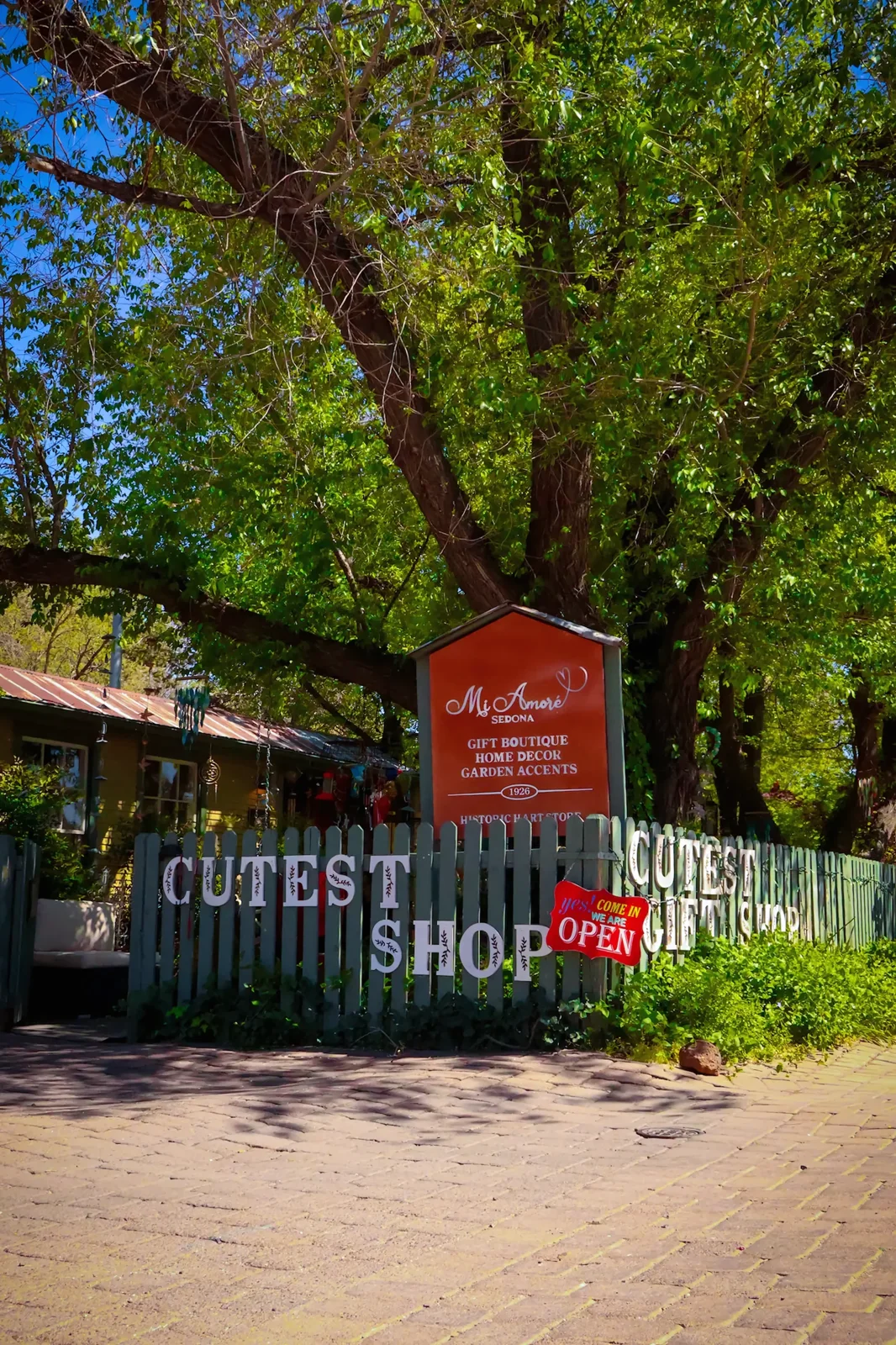
There is no need to turn the celebration into a shopping assignment. Decide whether you most want to paint, watch a performance or spend time with the altars, and give that choice enough room. A Sedona weekend can hold a red-rock morning and a very different kind of afternoon—one where the thing you remember is connected to someone you came to remember.
Cover photograph: Tlaquepaque South by Seasider53, October 6, 2026, under CC BY 4.0. Resized, converted and cropped for display. It shows the village before the November celebration.