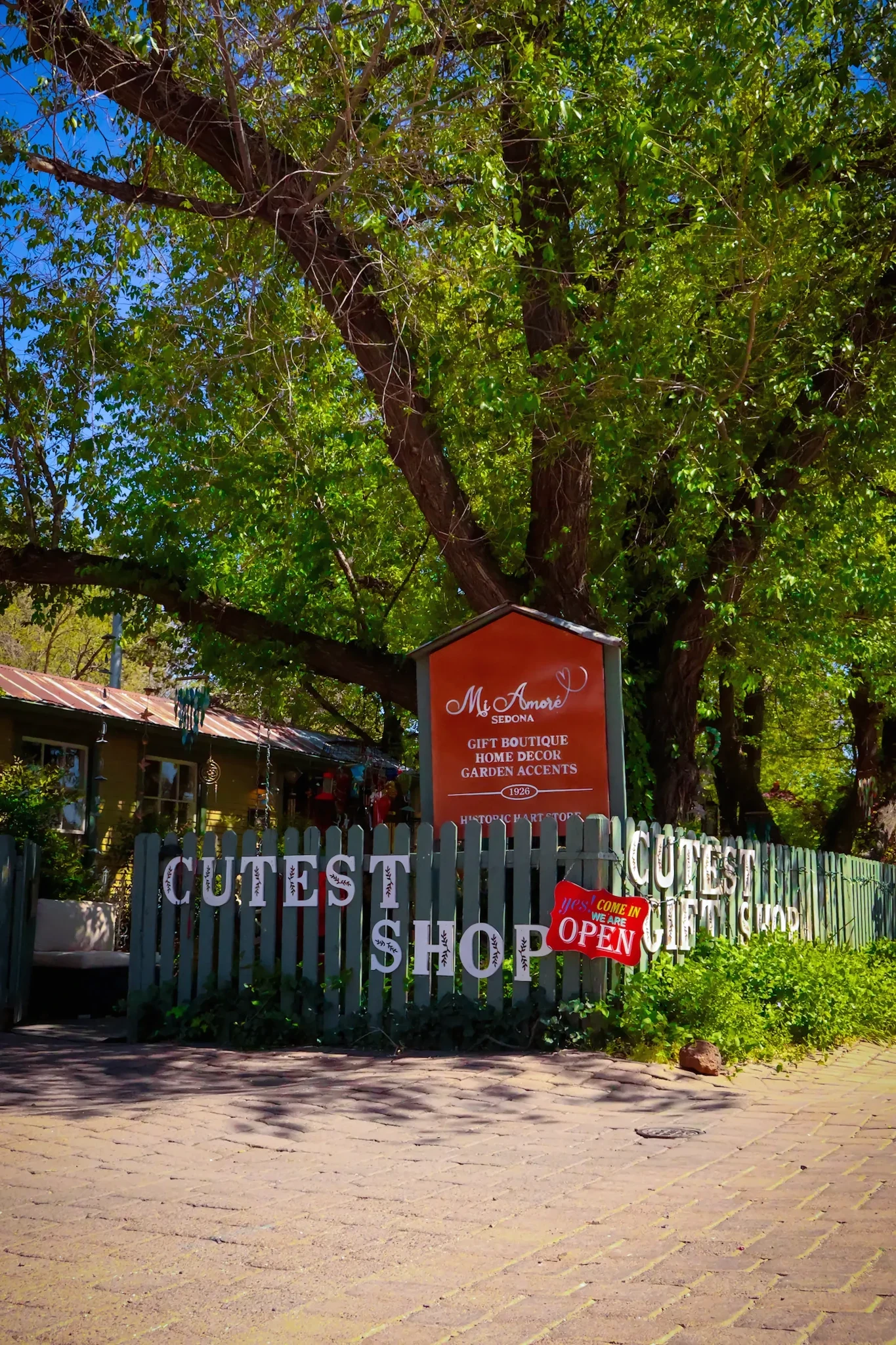
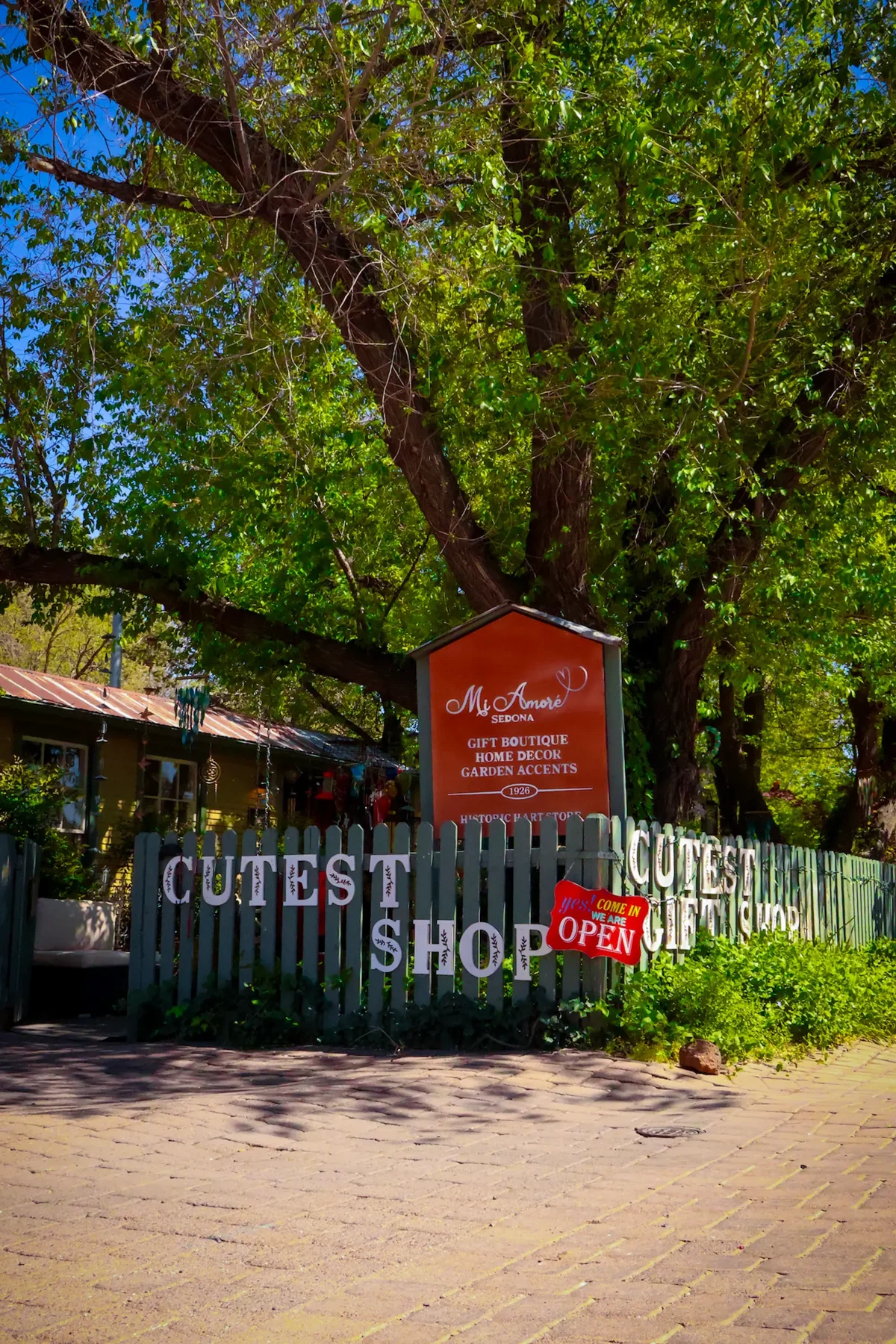
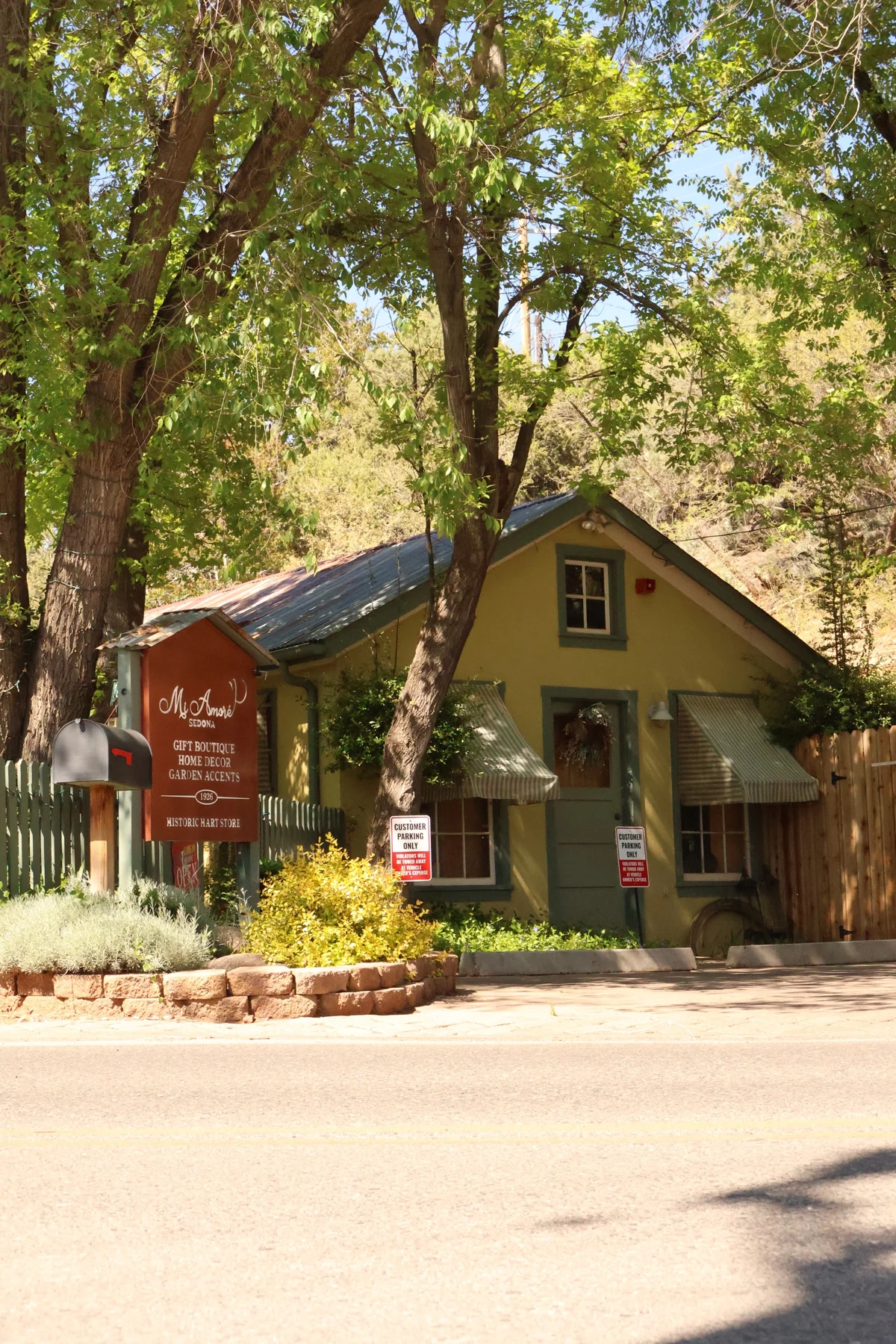
Before Sedona's shopping streets followed the highway north into Uptown, the town's commercial life gathered around a different corner. At Brewer and Ranger roads, a general store sold supplies, served passing motorists and connected the people who lived among the orchards and ranches. That building is the Hart Store, now home to Mi Amoré Sedona at 100 Brewer Road.
Its story is more interesting than a building that simply survived for a hundred years. A road realignment moved the business, the old store became housing, and a careful rehabilitation eventually brought shopping back inside. Each change explains something about how Sedona grew.
The practical distinction is worth knowing before you visit: the historic Hart Store is near the Tlaquepaque and Brewer Road area, southwest of the State Routes 89A and 179 junction known as the Y. It is a separate stop from the Uptown storefronts along North State Route 89A.
1926: a substantial store for a small community
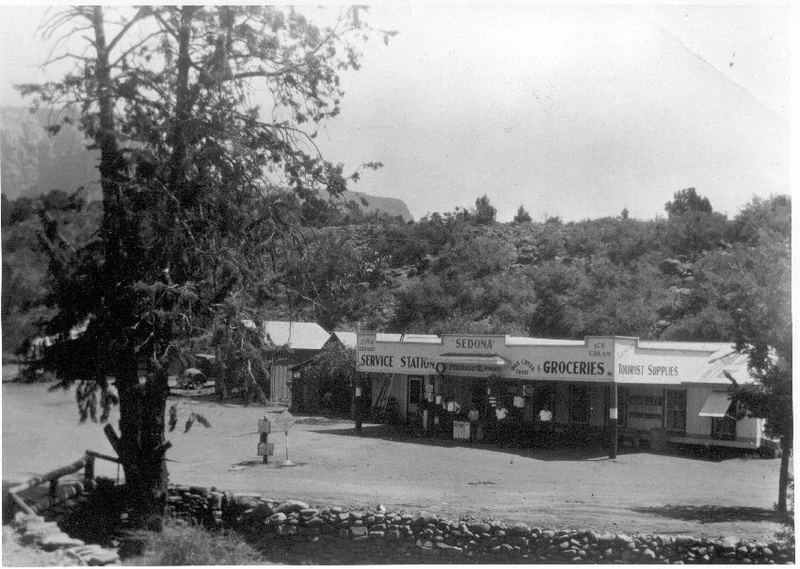
The National Register nomination dates the surviving building to 1926. Lewis Edmond “Dad” Hart and his wife, Delia, had come to Sedona the previous year and purchased orchard land. The store belonged to an economy shaped by fruit growing, dairy work, ranching and the effort of bringing supplies into a relatively isolated place.
It is often called Sedona's first store. The longer historical record makes that description more nuanced: residents had previously sold goods from their homes, and earlier stores had operated around the Brewer–Ranger intersection. In an oral interview recorded in 1985, Hart's daughter remembered her father's business as the first “big” store. Thinking of it as an important early general store is more accurate than imagining that no one had sold groceries here before 1926.
There were gasoline pumps as well as goods inside. The store served both local households and travelers; the city's historical marker describes Oak Creek fruit and tourist supplies among its offerings. Even then, residents' daily needs and visitors' journeys met at the same counter.
Delia helped run the store while Hart worked on the ranch. That detail brings the place down to a human scale. This was not a grand commercial district appearing overnight, but a family business within a small community whose roads, water and livelihoods were closely connected.
Why Brewer and Ranger roads mattered
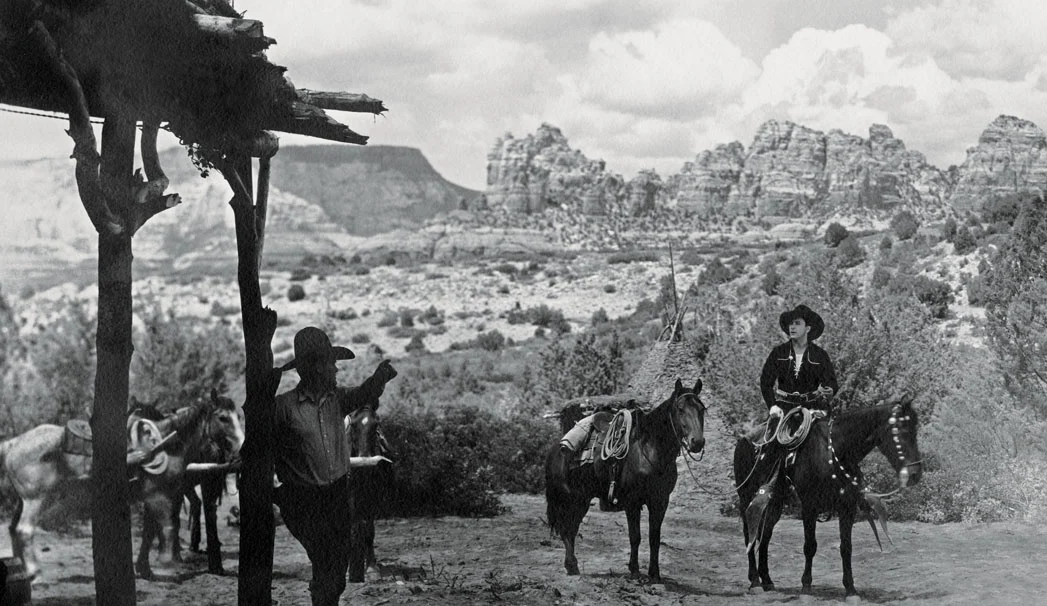
The Hart Store's location can seem tucked away if you arrive expecting all of historic Sedona to line the present highway. In the 1920s, however, the intersection outside was a logical place for a store. Much of the traffic through the settlement passed this corner, close to the school, the ranger station and early homes.
The National Register documentation traces the old road connections through the area and explains how commerce clustered here. A traveler approaching on the route from the south would pass through a different sequence of turns from today's highway drive. A general store at the intersection could reach neighbors and passing customers without needing the advertising language of a modern destination shop.
That is why the building tells more than a retail story. It preserves the location of an earlier commercial center. The present-day Y and the busy Uptown strip are not proof that business always happened in those same places.
For a wider picture of the settlement, orchards and later growth, our history of Sedona puts this corner into the town's longer story. The Hart Store is one small building within that history, rather than the beginning of all life in the area.
Electricity, telephone stories and the everyday work of connection
Hart's contribution extended beyond selling goods. The National Register account credits him with helping organize a cooperative around 1937 to bring electricity into Sedona. It describes the store as one of the earliest buildings to receive it. That is a later chapter than the 1926 opening, so the two events should not be compressed into a claim that electricity arrived with the building itself.
The store's telephone is part of local memory too. The nomination records residents' recollections, relayed by the property's then-owner, of people waiting to use the telephone and movie-industry visitors calling Hollywood. These are oral-history accounts, not a precise installation record establishing an undisputed “first telephone” date.
The appealing part is the practical one: a shop could also be where a person reached someone farther away or obtained a service that was scarce locally. The city marker also remembers Hart extending credit during the Great Depression and working to improve Sedona's roads. Those small acts explain its community role more clearly than simply calling the building a gathering place.
1939–1940: the business moved, and the building became a home
The pivotal change came when the main road arrangement shifted toward the junction of State Routes 179 and 89A. Around 1939, Hart relocated the store business to the Y, following the traffic to the new commercial focus.
The business moved; the old Brewer Road building stayed. That distinction is easy to miss when a short history says only that “the store moved.” The building you visit today is the earlier structure, not the later shop at the highway junction.
Around 1940 it was converted into a duplex for worker housing. The National Register account identifies that conversion as an important part of its history, rather than an interruption to be ignored. Sedona needed homes as well as places to buy groceries, and adapting the old building gave it another useful purpose.
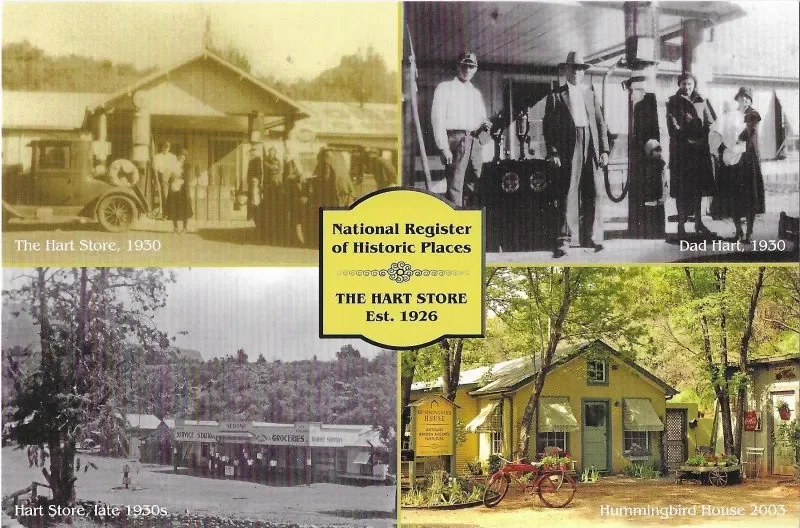
The conversion also changed its appearance. Parts of the front canopy were enclosed to make living space, and the record describes historic windows being retained or reused. The familiar low building therefore carries more than one period of its life. It is not an untouched 1926 storefront frozen behind glass.
By the time shopping expanded north along State Route 89A into what became Uptown, the old store was serving a quieter domestic role. Its survival is tied to that adaptation: a building bypassed by the main commercial route remained useful instead of disappearing.
2002 and 2007: returning to retail without erasing the middle chapters
The National Register nomination describes a 2002 rehabilitation that returned the building to specialty retail. That work respected much of the earlier residential conversion. Preserving the Hart Store did not mean stripping away every later change to imitate its original shopfront.
Its architectural interest is modest and approachable: a low, wood-frame building with simple windows, siding, rooflines and a porch, rather than an elaborate architectural showpiece. Historic photographs help you see how the front changed. The important continuity is the structure and its relationship to the corner, together with the evidence of its different uses.
Earlier visitors may remember the Hummingbird House name. The Sedona Heritage Museum's landmark-tour entry includes an image of that gift-shop chapter. Today the building houses Mi Amoré Sedona; the change of shop name does not make it a different historic place.
The Hart Store entered the National Register of Historic Places on October 25, 2007. It is also a City of Sedona historic landmark. Those are the precise designations to look for; “National Historic Landmark” is a separate federal designation and is not the status recorded for this property.
Readers who enjoy the details can explore the National Park Service Hart Store record and nomination, which documents the store-to-housing transition and includes historical photographs and maps. The city's historic landmark list places it alongside other surviving Sedona sites.
Visiting the Hart Store today
This is an active gift shop with a history, rather than a museum with a formal exhibition route. That is part of the pleasure of the visit: the building still has a useful place in everyday Sedona, and you can spend time inside without arranging your day around a large attraction.
At Mi Amoré Sedona, the emphasis is on beautifully chosen gifts, home accents and garden finds. Browse for something you will enjoy using or giving, while letting the setting be part of the discovery. There is no need to turn the stop into a hunt for an object claimed to be a historical artifact.
The address is 100 Brewer Road, and the shop is open daily from 10am to 4:30pm. Use that address when navigating rather than searching for an Uptown storefront. If your other plans run into the evening, give the store its place earlier in the day.
A useful visit has two parts: pause outside to place the building at its old intersection, then step inside to see what the space is doing now. Look for the historical marker and National Register plaque, and compare the present facade with the old photographs. You do not need to assume every visible detail dates to 1926 to appreciate the building.
Following the documented 1926 construction date, 2026 marks its centennial year. That is a century of changing uses, not a claim that the same shop has operated continuously for one hundred years. The residential years belong to the story just as much as the years behind a shop counter.
Make a small history outing of the surrounding area
Tlaquepaque makes a convenient neighboring stop, especially if your day already includes its galleries or lunch. Google Maps displayed a walking estimate of approximately 0.2 mile and five minutes from Tlaquepaque at 336 State Route 179 to the Hart Store on September 27, 2026. That is a planning estimate between those addresses, with extra time needed for crossings, browsing and finding the entrance.
See the Tlaquepaque-to-Hart Store walking route →
For more local history, Ranger Station Park is at 250 Brewer Road. The city describes restored historic exteriors, interpretive panels, a perimeter walking path and seating. Treat the buildings as historic features of a public park; do not assume their interiors are open for a museum tour.
These places offer different chapters. The Hart Store recalls the early commercial corner, the ranger station the Forest Service presence, and Tlaquepaque a much later arts-and-shopping development. Combining them gives the afternoon a little more meaning than calling every older-looking courtyard “old Sedona.”
Uptown can still be part of your day, but it is a separate area to plan for. Our Sedona walking guide explains how its compact shopping strip connects with the areas farther south and where a transport plan becomes useful.
The Hart Store rewards a small detour because it makes the town's changes visible. Roads shifted, the business followed them, residents made homes in the old shop, and retail returned. Today you can find a thoughtful gift in the same building while understanding why this quiet corner mattered long before your visit.
GOOD TO KNOW