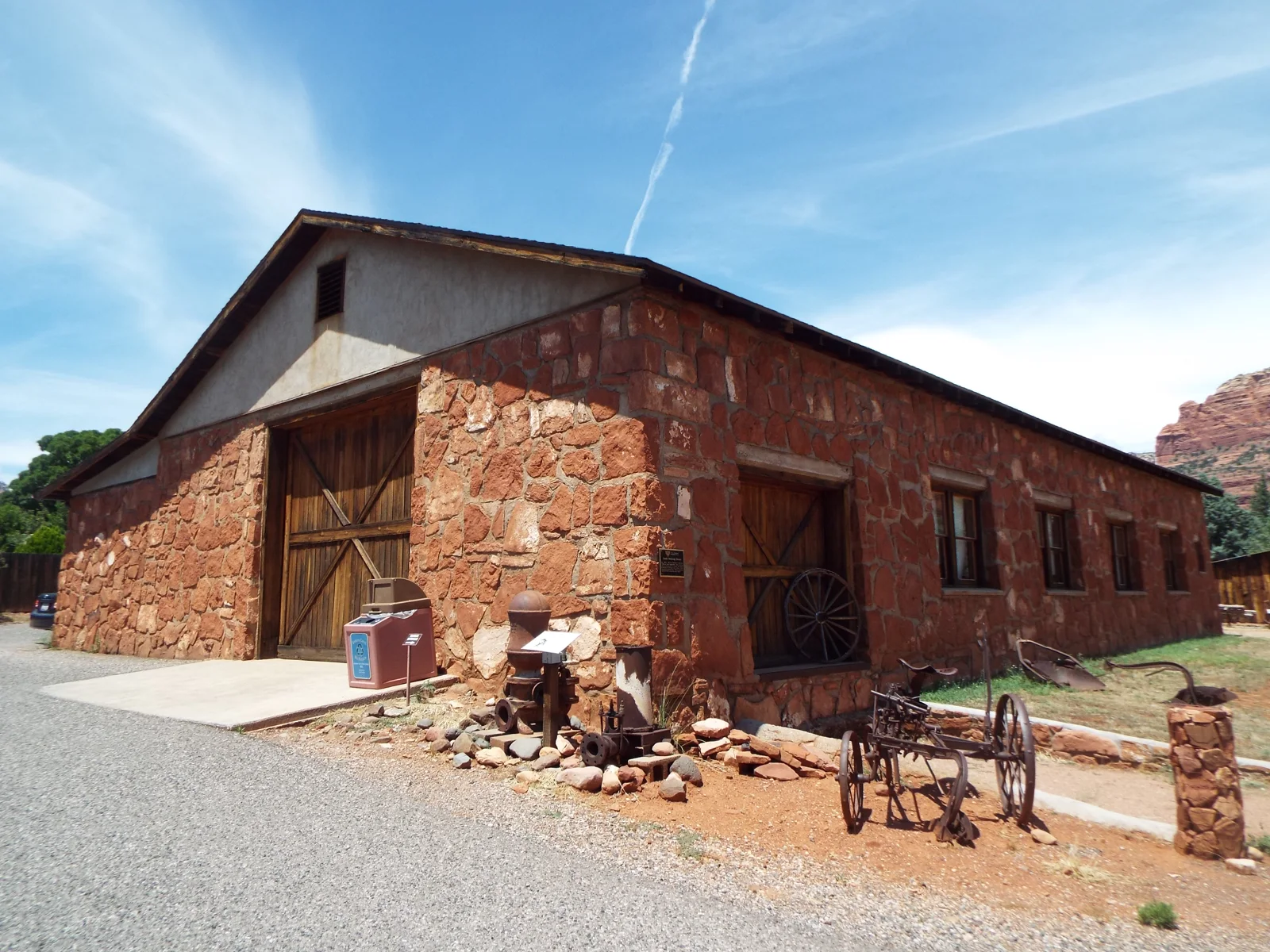
Sedona has an old apple-packing shed with a different job this Sunday: giving ghost stories somewhere to land. Poet and performer Michael Peach brings Haunted History to the Sedona Heritage Museum on Sunday, October 25, 2026, from 3–4 p.m. It is a compact way to add a little Halloween atmosphere to a red-rock weekend, especially if your favorite part of an old place is the story attached to it.
The performance takes place in the museum's Apple Shed at 735 Jordan Road in Uptown Sedona, according to the October 18 announcement. Expect spoken storytelling, poetry and local lore. Come for a performer shaping a tale, with room for humor as well as a shiver.
There is one useful planning catch: the regular museum closes at the same time the show begins. If you want both, give the exhibits an earlier place in your afternoon. Here is what to know before choosing your tickets and the rest of the day.
An hour for the stories behind the place
Peach has been presenting his original one-man shows at the museum since 2000. The museum's introduction to his work describes a performer who mixes historical research, cowboy poetry, humor and tall tales. That combination matters: the pleasure lies partly in the telling, and a theatrical story should not be mistaken for a verified account of a haunting.
You do not need to arrive knowing Sedona's history. A name, a building or an old incident can give a storyteller somewhere to begin. If you have been spending the weekend noticing the shapes of the rocks, this is a chance to turn your attention to the people and stories connected with the area.
The event's current listing includes pieces called Peoria's Runaway Pumpkin and The Ghosts of Wilson Canyon, alongside darker stories involving murder and revenge. Those titles give a sense of the range without giving away the tales. The museum's calendar and individual event page describe slightly different selections, so treat them as an introduction to the show rather than a guaranteed running order.
This suits a visitor who enjoys listening and letting a story unfold. If your group is looking for a costume party or a walk through theatrical rooms, read the organizer's description together before booking. With children, consider the subject matter as well as the price: a free child's ticket does not tell you how that child will feel about ghost stories.
Choose the October 25 performance
Tickets are listed at $10 in advance online or $12 at the door. The October 18 announcement says children 12 and under attend free. The Visit Sedona event calendar also lists the Sunday date and 3–4 p.m. time slot. All times here are local Sedona time.
Use the museum's 2026 event and ticket page to book. Its advance-sales text contains a mismatch: it names October 26 as the cutoff, although the show is October 25. The general performance-series page instead mentions a noon cutoff on performance day. We could not establish one reliable final online-sales deadline from those pages.
If you want the advance price, book ahead rather than planning around either cutoff. For a last-minute purchase, a child's reservation, or seating and access arrangements, call the museum at 928-282-7038. Do not wait until Monday because of that stray date. Details were checked October 21; confirm the event page again before making a special trip.
The setting has a story of its own
The museum dates the former Jordan farmstead's fruit-packing shed to 1946. Its apple-grading machine remains on display: a reminder of the working orchard that preceded today's museum.
That history gives the afternoon a pleasing connection between setting and performance. You can look at the old buildings for their everyday purpose before listening to stories that take a more imaginative turn. For the wider background, our history of Sedona follows the orchard years alongside the town's other chapters.
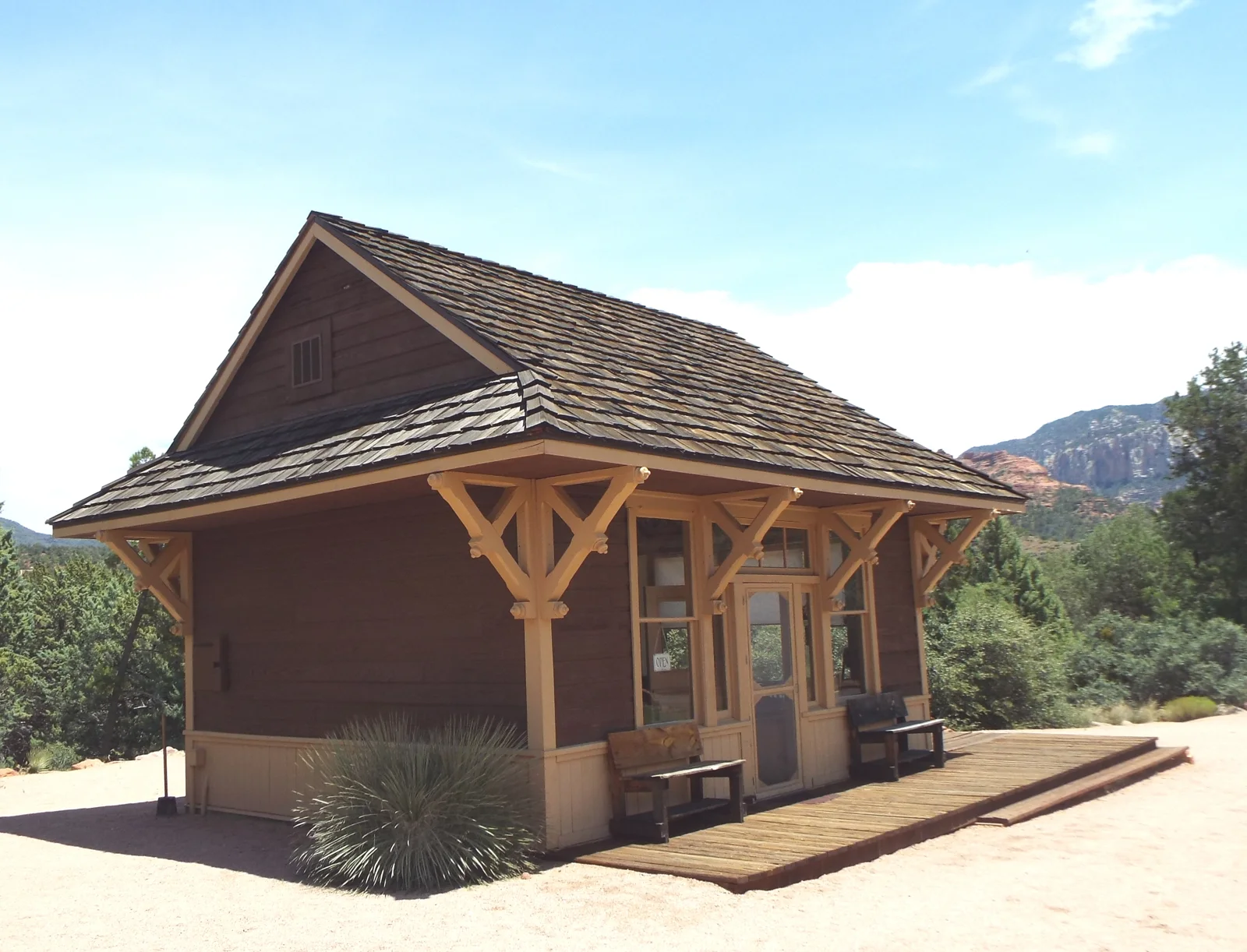
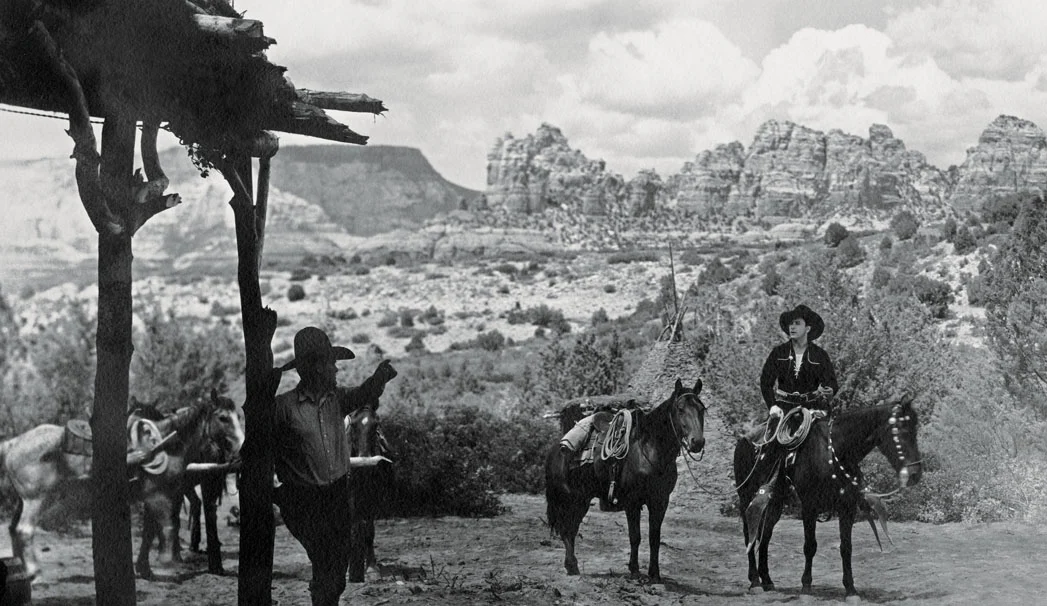
Our five-film Sedona watchlist explains the telegraph-office connection and offers something to watch before or after your trip. You can enjoy that separate thread without turning Sunday's performance into a movie-location tour.
See the museum before the show
The museum's visitor page lists regular hours of 11 a.m.–3 p.m., with major-holiday closures. Regular adult admission is $10 and children under 13 are free. The performance has its own ticket listing; do not assume a show ticket includes an earlier exhibit visit. Ask when booking if you want to do both.
For a comfortable sequence, have lunch, visit the exhibits, and leave a little breathing room before the 3 p.m. start. That is a suggested way to arrange your day, not an additional timed program. Arriving only for the performance is also a complete outing; you do not have to add a museum visit to justify the hour.
Use the museum's arrival directions, including its overflow-parking instructions if the main lot is full. That overflow approach involves a pedestrian bridge and an uphill walkway. If that would be difficult for anyone in your group, ask about the most suitable arrival point before setting out.
Make room for a small discovery beforehand
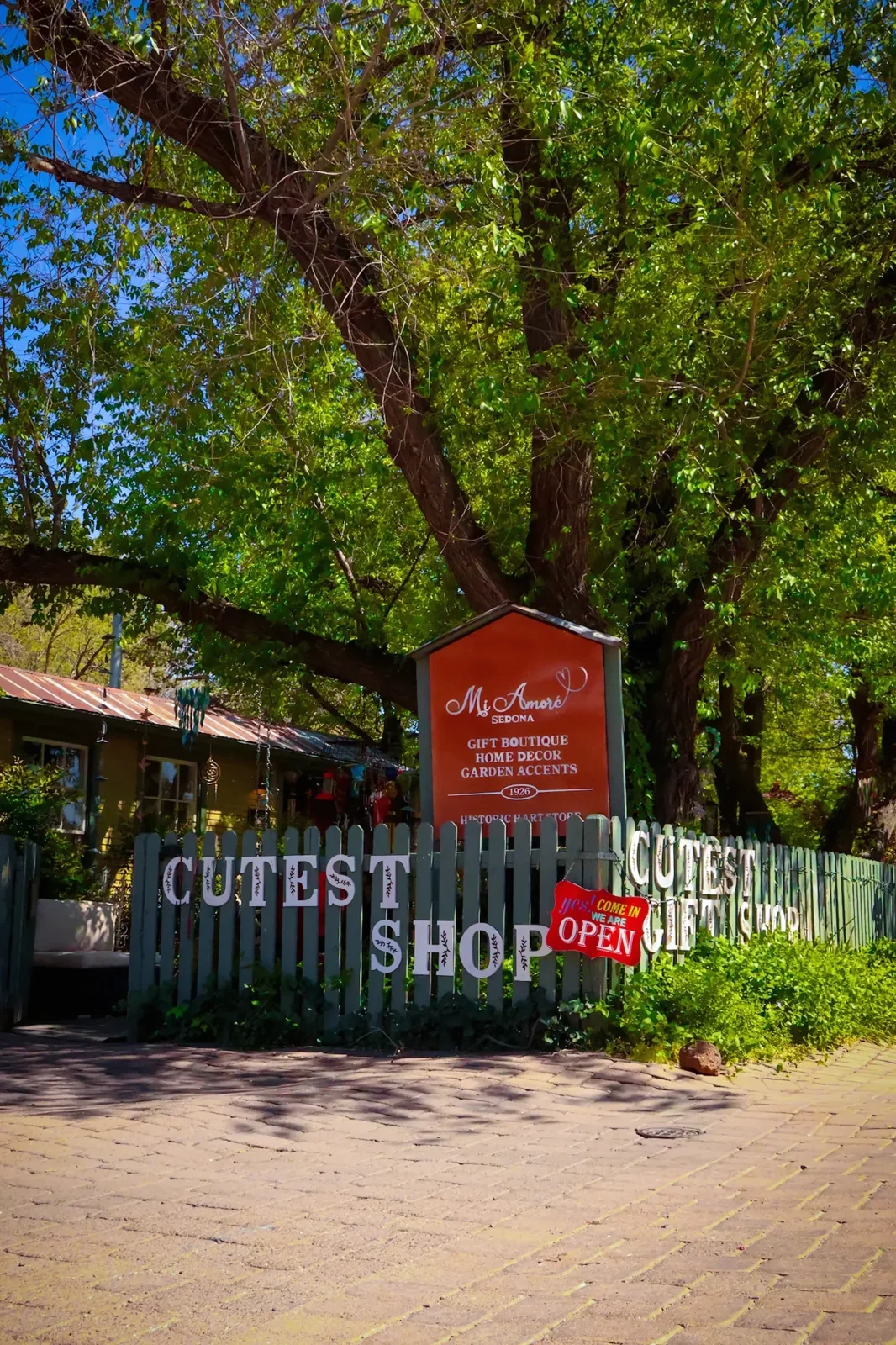
If you would enjoy a gift-shop stop, put it earlier in the day. Mi Amoré Sedona is inside the historic Hart Store at 100 Brewer Road, near Tlaquepaque, with curated gifts and home and garden pieces. Our daily hours are 10 a.m.–4:30 p.m.; a leisurely browse fits more comfortably before the show than in the short window afterward.
Choose one or two things you actually want from the afternoon: a museum visit, a thoughtful gift, or simply the performance. Let the rest stay optional. An hour of storytelling can be a satisfying change of pace in a trip full of viewpoints—and you may leave with a name or a tale you want to learn more about.
Cover photograph: the museum's fruit-packing shed in August 2019, by Marine 69-71, under CC BY-SA 4.0. Resized, converted to WebP and cropped for display under the same license. The photograph shows the building, not this year's performance.